. 2019 Dec 2:10:e00115.
doi: 10.1016/j.mec.2019.e00115. eCollection 2020 Jun.

Production of tetra-methylpyrazine using engineered Corynebacterium glutamicum

Affiliations

Production of tetra-methylpyrazine using engineered Corynebacterium glutamicum

Thomas Eng et al. Metab Eng Commun. .

Abstract

Corynebacterium glutamicum ATCC 13032 is an established and industrially-relevant microbial host that has been utilized for the expression of many desirable bioproducts. Tetra-methylpyrazine (TMP) is a naturally occurring alkylpyrazine with broad applications spanning fragrances to resins. We identified an engineered strain of C. glutamicum which produces 5 ​g/L TMP and separately, a strain which can co-produce both TMP and the biofuel compound isopentenol. Ionic liquids also stimulate TMP production in engineered strains. Using a fed batch-mode feeding strategy, ionic liquid stimulated strains produced 2.2 ​g/L of tetra-methylpyrazine. We show that feedback from a specific heterologous gene pathway on host physiology leads to acetoin accumulation and the production of TMP.

Keywords: 2,3,5,6-Tetra-methylpyrazine; Alkaloids; Bioreactor; Corynebacterium glutamicum; Isopentenol; Terpene.


Conflict of interest statement

The authors have no conflicts of interest to declare.

Figures
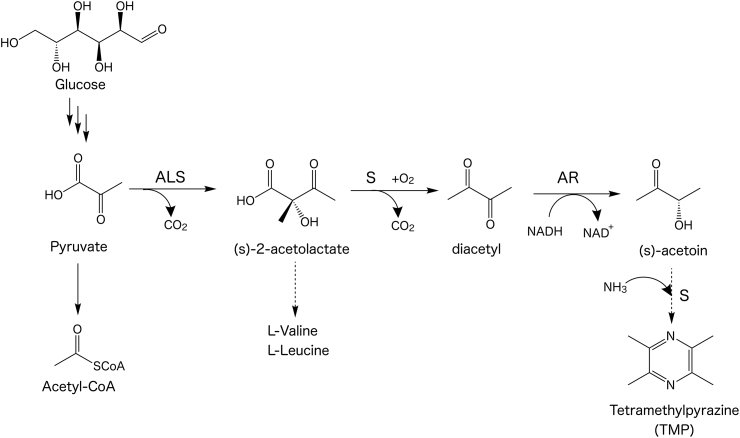
Fig. 1
Fig. 1
Diagram of proposed tetra-methylpyrazine (TMP) production pathway in C. glutamicum. Model. Pyruvate is generated from glucose using the Embden-Meyerhof-Parnas (EMP) pathway and converted to TMP in four steps as indicated. ALS, acetolactate synthase (ilvB, Cgl1271; ilvN, Cgl1272); AR, acetoin reductase (butA, Cgl2674). The upper-case letter S with arrows represents non-enzymatic spontaneous reactions. This figure was adapted and expanded upon based on Xiao et al. (2014). Pathway for the production to isopentenol is described in Kang et al. (2016).
Fig. 2
Fig. 2
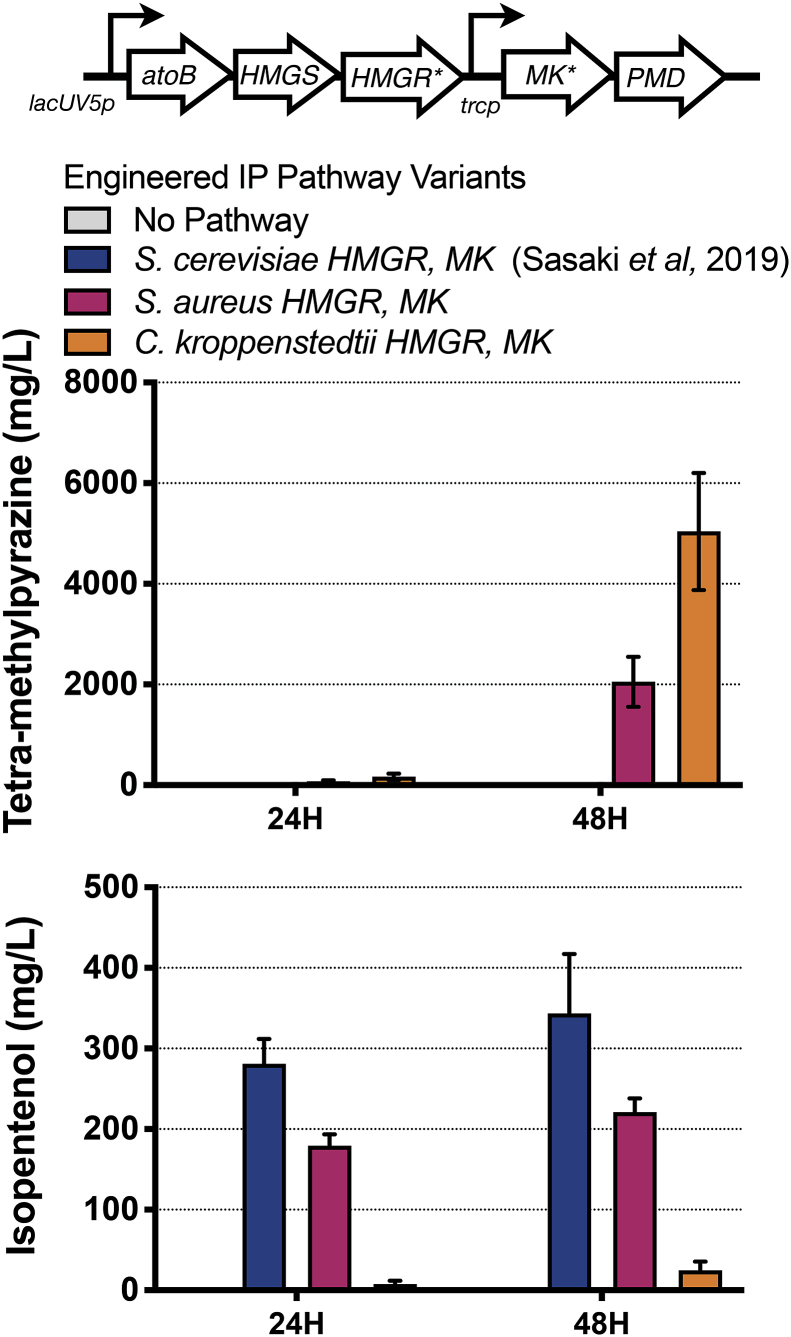
mk and hmgR Variants from bacterial species bias production towards tetra-methylpyrazine. Top panel. Schematic of the heterologous isopentenol production pathway. The two genes selected for optimization by substitution with homologs are indicated with an asterisk (*). The proposed metabolic pathway for the conversion of glucose to isopentenol has been previously described in Sasaki et al (2019). Bottom panels. Analysis of the engineered isopentenol production pathway in C. glutamicum using mk and hmgR homologs from S. aureus and C. kroppenstedtii in a 24 well plate format. C. glutamicum ΔpoxB ΔldhA strain harboring the original isopentenol production pathway (JBEI-19559) was compared with variants where the S. cerevisiae MK and HMGR were replaced with mk and hmgR from S. aureus (JBEI-19652) or C. kroppenstedtii (JBEI-19658). Samples were cultivated in CGXII media 4% d-glucose in a 24 well plate format. TMP or isopentenol titers were analyzed at the timepoints indicated and are an average of three biological replicates. The error bars represent standard error.
Fig. 3
Fig. 3
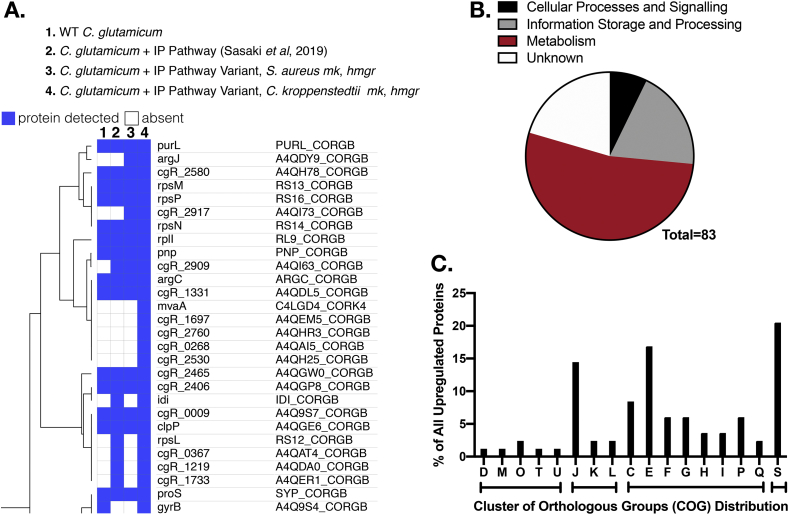
Proteomic Analysis of Engineered C. glutamicum strains. A. Hierarchical clustering of proteins enriched after heterologous gene pathway expression in engineered C. glutamicum strains. B. Gene functions of enriched proteins as modeled with eggNOG-mapper to assign genes into categories of orthologous groups (COGs). WT C. glutamicum (JBEI-7936) was compared against strains harboring the original isopentenol pathway (JBEI-19571) or the plasmid variants (JBEI-19652 and JBEI-19658). C. Distribution of enriched proteins into specific COGs. COGs falling into related categories from the top panel are grouped together in brackets below. COG definitions: D, cell division and chromosome partitioning; M, cell wall structure and biogenesis and outer membrane; O, molecular chaperones and related functions; T, signal transduction; Intracellular trafficking, secretion; J, Translation, ribosomal structure and biogenesis; K, transcription; L, replication, recombination, repair; C, energy production and conversion; E, amino acid transport and metabolism; F, nucleotide transport and metabolism; G, carbohydrate transport and metabolism; H, coenzyme transport and metabolism; I, lipid transport and metabolism; P, inorganic ion transport and metabolism; Q secondary metabolite transport and metabolism; S, unknown function.
Fig. 4
Fig. 4
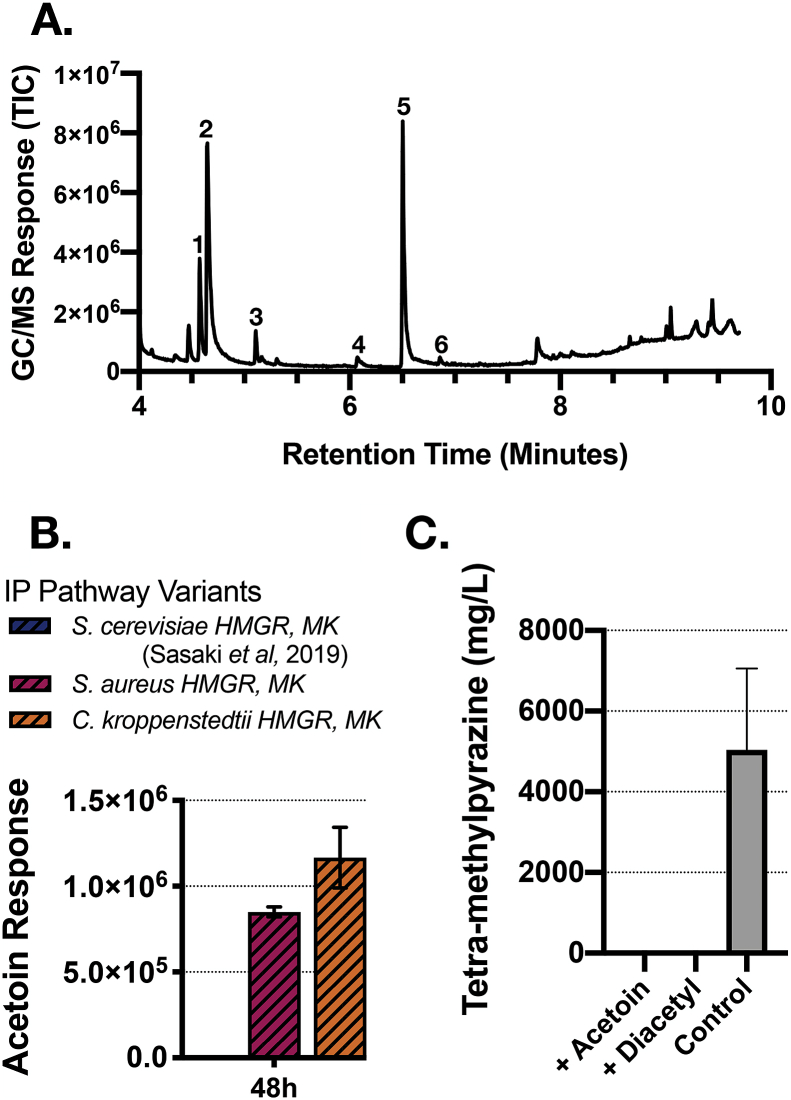
GC/MS analysis of tetra-methylpyrazine and S-acetoin. A. Identification of tetra-methylpyrazine and other peaks by GC/MS analysis. The genotypes of the strains used were the same as described in Fig. 2. Peak identification. 1. Acetoin (3-hydroxy-2-butanone). 2. Isopentenol (3-methyl-3-buten-1-ol). 3. 4-penten-1-ylacetate. 4. 2,3,5-tri-methyl-pyrazine. 5. 2,3,5,6-tetra-methyl-pyrazine. 6. 3,5-diethyl-2-methyl-pyrazine. B. Comparison of acetoin peak height across different engineered strains by GC/MS analysis. C. Detection of spontaneous TMP formation in CGXII media from precursors, acetoin or diacetyl, after 48 ​h post incubation. 100 ​mM of either acetoin or diacetyl was added to CGXII media. As a reference, TMP produced from the C. kroppenstedtii variant in JBEI-19658 is replotted from Fig. 2 on the same graph.
Fig. 5
Fig. 5
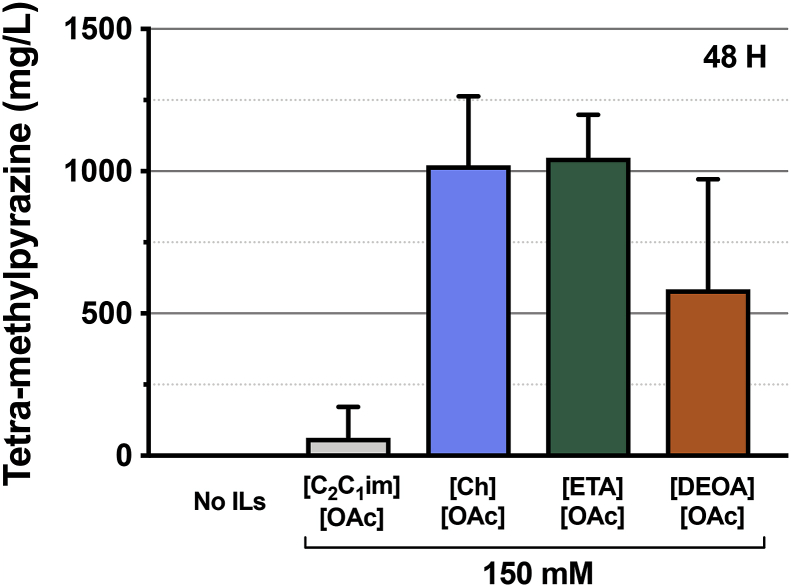
Specific forms of ionic liquids induce tetra-methylpyrazine production in C. glutamicum. The production profiles of the C. glutamicum (JBEI-19571) against three types (imidazolium, cholinium, and protic form) of ionic liquids were examined in CGXII media with 4% d-glucose in a 24 well plate format. ([C2C1im]+); cholinium ([Ch]+); ethanolamine acetate [ETA][OAc]; and diethanolamine acetate [DEOA][OAc] A. Produced titers of tetra-methylpyrazine are shown at 48 ​h post induction under 75 ​mM (A) or 150 ​mM (B) [C2C1im][OAc], [Ch][OAc], [ETA][OAc], and [DEOA][OAc]. The control experiment was performed without IL supplementation (No ILs). Data shown are an average of biological triplicates, and the error bars represent standard error.
Fig. 6
Fig. 6
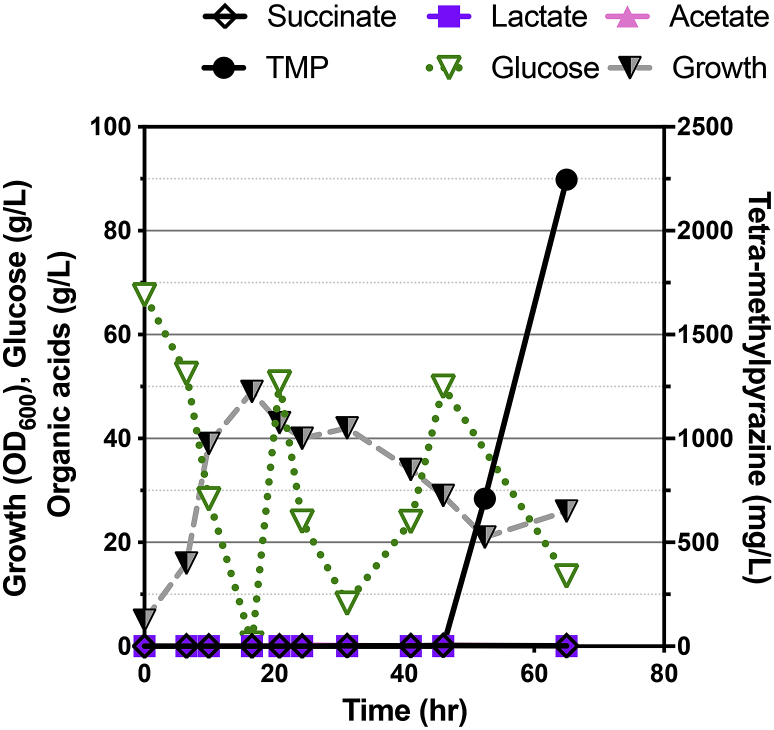
Fed-batch mode production of TMP in engineered C. glutamicum. C. glutamicum (JBEI-19571) was initially cultivated in batch mode using CGXII minimal media including 8% starting d-glucose and 50 ​mM [Ch][Lys] in a 2L Sartorius Bioreactor. Subsequently, fed-batch mode was initiated when the initial d-glucose concentration decreased below 1%. A pulse mode feeding strategy was utilized to raise the d-glucose concentration above 1%. Final products and organic acid concentrations were quantified and are indicated as labeled in the legend above.
Supplemental figure 2
Supplemental Figure 2. Related to Fig. 3 Complete heat map of hierarchical clustered strains and proteins upregulated in engineered C. glutamicum strains.

References

    1. Baral N.R., Kavvada O., Mendez-Perez D., Mukhopadhyay A., Lee T.S., Simmons B.A., Scown C.D. Techno-economic analysis and life-cycle greenhouse gas mitigation cost of five routes to bio-jet fuel blendstocks. Energy Environ. Sci. 2019;12:807–824.
    1. Baral N.R., Sundstrom E.R., Das L., Gladden J., Eudes A., Mortimer J.C., Singer S.W., Mukhopadhyay A., Scown C.D. Approaches for more efficient biological conversion of lignocellulosic feedstocks to biofuels and bioproducts. ACS Sustain. Chem. Eng. 2019;7(10):9062–9079.
    1. Chen H., Cao J., Zhu Z., Zhang G., Shan L., Yu P., Wang Y., Sun Y., Zhang Z. A novel tetramethylpyrazine derivative protects against glutamate-induced cytotoxicity through PGC1α/nrf2 and PI3K/Akt signaling pathways. Front. Neurosci. 2018;12 - PMC - PubMed
    1. Deng T., Tao S., Luo D., Qin P. 2006. China Patent CN1546474A. Method for Preparing Tetramethyl Pyrazine.
    1. Demain A., Jackson M., Trenner N. Thiamine-dependent accumulation of tetramethylpyrazine accompanying a mutation in the isoleucine-valine pathway. J. Bacteriol. 1967;94:323–326. - PMC - PubMed