


Understanding the formation and behaviors of droplets toward consideration of changeover during cell manufacturing
- PMID: 31890765
- PMCID: PMC6933465
- DOI: 10.1016/j.reth.2019.04.002
Understanding the formation and behaviors of droplets toward consideration of changeover during cell manufacturing
Abstract
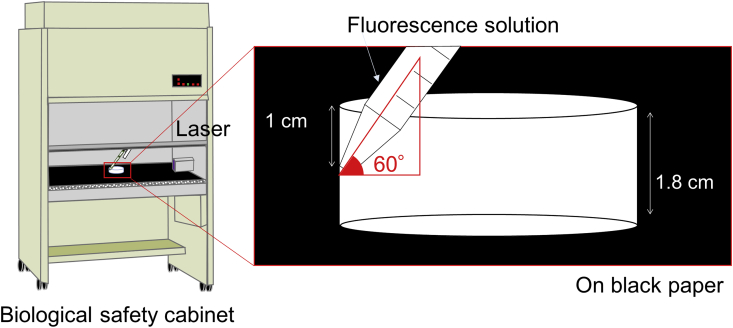
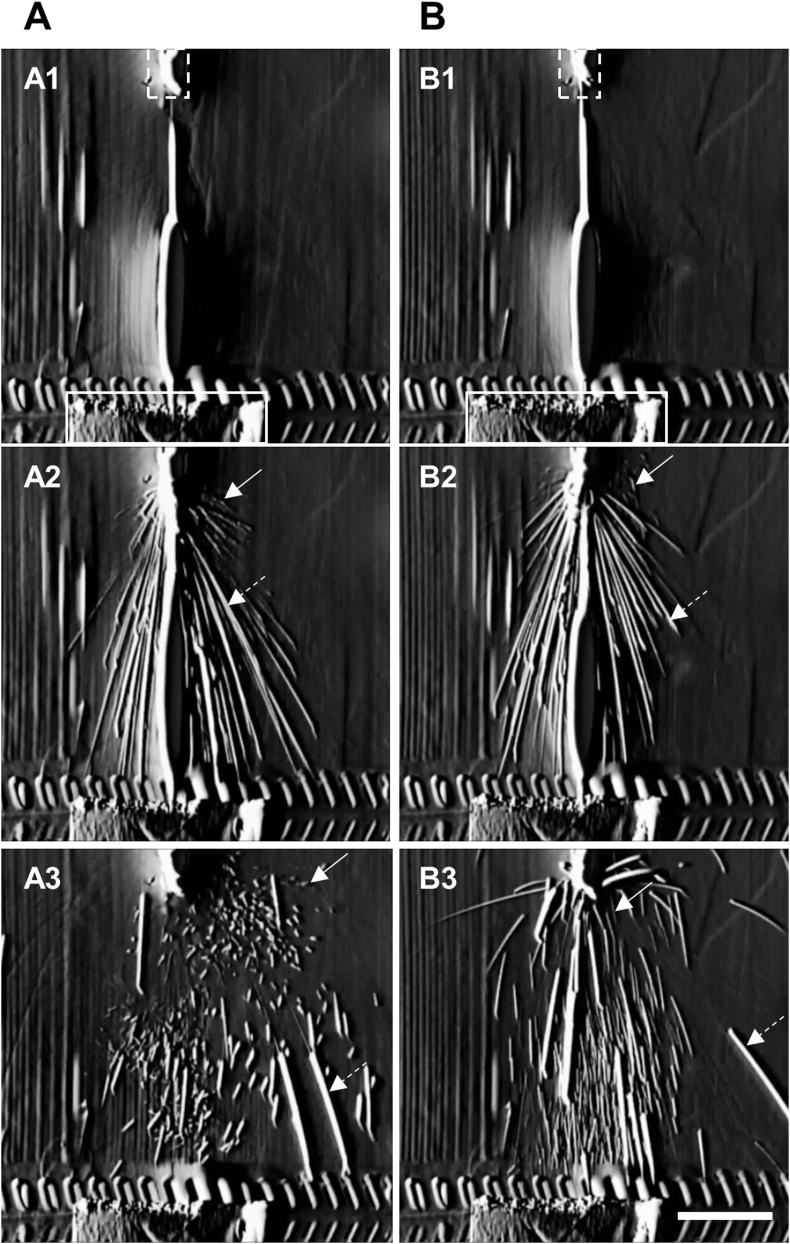
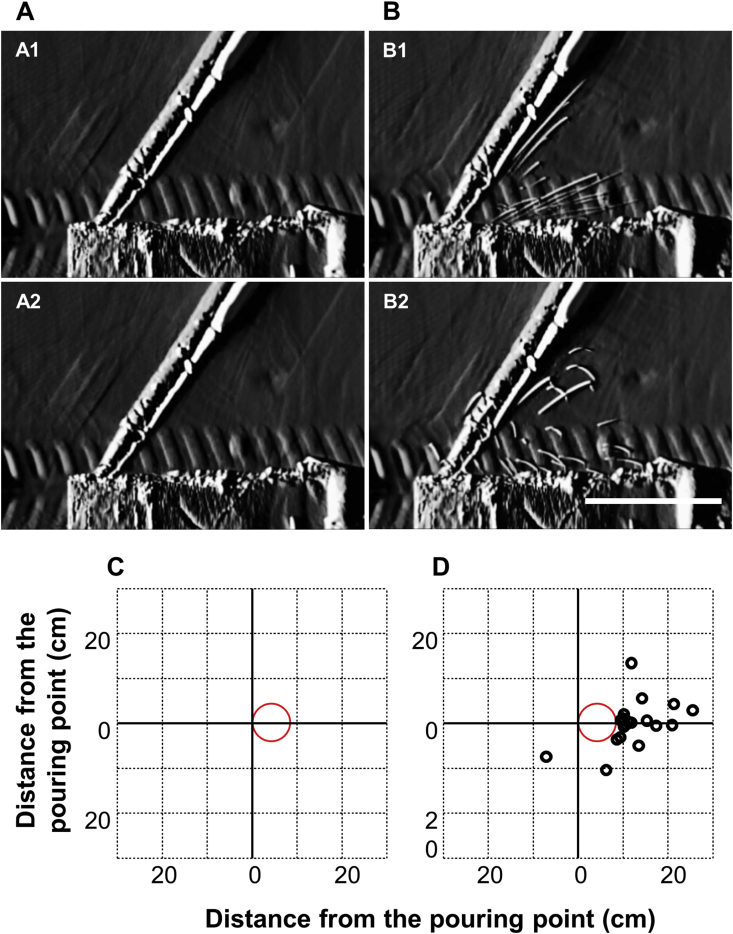
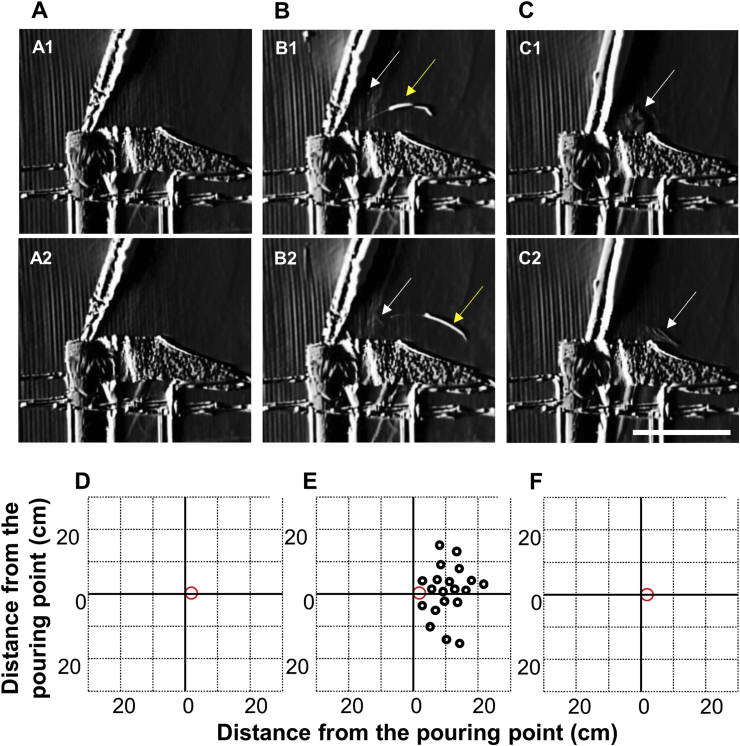
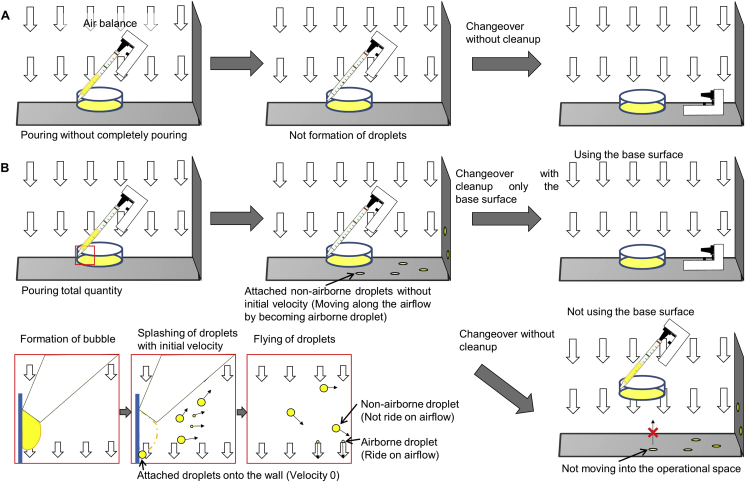
Preventing the contamination of processed cells is required for achieving reproducible manufacturing. A droplet is one of the potential causes contamination in cell manufacturing. The present study elucidates the formation mechanism and characteristics of droplets based on the observation and detection of droplets on the base surface of the biological safety cabinet (BSC) where cell processing is conducted under unidirectional airflow. Pouring fluorescent solution into the vessel using a measuring pipette was conducted to visualize the formation of droplets by videos as well as visual detection by blacklight irradiation on the base surface of the BSC. The experiments revealed that airborne and non-airborne droplets emerged from bursting bubbles, which formed when the entire solution was pushed out of the measuring pipette. Therefore, the improving procedure of pouring technique when entire solution was not pushed out of the pipette realized no formation of the droplets due to the prevention of emergence of bubble. In addition, an alternative procedure in which the entire solution was poured into the deep point of the test tube prevented the flying of non-airborne droplets outside the tube, while airborne droplets that escaped the tube rode the airflow of BSC. These results suggested a method for the prevention of the droplet formation, as well as the deposit control of droplets onto the surface in BSC, leading to cleanup area in the BSC for changeover with environment continuity.
Keywords: Airborne and non-airborne droplets; BSC, biological safety cabinet; Bursting bubble; CPA, cell processing area; Changeover; Pouring the solution.
© 2019 The Japanese Society for Regenerative Medicine. Production and hosting by Elsevier B.V.
Figures
References
-
- Houkin K., Shichinohe H., Abe K., Arato T., Dezawa M., Honmou O. Accelerating cell therapy for stroke in Japan: regulatory framework and guidelines on development of cell-based products. Stroke. 2018;49:e145–e152. - PubMed
-
- Hu S.C., Shiue A., Tu J.Z., Lin H.Y., Chiu R.B. Validation of cross-contamination control in biological safety cabinet for biotech/pharmaceutical manufacturing process. Environ Sci Pollut Res. 2015;22:19264–19272. - PubMed
-
- Kino-oka M., Taya M. Recent developments in processing systems for cell and tissue cultures toward therapeutic application. J Biosci Bioeng. 2009;108:267–276. - PubMed
-
- Wang W., Ignatius A.A., Thakkar S.V. Impact of residual impurities and contaminants on protein stability. J Pharm Sci. 2014;103:1315–1330. - PubMed
LinkOut - more resources
Full Text Sources
