


GBM-Targeted oHSV Armed with Matrix Metalloproteinase 9 Enhances Anti-tumor Activity and Animal Survival
- PMID: 31890868
- PMCID: PMC6926261
- DOI: 10.1016/j.omto.2019.10.005
GBM-Targeted oHSV Armed with Matrix Metalloproteinase 9 Enhances Anti-tumor Activity and Animal Survival
Abstract
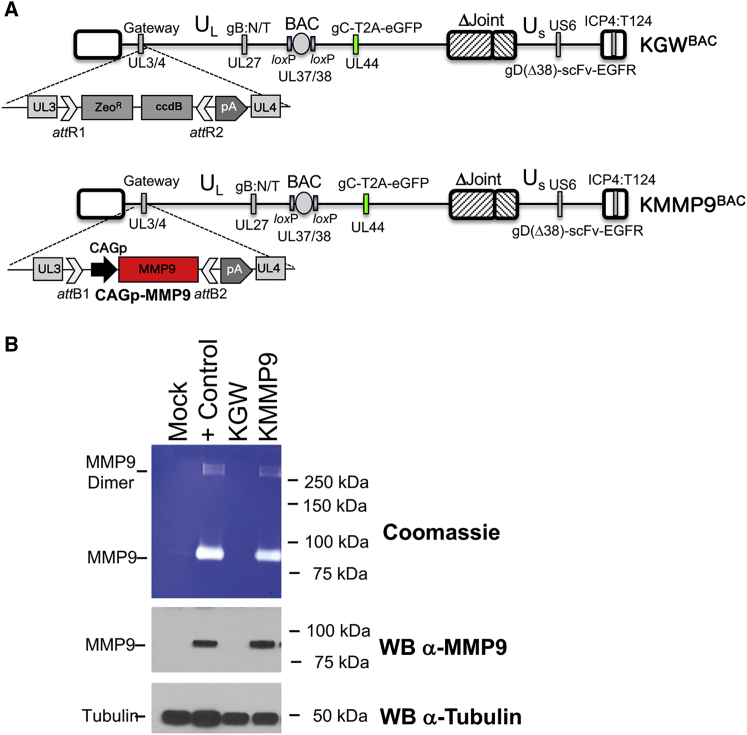
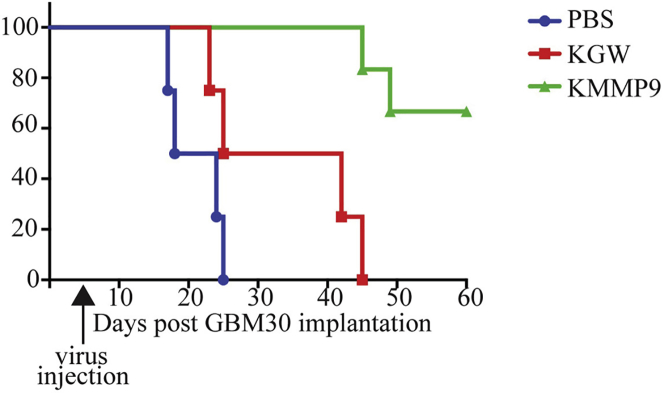
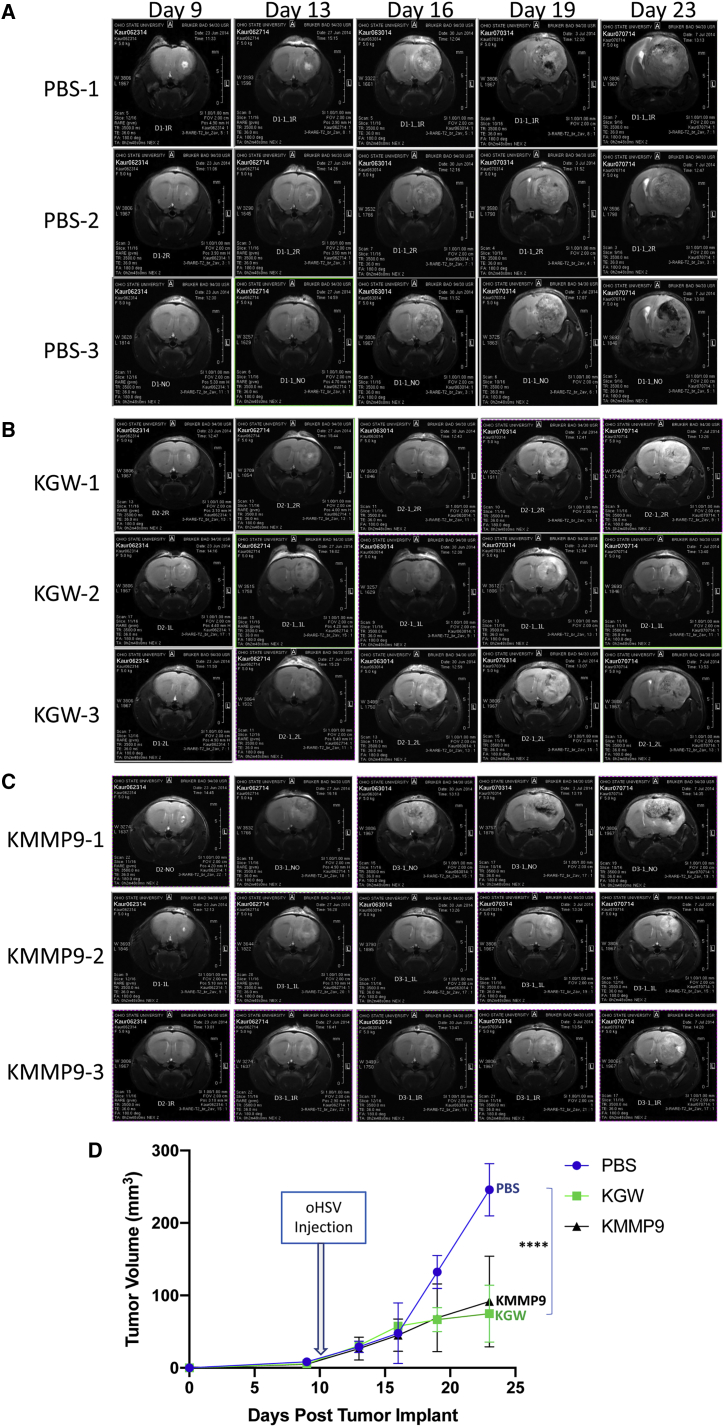
The use of mutant strains of oncolytic herpes simplex virus (oHSV) in early-phase human clinical trials for the treatment of glioblastoma multiforme (GBM) has proven safe, but limited efficacy suggests that more potent vector designs are required for effective GBM therapy. Inadequate vector performance may derive from poor intratumoral vector replication and limited spread to uninfected cells. Vector replication may be impaired by mutagenesis strategies to achieve vector safety, and intratumoral virus spread may be hampered by vector entrapment in the tumor-specific extracellular matrix (ECM) that in GBM is composed primarily of type IV collagen. In this report, we armed our previously described epidermal growth factor receptor (EGFR)vIII-targeted, neuronal microRNA-sensitive oHSV with a matrix metalloproteinase (MMP9) to improve intratumoral vector distribution. We show that vector-expressed MMP9 enhanced therapeutic efficacy and long-term animal survival in a GBM xenograft model.
Keywords: Glioblastoma multiforme = GBM; OVs derived from herpes simplex virus = oHSV; Oncolytic vectors = OVs; extracellular matrix = ECM; matrix metalloproteinase 9 = MMP9.
© 2019 The Authors.
Figures
References
-
- Mohyeldin A., Chiocca E.A. Gene and viral therapy for glioblastoma: a review of clinical trials and future directions. Cancer J. 2012;18:82–88. - PubMed
-
- Yin A.A., Cheng J.X., Zhang X., Liu B.L. The treatment of glioblastomas: a systematic update on clinical phase III trials. Crit. Rev. Oncol. Hematol. 2013;87:265–282. - PubMed
Grants and funding
LinkOut - more resources
Full Text Sources
Research Materials
Miscellaneous
