


Reconstruction of segmental mandibular defects: Current procedures and perspectives
- PMID: 31890875
- PMCID: PMC6929581
- DOI: 10.1002/lio2.325
Reconstruction of segmental mandibular defects: Current procedures and perspectives
Abstract
Background: The reconstruction of segmental mandibular defects remains a challenge for the reconstructive surgeon, from both a functional and an esthetic point of view.
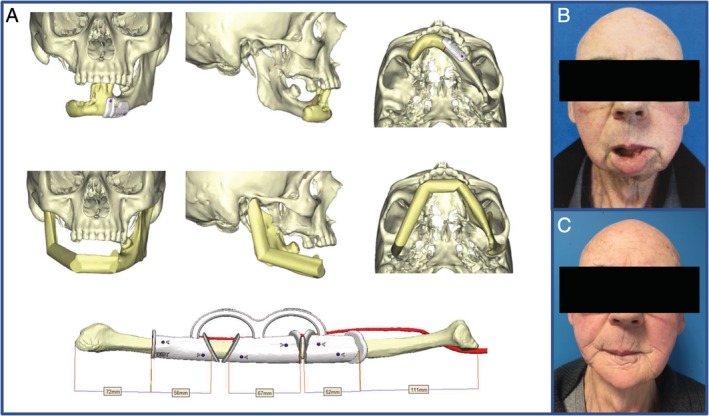
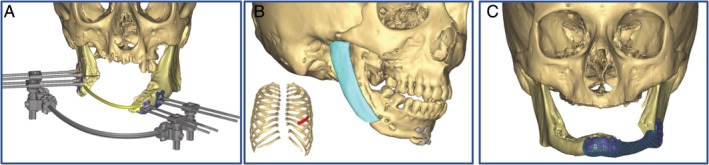
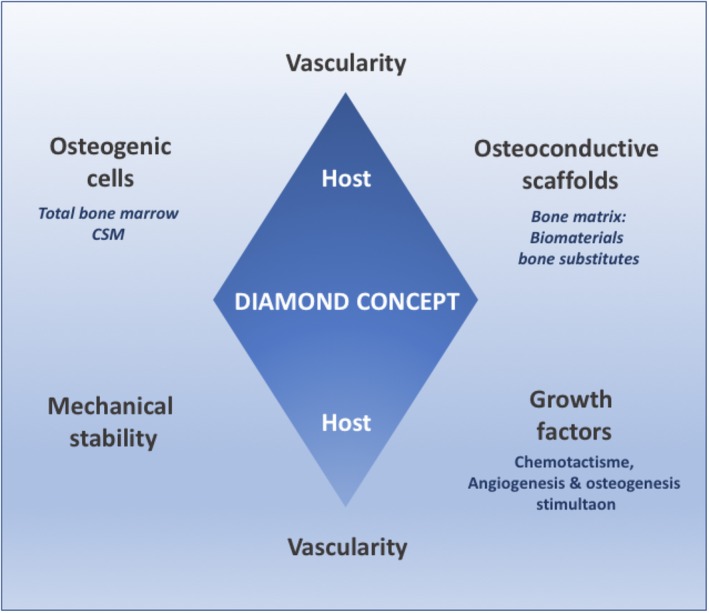
Methods: This clinical review examines the different techniques currently in use for mandibular reconstruction as related to a range of etiologies, including the different bone donor sites, the alternatives to free flaps (FFs), as well as the contribution of computer-assisted surgery. Recent progress and the perspectives in bone tissue engineering (BTE) are also discussed.
Results: Osseous FF allows reliable and satisfying outcomes. However, locoregional flap, distraction osteogenesis, or even induced membrane techniques are other potential options in less favorable cases. Obtaining an engineered bone with satisfactory mechanical properties and sufficient vascular supply requires further investigations.
Conclusions: Osseous FF procedure remains the gold standard for segmental mandible reconstruction. BTE strategies offer promising alternatives.
Keywords: CAD/CAM; bone tissue engineering; free flap; mandible reconstruction; microvascular.
© 2019 The Authors. Laryngoscope Investigative Otolaryngology published by Wiley Periodicals, Inc. on behalf of The Triological Society.
Conflict of interest statement
The authors declare no potential conflict of interest.
Figures
References
-
- Namaki S, Matsumoto M, Ohba H, Tanaka H, Koshikawa N, Shinohara M. Masticatory efficiency before and after surgery in oral cancer patients: comparative study of glossectomy, marginal mandibulectomy and segmental mandibulectomy. J Oral Sci. 2004;46(2):113‐117. - PubMed
-
- Toto JM, Chang EI, Agag R, Devarajan K, Patel SA, Topham NS. Improved operative efficiency of free fibula flap mandible reconstruction with patient‐specific, computer‐guided preoperative planning: preoperative modeling for free fibula flaps. Head Neck. 2015;37(11):1660‐1664. 10.1002/hed.23815. - DOI - PubMed
Publication types
LinkOut - more resources
Full Text Sources
Miscellaneous