


Simplified methodology for a modular and genetically expanded protein synthesis in cell-free systems
- PMID: 31890924
- PMCID: PMC6926333
- DOI: 10.1016/j.synbio.2019.10.002
Simplified methodology for a modular and genetically expanded protein synthesis in cell-free systems
Erratum in
-
Erratum regarding previously published articles.Synth Syst Biotechnol. 2020 Oct 14;5(4):332. doi: 10.1016/j.synbio.2020.10.004. eCollection 2020 Dec. Synth Syst Biotechnol. 2020. PMID: 33102828 Free PMC article.
Abstract
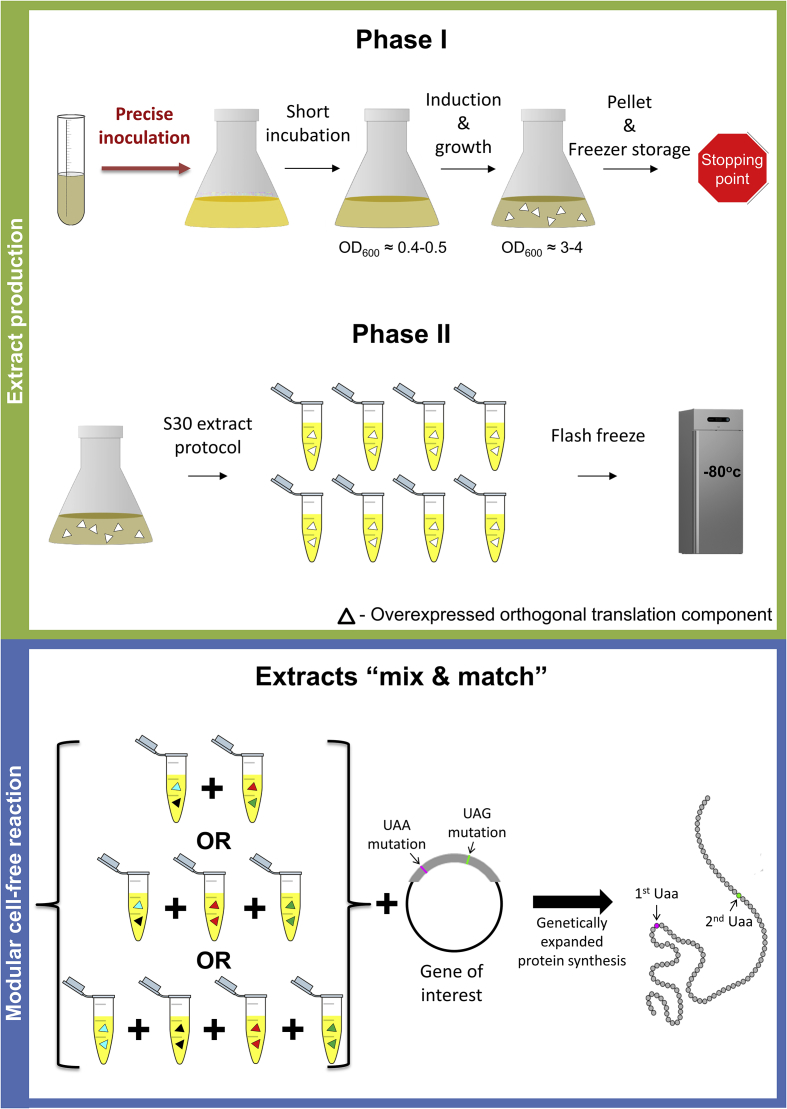
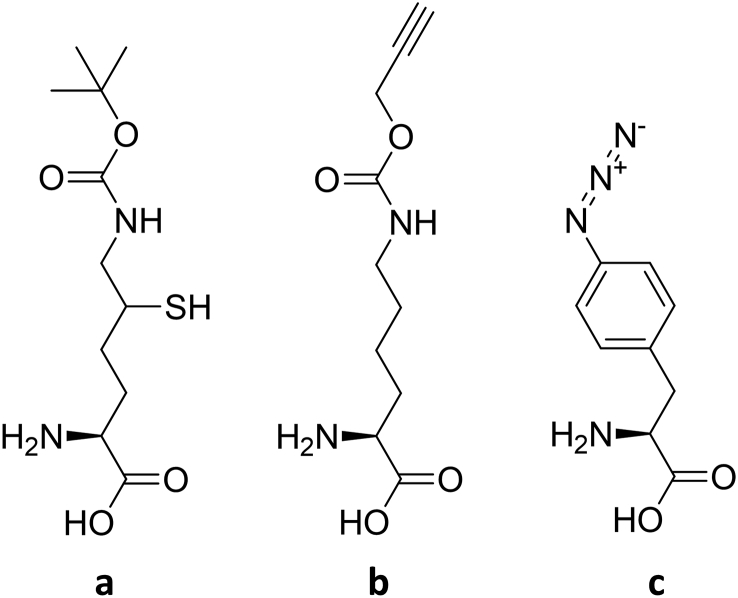
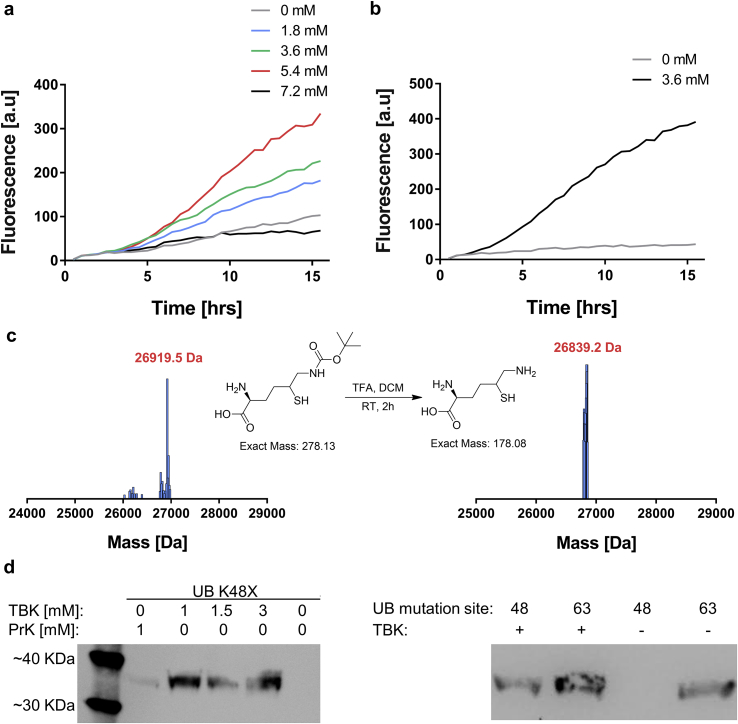
Genetic code expansion, which enables the site-specific incorporation of unnatural amino acids into proteins, has emerged as a new and powerful tool for protein engineering. Currently, it is mainly utilized inside living cells for a myriad of applications. However, the utilization of this technology in a cell-free, reconstituted platform has several advantages over living systems. The typical limitations to the employment of these systems are the laborious and complex nature of its preparation and utilization. Herein, we describe a simplified method for the preparation of this system from Escherichia coli cells, which is specifically adapted for the expression of the components needed for cell-free genetic code expansion. Besides, we propose and demonstrate a modular approach to its utilization. By this approach, it is possible to prepare and store different extracts, harboring various translational components, and mix and match them as needed for more than four years retaining its high efficiency. We demonstrate this with the simultaneous incorporation of two different unnatural amino acids into a reporter protein. Finally, we demonstrate the advantage of cell-free systems over living cells for the incorporation of δ-thio-boc-lysine into ubiquitin by using the methanosarcina mazei wild-type pyrrolysyl tRNACUA and tRNA-synthetase pair, which could not be achieved in a living cell.
Keywords: Cell free system; Genetic code expansion; Simplified extract preparation; Thio-lysine.
© 2019 Production and hosting by Elsevier B.V. on behalf of KeAi Communications Co., Ltd.
Figures
References
-
- Ambrogelly A., Palioura S., Söll D. Natural expansion of the genetic code. Nat Chem Biol. 2007;3:29–35. - PubMed
-
- Hao B., Gong W., Ferguson T.K., James C.M., Krzycki J a, Chan M.K. A new UAG-encoded residue in the structure of a methanogen methyltransferase. Science. 2002;296:1462–1466. - PubMed
-
- Wang L., Brock A., Herberich B., Schultz P.G. Expanding the genetic code of Escherichia coli. Science. 2001;292:498–500. - PubMed
-
- Chin J.W., Cropp T.A., Anderson J.C., Mukherji M., Zhang Z., Schultz P.G. An expanded eukaryotic genetic code. Science. 2003;301:964–967. - PubMed
LinkOut - more resources
Full Text Sources
Research Materials
