


doi: 10.1080/87565641.2019.1709465.
Epub 2020 Jan 1.
Investigating Implicit and Explicit Word Learning in School-age Children Using a Combined Behavioral-Event Related Potential (ERP) Approach
Affiliations
- PMID: 31893945
- PMCID: PMC8194412
- DOI: 10.1080/87565641.2019.1709465
Item in Clipboard
Investigating Implicit and Explicit Word Learning in School-age Children Using a Combined Behavioral-Event Related Potential (ERP) Approach
Dev Neuropsychol.
2020 Jan-Feb.
Abstract
One challenge in word learning research is how to operationalize learning. We combined behavioral measures with EEG to examine implicit and explicit recognition of words previously introduced with or without meaning in an incidental learning task. Participants (8-11-year-old children) were not able to recognize previously introduced nonsense words and better performance on the learning task resulted in poorer word recognition. The N400 amplitude differed between nonsense words with meaning versus nonsense words no meaning and novel nonsense words. Results indicate that introducing a nonsense word with meaning does not aid in explicit word learning but improves implicit word learning.
Figures
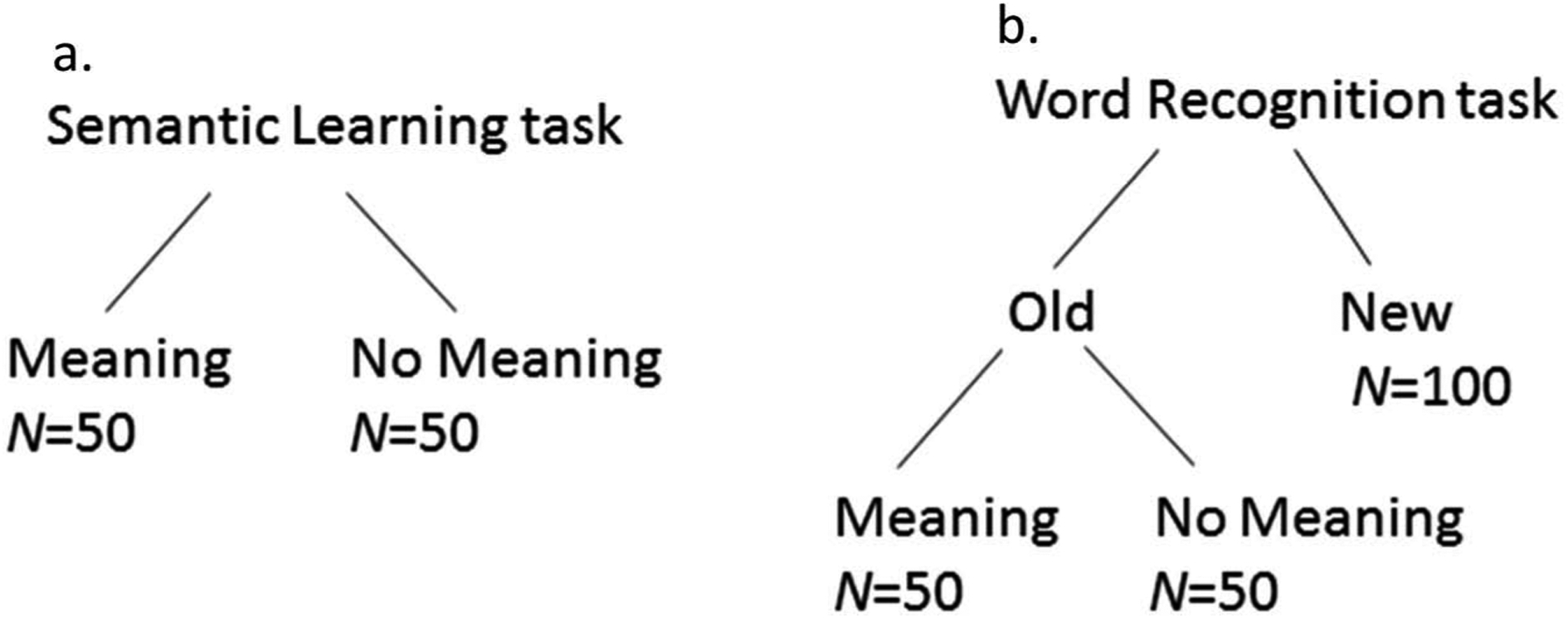
Breakdown of number of stimuli per condition for the (A) Semantic learning task and (B) Word recognition task.
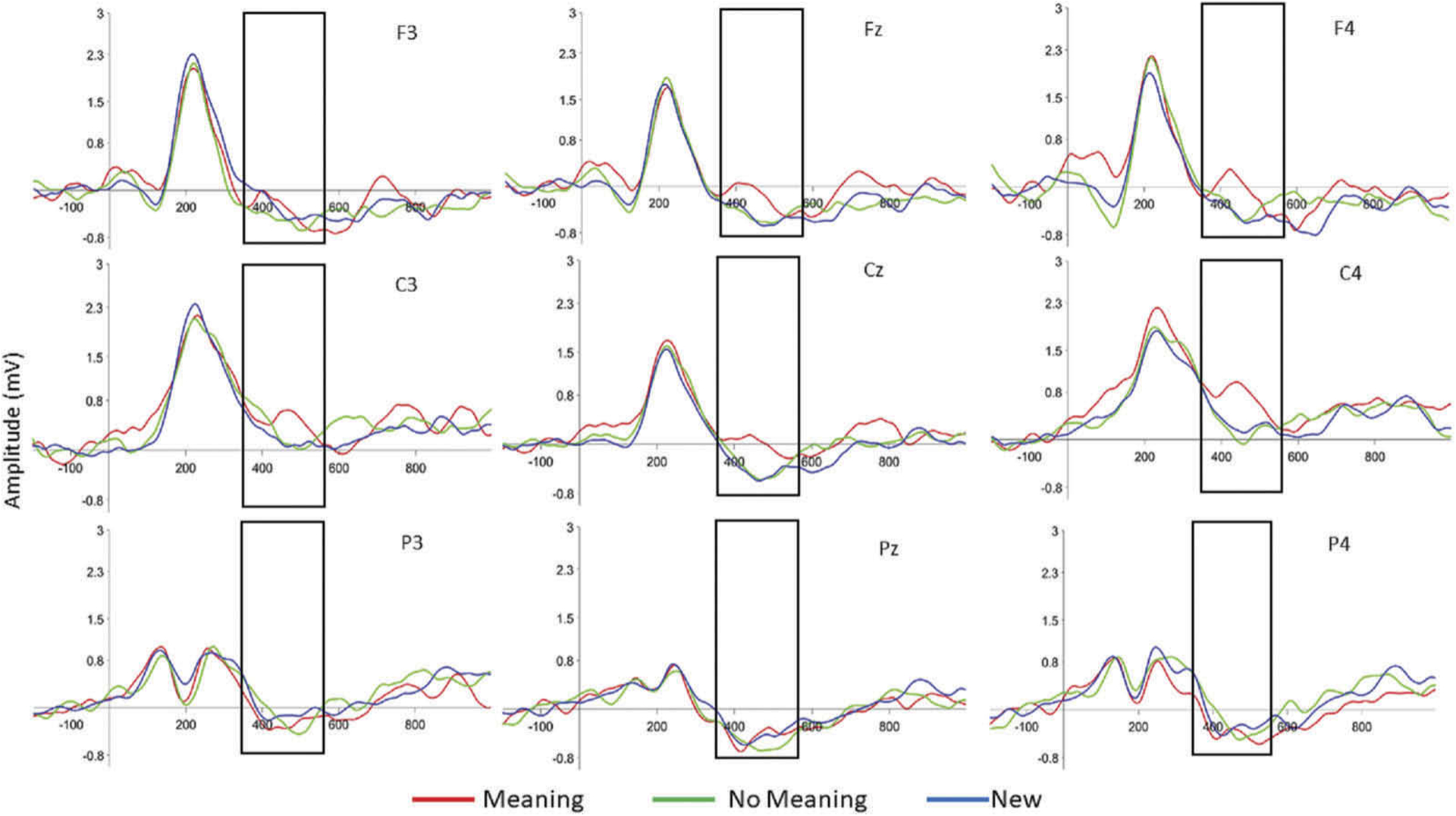
ERPs for the meaning, no meaning, and new conditions on the word recognition task. The box indicates the N400 time window.
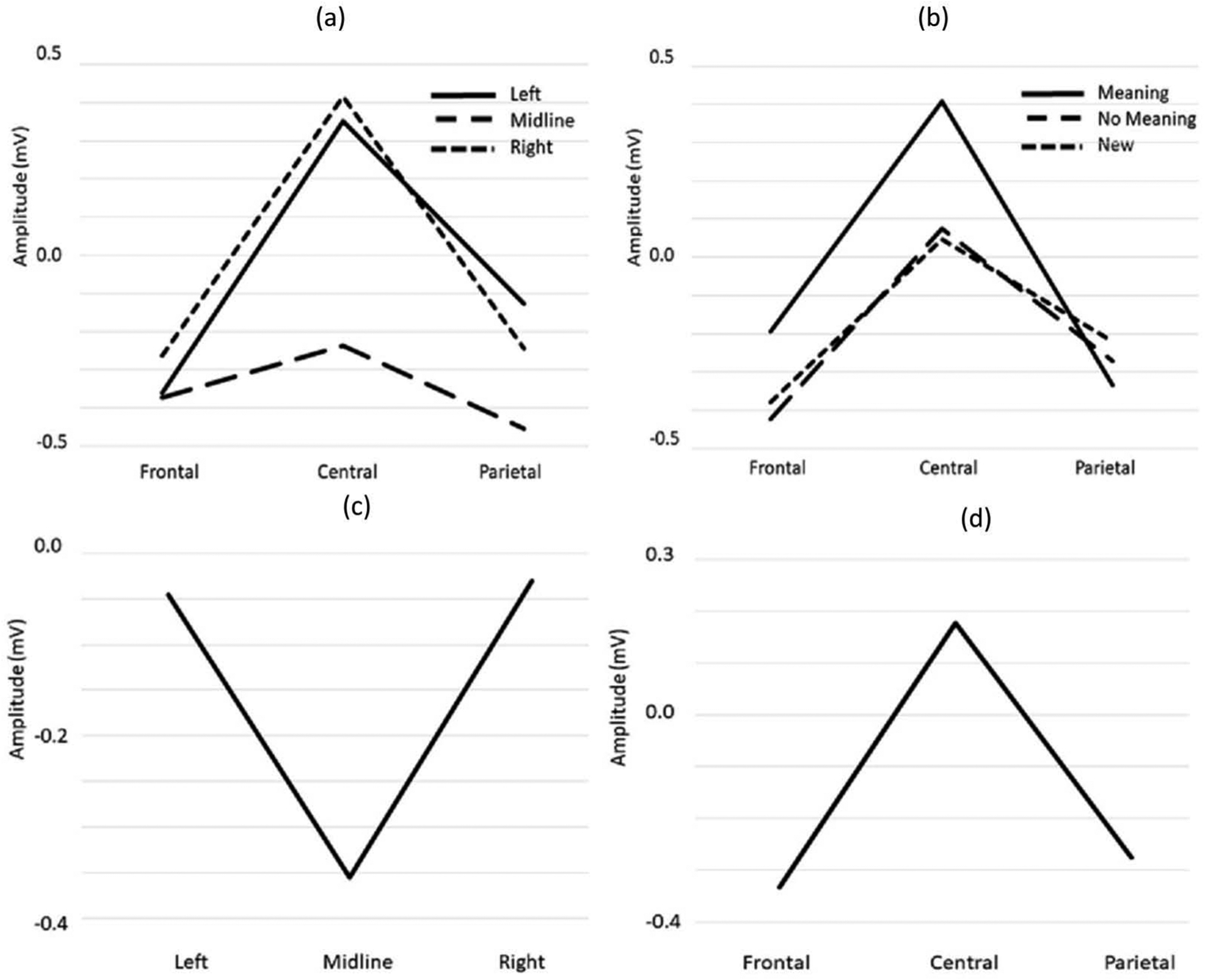
Line graphs demonstrating N400 averages for each of the significant effects on the Word Recognition task. (A) anterior/poster × lateral interaction, (B) condition × anterior/posterior interaction, (C) main effect of laterality, (D) main effect of anterior/posterior.
References
-
- Abel AD, Schneider JM, & Maguire M (2018). The N400 response indexes word learning from linguistic context in children. Language Learning and Development, 14, 61–71. doi: 10.1080/15475441.2017.1362347 - DOI
Publication types
MeSH terms
Grants and funding
LinkOut - more resources
Full Text Sources
