Review
. 2020 Mar;27(3):872-886.
doi: 10.1038/s41418-019-0481-8. Epub 2020 Jan 2.

Autophagy and microbial pathogenesis

Affiliations
Review

Autophagy and microbial pathogenesis

Matthew D Keller et al. Cell Death Differ. 2020 Mar.

Abstract

Autophagy is a cell biological process that promotes resilience in the face of environmental perturbations. Given that infectious agents represent a major type of environmental threat, it follows that the autophagy pathway is central to the outcome of host-microbe interactions. Detailed molecular studies have revealed intricate ways in which autophagy suppresses or enhances the fitness of infectious agents, particularly intracellular pathogens such as viruses that require the host cell machinery for replication. Findings in animal models have reinforced the importance of these events that occur within individual cells and have extended the role of autophagy to extracellular microbes and immunity at the whole organism level. These functions impact adaptation to bacteria that are part of the gut microbiota, which has implications for the etiology of chronic disorders such as inflammatory bowel disease. Despite major advances in how autophagy regulates inflammatory reactions toward microbes, many challenges remain, including distinguishing autophagy from closely related pathways such as LC3-associated phagocytosis. Here, we review the role of autophagy in microbial pathogenesis at the level of organismal biology. In addition to providing an overview of the prominent function of autophagy proteins in host-microbe interactions, we highlight how observations at the cellular level are informing pathogenesis studies and offer our perspective on the future directions of the field.


Conflict of interest statement

VJT is an inventor on patents and patent applications filed by New York University, which are currently under commercial license to Janssen Biotech Inc. KC has consulted for or received an honorarium from Puretech Health, Genentech, and AbbVie, Inc., has received research support from Puretech Health and Pfizer, Inc, and has a provisional patent, US Patent Appln. No. 15/625,934.

Figures
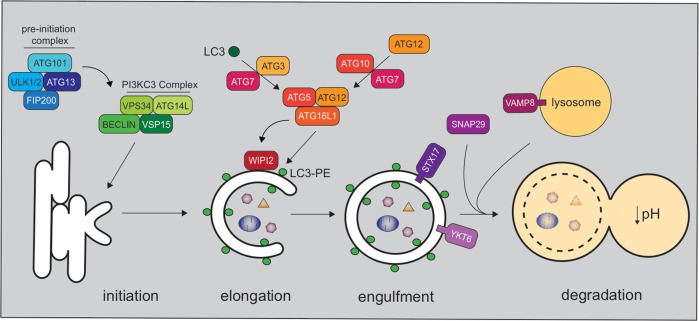
Fig. 1
Fig. 1. Overview of the autophagy pathway. Autophagy is initiated when the preinitiation complex (ULK1 or ULK2, FIP200, ATG13, and ATG101) mediates the phosphorylation of Beclin-1 to activate the class 3 phosphatidylinositol kinase (PI3KC3) complex (VPS34, VPS15, Beclin-1, and ATG14L) to generate PI3Ps at the ER-Golgi intermediate compartment (ERGIC) and ER-mitochondria contact regions.
The ATG16L1 complex (ATG16L1, ATG5, and ATG12) is generated through a ubiquitin-like pathway by ATG7 and ATG10 that covalently attaches ATG12 to ATG5. Following non-covalent binding between ATG5 and ATG16L1, the complex is recruited to these ER-associated sites by the PI3P-binding protein WIPI2. ATG7 also functions in a second ubiquitin-like pathway by activating and transferring the ubiquitin-like molecule LC3 to ATG3. The ATG16L1 complex then transfers LC3 from ATG3 onto the lipid phosphatidylethanolamine (PE) on the pre-autophagosomal structure. Through its fusogenic properties, LC3 mediates the elongation and closure of the autophagosome. STX17, VAMP8, SNAP29, YKT6 and other membrane integrated SNARE proteins and their cofactors mediate fusion between the autophagosome and endo-lysosomal vesicles. The acidic environment and enzymes mediate the degradation and recycling of cargo molecules such as mitochondria (blue oval), intracellular pathogens (purple hexagon), or protein aggregates (triangle).
Fig. 2
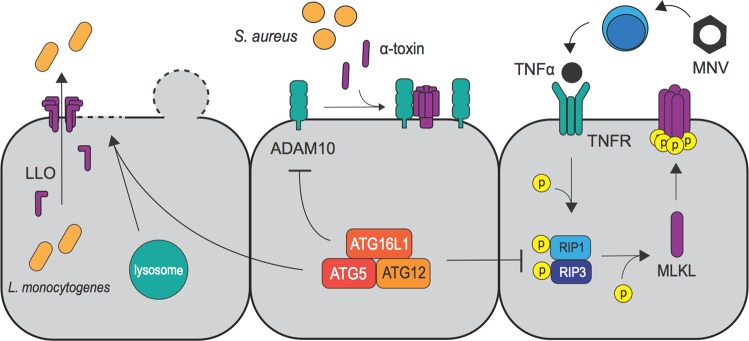
Fig. 2. The ATG16L1 complex defends the plasma membrane from pore-forming molecules during infections.
In the first example, Listeriolysin O (LLO) produced by Listeria monocytogenes mediates pore formation in the plasma membrane that facilitates cell-to-cell spread of the bacterium. The ATG16L1 complex restricts this spread by promoting plasma membrane repair through an autophagy-independent mechanism involving the exocytosis of lysosomes that confines the damage to surface blebs. In the second example, α-toxin secreted by Staphylococcus aureus binds ADAM10 on the surface of target cells such as the endothelium leading to cell death. The ATG16L1 complex downregulates ADAM10 levels, limiting the availability of the receptor for α-toxin binding and promotes cell survival. In the third example, TNFα produced by immune cells in the gut in response to murine norovirus (MNV) infection is tolerated by intestinal epithelial cells when autophagy is intact. However, upon the disruption of the ATG16L1 complex and inhibition of mitophagy, the accumulation of reactive oxygen species (ROS) licenses signaling through RIPK1 and RIPK3 downstream of the TNFα receptor (TNFR) resulting in the activation of MLKL, the pore-forming executioner molecule of the necroptosis pathway of programmed cell death.
Fig. 3
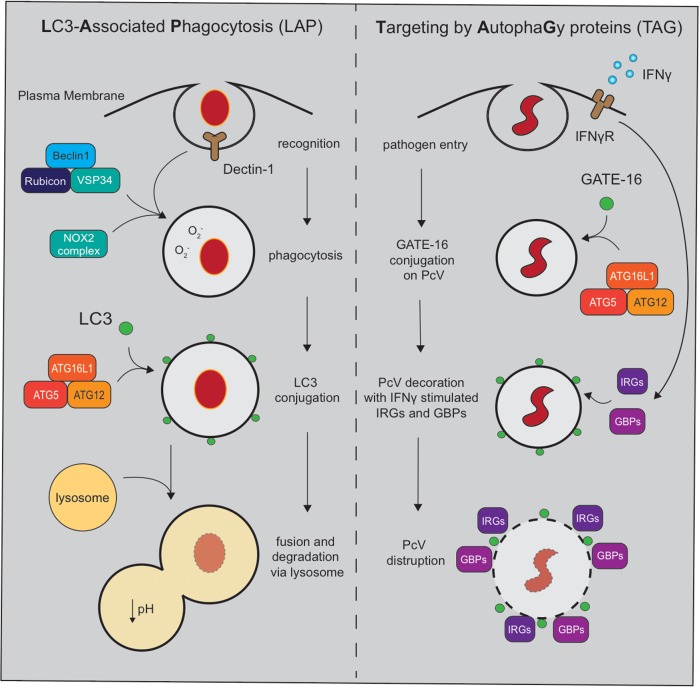
Fig. 3. Non-autophagy functions of ATGs mediate cell autonomous defense against eukaryotic pathogens.
During LC3-associated phagocytosis (LAP), internalized microbes are recognized by pattern recognition receptors, such as Dectin-1 binding of β-glucan from Aspergillus fumigatus, leading to the recruitment of a PI3KC3 complex. In contrast to autophagy, the PI3KC3 complex assembled during LAP is distinguished by the presence of Rubicon and the concurrent recruitment of the NADPH oxidase 2 (NOX2) complex that generates ROS. LC3 lipidation by the ATG16L1 complex then mediates the maturation of the single-membrane phagosome through fusion with the lysosome and degradation of the contents. Targeting by Autophagy Proteins (TAG) is initiated by IFNγ and involves the decoration of the pathogen-containing vacuole (PcV) by the LC3 homolog GATE-16 during Toxoplasma gondii infection. Although dependent on the ATG16L1 complex, the downstream autophagy factors involved in lysosomal degradation are dispensable. Instead, IFNγ inducible GTPase belonging to the IRG and GBP families are recruited and contribute to the disruption of the PcV membrane.

References

    1. Matsuzawa-Ishimoto Y, Hwang S, Cadwell K. Autophagy and inflammation. Annu Rev Immunol. 2018;36:73–101. - PubMed
    1. Hamasaki M, Furuta N, Matsuda A, Nezu A, Yamamoto A, Fujita N, et al. Autophagosomes form at ER-mitochondria contact sites. Nature. 2013;495:389–93.. - PubMed
    1. Ge L, Melville D, Zhang M, Schekman R. The ER-Golgi intermediate compartment is a key membrane source for the LC3 lipidation step of autophagosome biogenesis. eLife. 2013;2:e00947. - PMC - PubMed
    1. Dooley HC, Razi M, Polson HE, Girardin SE, Wilson MI, Tooze SA. WIPI2 links LC3 conjugation with PI3P, autophagosome formation, and pathogen clearance by recruiting Atg12-5-16L1. Mol Cell. 2014;55:238–52.. - PMC - PubMed
    1. Nishimura T, Kaizuka T, Cadwell K, Sahani MH, Saitoh T, Akira S, et al. FIP200 regulates targeting of Atg16L1 to the isolation membrane. EMBO Rep. 2013;14:284–91.. - PMC - PubMed

Publication types