


Senescence in the pathogenesis of age-related macular degeneration
- PMID: 31897543
- PMCID: PMC11105088
- DOI: 10.1007/s00018-019-03420-x
Senescence in the pathogenesis of age-related macular degeneration
Abstract
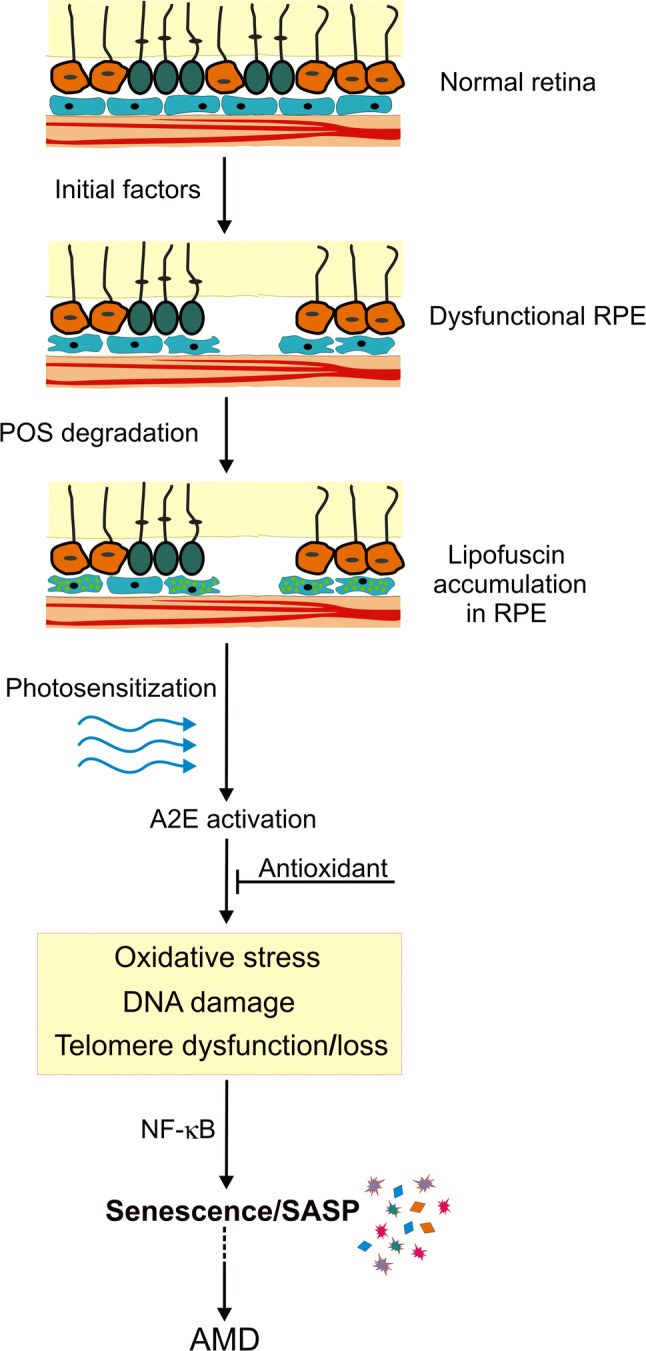
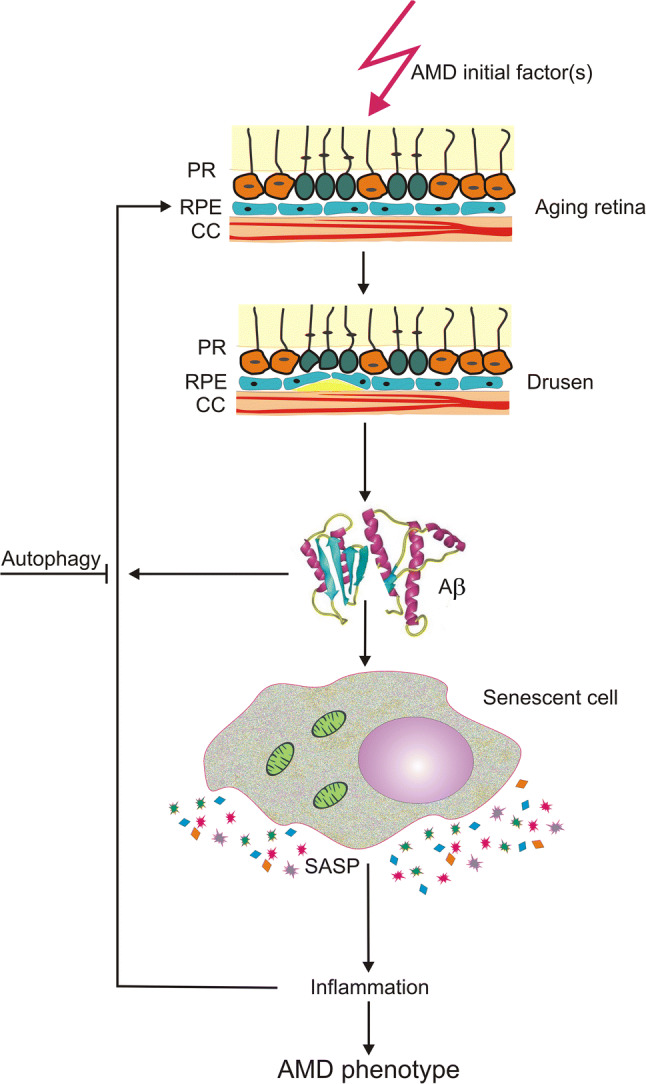
Age-related macular degeneration (AMD) is a complex eye disease underlined by the death of photoreceptors and degeneration of retinal pigment epithelium (RPE) and choriocapillaris (CC). The mechanism(s) responsible for massive and progressive retinal degeneration is not completely known. Senescence, a state of permanent inhibition of cell growth, may be induced by many factors important for AMD pathogenesis and results in senescence-associated secretory phenotype (SASP) that releases growth factors, cytokines, chemokines, proteases and other molecules inducing inflammation and other AMD-related effects. These effects can be induced in the affected cell and neighboring cells, leading to progression of AMD phenotype. Senescent cells also release reactive oxygen species that increase SASP propagation. Many other pathways of senescence-related AMD pathogenesis, including autophagy, the cGAS-STING signaling, degeneration of CC by membrane attack complex, can be considered. A2E, a fluorophore present in lipofuscin, amyloid-beta peptide and humanin, a mitochondria-derived peptide, may link AMD with senescence. Further studies on senescence in AMD pathogenesis to check the possibility of opening a perspective of the use of drugs killing senescent cells (senolytics) and terminating SASP bystander effects (senostatics) might be beneficial for AMD that at present is an incurable disease.
Keywords: A2E; Age-related macular degeneration (AMD); Amyloid-beta; DNA damage; Inflammaging; Oxidative stress; Senescence; Stress-induced premature senescence.
Conflict of interest statement
The author does not declare any conflict of interest associated with this paper.
Figures
References
-
- Hogan MJ. Role of the retinal pigment epithelium in macular disease. Trans Am Acad Ophthalmol Otolaryngol. 1972;76(1):64–80. - PubMed
Publication types
MeSH terms
Substances
LinkOut - more resources
Full Text Sources
Other Literature Sources
Medical
Research Materials
