


Changes in microarchitecture of atherosclerotic calcification assessed by 18F-NaF PET and CT after a progressive exercise regimen in hyperlipidemic mice
- PMID: 31897996
- PMCID: PMC7329622
- DOI: 10.1007/s12350-019-02004-3
Changes in microarchitecture of atherosclerotic calcification assessed by 18F-NaF PET and CT after a progressive exercise regimen in hyperlipidemic mice
Abstract
Background: Despite the association of physical activity with improved cardiovascular outcomes and the association of high coronary artery calcification (CAC) scores with poor prognosis, elite endurance athletes have increased CAC. Yet, they nevertheless have better cardiovascular survival. We hypothesized that exercise may transform vascular calcium deposits to a more stable morphology.
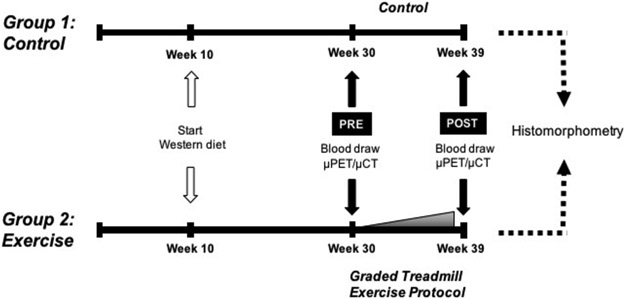
Methods: To test this, hyperlipidemic mice (Apoe-/-) with baseline aortic calcification were separated into 2 groups (n = 9/group) with control mice allowed to move ad-lib while the exercise group underwent a progressive treadmill regimen for 9 weeks. All mice underwent blood collections and in vivo 18F-NaF μPET/μCT imaging both at the start and end of the exercise regimen. At euthanasia, aortic root specimens were obtained for histomorphometry.
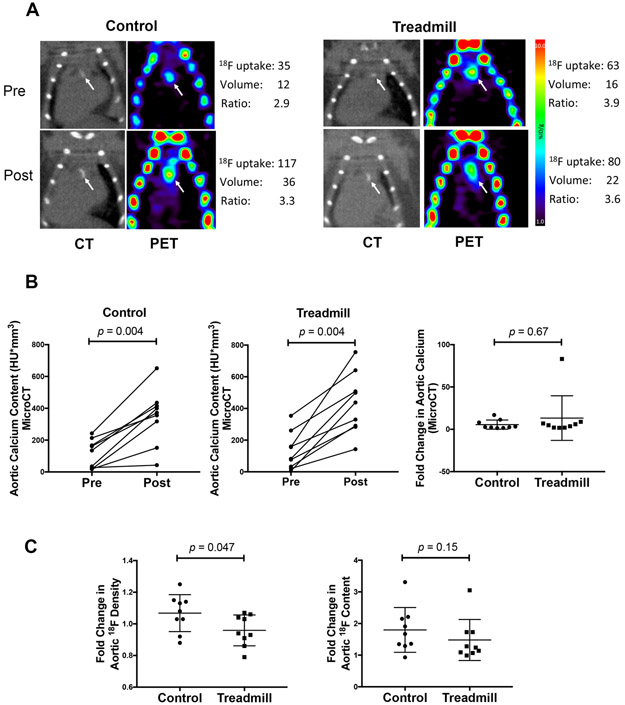
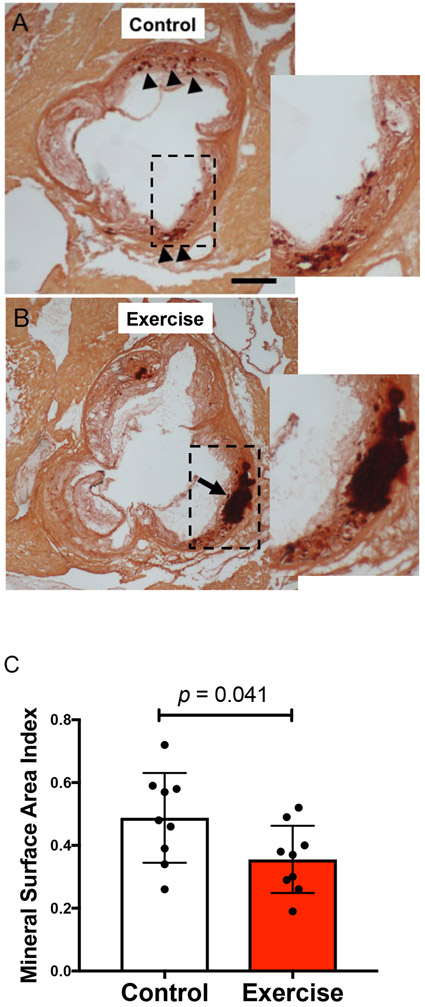
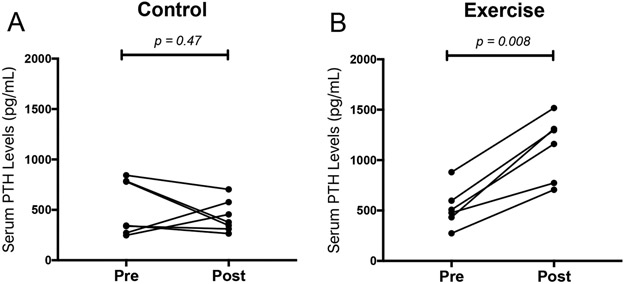
Results: Results showed that, while aortic calcification progressed similarly in both groups based on µCT, the fold change in 18F-NaF density was significantly less in the exercise group. Histomorphometric analysis of the aortic root calcium deposits showed that the exercised mice had a lower mineral surface area index than the control group. The exercise regimen also raised serum PTH levels twofold.
Conclusion: These findings suggest that weeks-long progressive exercise alters the microarchitecture of atherosclerotic calcium deposits by reducing mineral surface growth, potentially favoring plaque stability.
Keywords: 18F-NaF PET/CT imaging; PTH; Treadmill exercise; aortic; calcification; hyperlipidemia; microarchitecture.
© 2020. American Society of Nuclear Cardiology.
Figures
References
-
- Tanasescu M, Leitzmann MF, Rimm EB, Willett WC, Stampfer MJ, Hu FB, Exercise type and intensity in relation to coronary heart disease in men, JAMA. 288 (2002) 1994–2000. - PubMed
-
- Gepner AD, Young R, Delaney JA, Tattersall MC, Blaha MJ, Post WS, Gottesman RF, Kronmal R, Budoff MJ, Burke GL, Folsom AR, Liu K, Kaufman J, Stein JH, Comparison of coronary artery calcium presence, carotid plaque presence, and carotid intima-media thickness for cardiovascular disease prediction in the Multi-Ethnic Study of Atherosclerosis, Circ Cardiovasc Imaging. 8 (2015). 10.1161/CIRCIMAGING.114.002262. - DOI - PMC - PubMed
Publication types
MeSH terms
Substances
Grants and funding
LinkOut - more resources
Full Text Sources
Miscellaneous
