


ICU-acquired weakness, diaphragm dysfunction and long-term outcomes of critically ill patients
- PMID: 31900667
- PMCID: PMC6942110
- DOI: 10.1186/s13613-019-0618-4
ICU-acquired weakness, diaphragm dysfunction and long-term outcomes of critically ill patients
Abstract
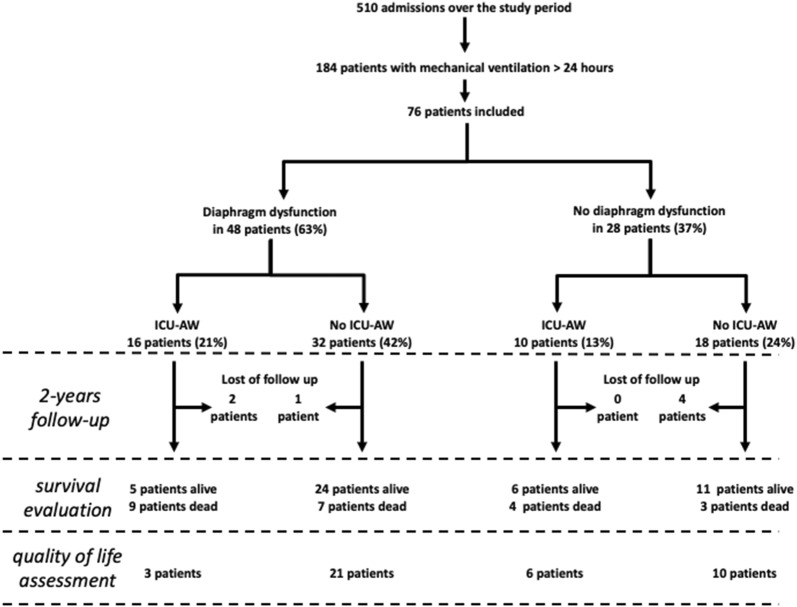
Background: Intensive care unit (ICU)-acquired weakness and diaphragm dysfunction are frequent conditions, both associated with poor prognosis in critically ill patients. While it is well established that ICU-acquired weakness severely impairs long-term prognosis, the association of diaphragm dysfunction with this outcome has never been reported. This study investigated whether diaphragm dysfunction is associated with negative long-term outcomes and whether the coexistence of diaphragm dysfunction and ICU-acquired weakness has a particular association with 2-year survival and health-related quality of life (HRQOL).
Methods: This study is an ancillary study derived from an observational cohort study. Patients under mechanical ventilation were enrolled at the time of their first spontaneous breathing trial. Diaphragm dysfunction was defined by tracheal pressure generated by phrenic nerve stimulation < 11 cmH2O and ICU-acquired weakness was defined by Medical Research Council (MRC) score < 48. HRQOL was evaluated with the SF-36 questionnaire.
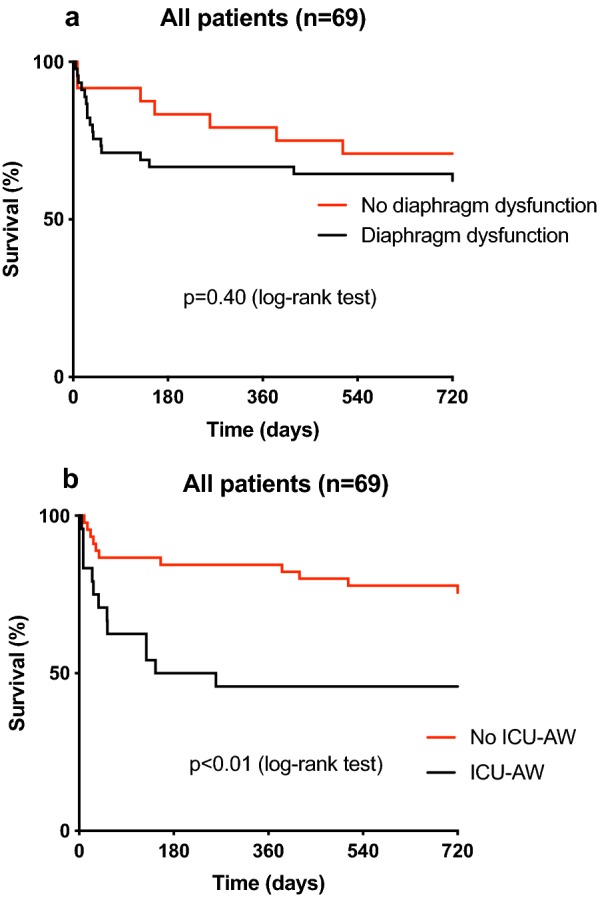
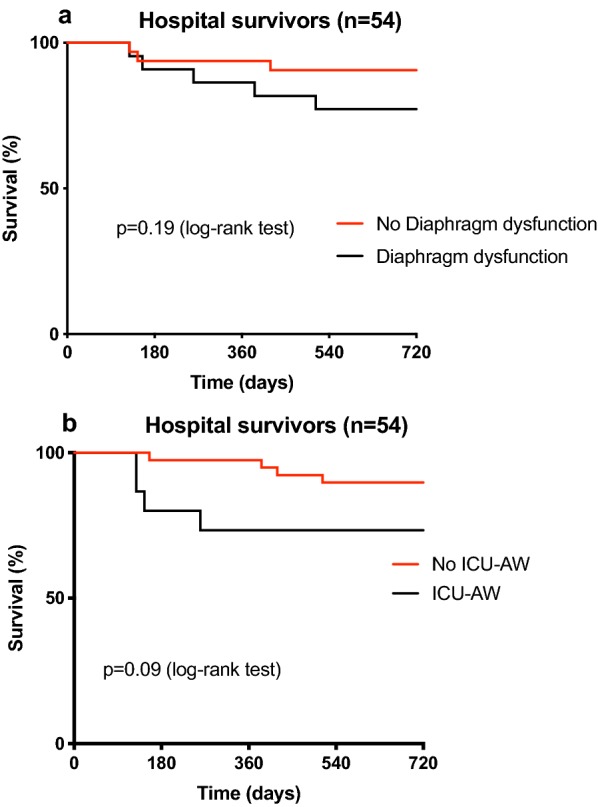
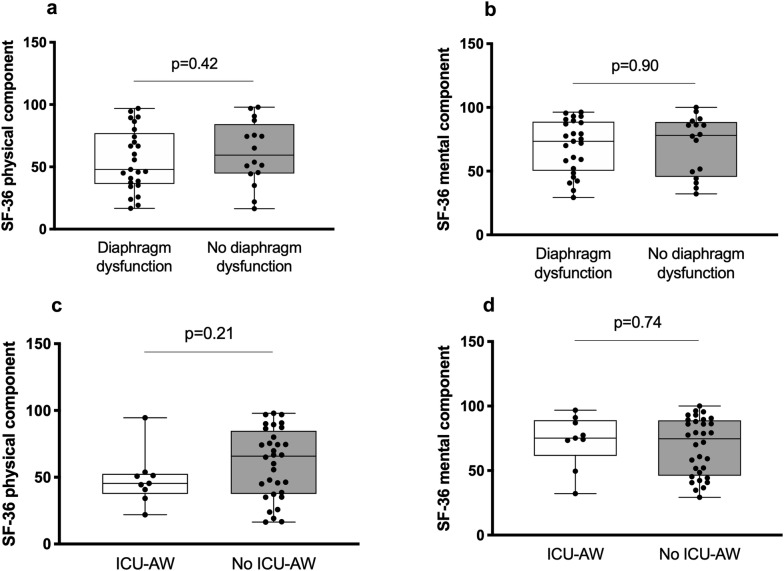
Results: Sixty-nine of the 76 patients enrolled in the original study were included in the survival analysis and 40 were interviewed. Overall 2-year survival was 67% (46/69): 64% (29/45) in patients with diaphragm dysfunction, 71% (17/24) in patients without diaphragm dysfunction, 46% (11/24) in patients with ICU-acquired weakness and 76% (34/45) in patients without ICU-acquired weakness. Patients with concomitant diaphragm dysfunction and ICU-acquired weakness had a poorer outcome with a 2-year survival rate of 36% (5/14) compared to patients without diaphragm function and ICU-acquired weakness [79% (11/14) (p < 0.01)]. Health-related quality of life was not influenced by the presence of ICU-acquired weakness, diaphragm dysfunction or their coexistence.
Conclusions: ICU-acquired weakness but not diaphragm dysfunction was associated with a poor 2-year survival of critically ill patients.
Keywords: Diaphragm dysfunction; Limb muscle weakness; Mortality; Quality of life; Survival.
Conflict of interest statement
AD reports personal fees and non-financial support from Medtronic; grants, personal fees and non-financial support from Philips; personal fees from Baxter; personal fees from Hamilton; grants and non-financial support from Fisher & Paykel; grants from the French Ministry of Health. MD received personal fees from Lungpacer Inc. BPD received personal fees from Grifols, Boehringer Ingelheim and Roche, and has signed clinical research contracts with Sanofi, Roche and Boehringer Ingelheim. Thomas Similowski has received personal fees from Lungpacer Inc. and is a member of the board of a research association that has received, over the past ten years, unrestricted research grants from Maquet, Hamilton, Covidien, and Philips. He is the head of a research unit (UMRS 1158) that has signed research contracts with Air Liquide Medical Systems, France; he is listed as inventor or co-inventor on several patents, granted or pending, describing a brain–ventilator interface. LB’s Research Laboratory received research grants from Covidien, General Electric, Fisher Paykel, Maquet (with St Michael’s Hospital) and Philips. The other authors have no conflict of interest to disclose.
Figures
References
-
- Hermans G, Van Mechelen H, Clerckx B, Vanhullebusch T, Mesotten D, Wilmer A, et al. Acute outcomes and 1-year mortality of intensive care unit-acquired weakness. A cohort study and propensity-matched analysis. Am J Respir Crit Care Med. 2014;190:410–420. doi: 10.1164/rccm.201312-2257OC. - DOI - PubMed
LinkOut - more resources
Full Text Sources
