. 2020 Jan 8;27(1):129-139.e4.
doi: 10.1016/j.chom.2019.11.012. Epub 2019 Dec 31.

The Salmonella Secreted Effector SarA/SteE Mimics Cytokine Receptor Signaling to Activate STAT3

Affiliations

The Salmonella Secreted Effector SarA/SteE Mimics Cytokine Receptor Signaling to Activate STAT3

Kyle D Gibbs et al. Cell Host Microbe. .

Abstract

Bacteria masterfully co-opt and subvert host signal transduction. As a paradigmatic example, Salmonella uses two type-3 secretion systems to inject effector proteins that facilitate Salmonella entry, establishment of an intracellular niche, and modulation of immune responses. We previously demonstrated that the Salmonella anti-inflammatory response activator SarA (Stm2585, GogC, PagJ, SteE) activates the host transcription factor STAT3 to drive expression of immunomodulatory STAT3-targets. Here, we demonstrate-by sequence, function, and biochemical measurement-that SarA mimics the cytoplasmic domain of glycoprotein 130 (gp130, IL6ST). SarA is phosphorylated at a YxxQ motif, facilitating binding to STAT3 with greater affinity than gp130. Departing from canonical gp130 signaling, SarA function is JAK-independent but requires GSK-3, a key regulator of metabolism and development. Our results reveal that SarA undergoes host phosphorylation to recruit a STAT3-activating complex, circumventing cytokine receptor activation. Effector mimicry of gp130 suggests GSK-3 can regulate normal cytokine signaling, potentially enabling metabolic and immune crosstalk.

Keywords: GSK-3; JAK-STAT; PRM; SH2; SOCS-3; SPI-2; YxxQ; cytokine receptor; gp130; parallel reaction monitoring.


Conflict of interest statement

Declaration of interests: The authors declare no competing interests.

Figures

Figure 1.
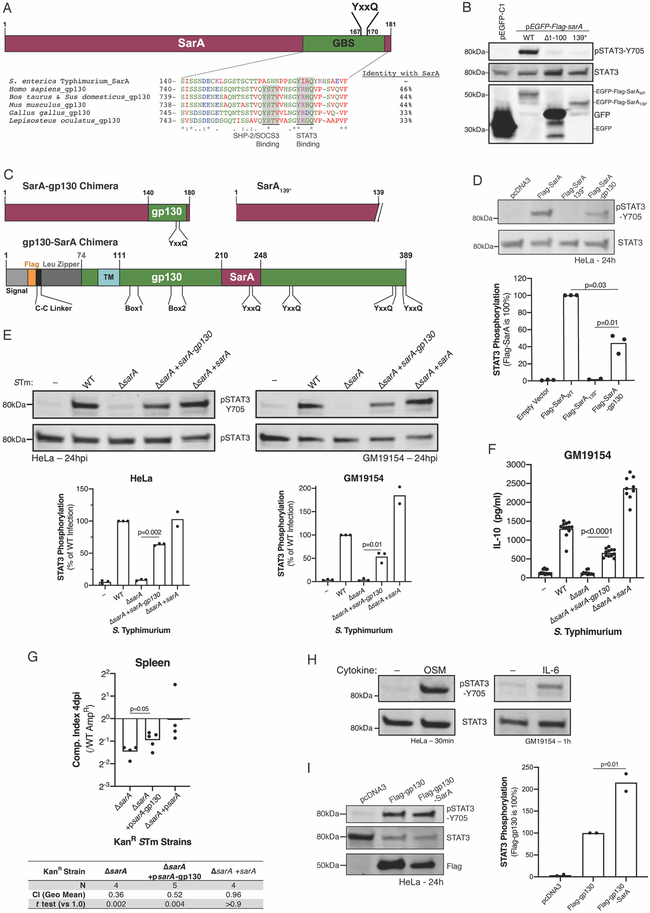
Figure 1.. SarA functionally mimics part of the gp130 intracellular domain.
(A) The gp130 binding-of-STAT3 (GBS) sequence from S. Typhimurium SarA (amino acids 140-178) aligns with a conserved sequence in gp130 orthologues from human, cow, pig, mouse, chicken, and spotted gar fish. Amino acids are colored by type, and percent identity compared to SarA is listed for each ortholog. (B) SarA lacking the GBS is expressed but fails to drive STAT3-Y705 phosphorylation. HeLas were transfected with 5 μg pEGFP-Flag-sarA WT, Δ1-100 (deletion of SarA’s first 100 amino acids), or 139* (C-terminal truncation removing the GBS) 24 hrs before lysis and immunoblotting. (C) Domain diagrams of SarA-gp130 chimeras. (D) SarA-gp130 chimera drives STAT3 phosphorylation. STAT3 phosphorylation was measured 24 hrs after transfection in three experiments. (E, F) SarA-gp130 chimera under the endogenous promoter complements ΔsarA S Typhimurium induction of (E) STAT3 phosphorylation and (F) IL-10 in HeLa and LCL GM19154 by 24 hpi. No differences were noted in invasion or pyroptosis (Figure S1). IL-10 was measured by ELISA from three experiments. (G) SarA-gp130 chimera partially rescues ΔsarA virulence. Competitive index between AmpR wild type (WT) and KanR strains was measured four days after an intra-peritoneal injection of 1,000 CFUs into C57BL/6J mice. From two experiments. One-sample t tests against zero (no change from 1:1 inoculum) on log10-transformed data. (H) Gp130 ligands drive STAT3 phosphorylation in HeLa and LCL GM19154. Cells were treated with OSM (10 ng/mL) or IL-6 (50 ng/mL) for indicated time. (I) Dimeric gp130-SarA chimera induces more STAT3 phosphorylation than dimeric gp130. HeLa cells were transfected with the indicated constructs and STAT3 phosphorylation was assessed 24 hrs later. Unless noted, all p values are from Welch’s t test.
Figure 2.
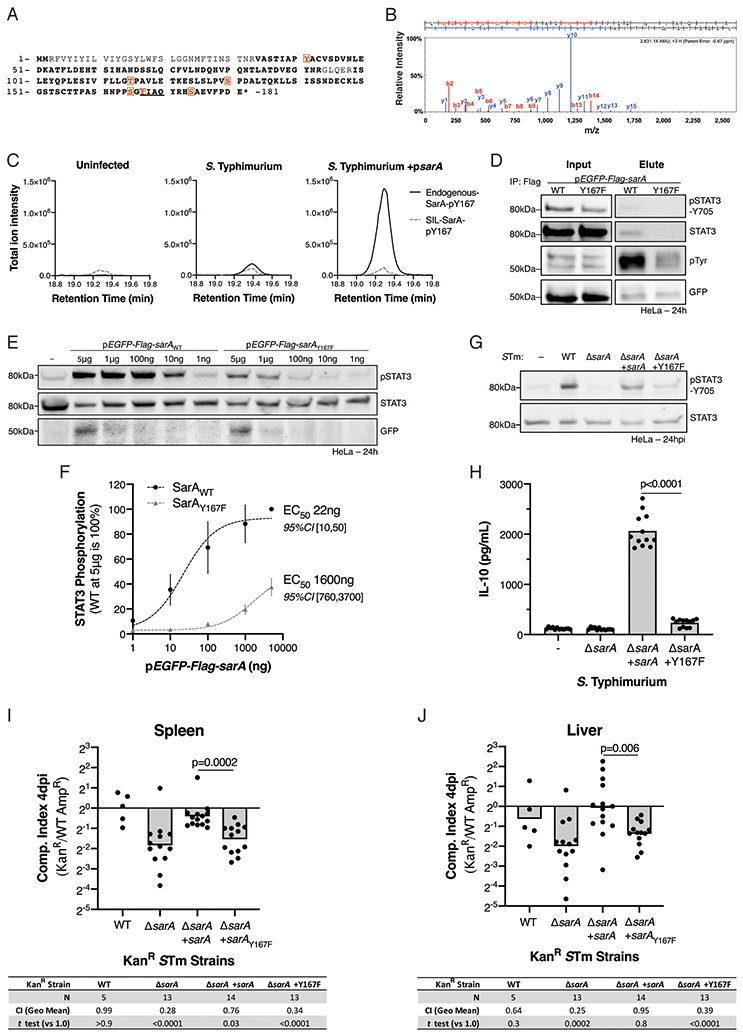
Figure 2.. Host phosphorylation of SarA-Y167 is required for STAT3 binding and activation.
(A) LC-MS/MS reveals SarA is host phosphorylated in HeLa cells. Orange boxes indicate phosphorylation sites (100% localization probability) and bold represents MS coverage. Confidence of phospho-site localization was determined with the Ascore algorithm. (B) MS/MS spectrum of pY167-containing peptide. Only matching y+ and b+ ions are shown. (C) A targeted MS approach, which uses a stable isotope-labeled internal standard (SIL-SarA), detects endogenous pY167 phosphopeptide in HeLas infected with either S. Typhimurium WT or ΔsarA complemented with sarA on a low-copy plasmid. Total ion chromatograms of matching product ions are shown for the internal standard (dashed grey) and endogenous (solid black) pY167 phosphopeptides. Individual ion traces, including phosphosite-localizing ions, are shown in Figure S2. (D) SarA-Y167 phosphorylation is necessary for STAT3 binding. HeLa cell were lysed 24 hrs after transfection with pEGFP-Flag-sarA, then precipitated with anti-Flag M2 beads. (E,F) SarAY167F mutant induces less STAT3 phosphorylation. STAT3 phosphorylation quantified relative to 5 μg SarAWT transfection in four replicates across four experiments. EC50 calculated from dose-response curve assuming a Hill coefficient of 1. (G,H) SarAY167F fails to complement S. Typhimurium (STm) ΔsarA 24 hpi. LCL GM19154 supernatant IL-10 was measured 24 hpi in twelve replicates across three experiments. (I,J) SarAY167F does not restore virulence in ΔsarA STm at 4 days after an intraperitoneal injection of 1,000 CFUs into C57BL/6J mice. Five experiments. One outlier in ΔsarA +sarAy167F (CI = 39 in spleen and 98 in liver) was identified using Grubbs’ (α = 0.0001) and excluded. P values in tables from one-sample t test against 0 (no change from 1: 1 inoculum) using log10-transformed ratios. Displayed p values are from Welch’s t test.
Figure 3.
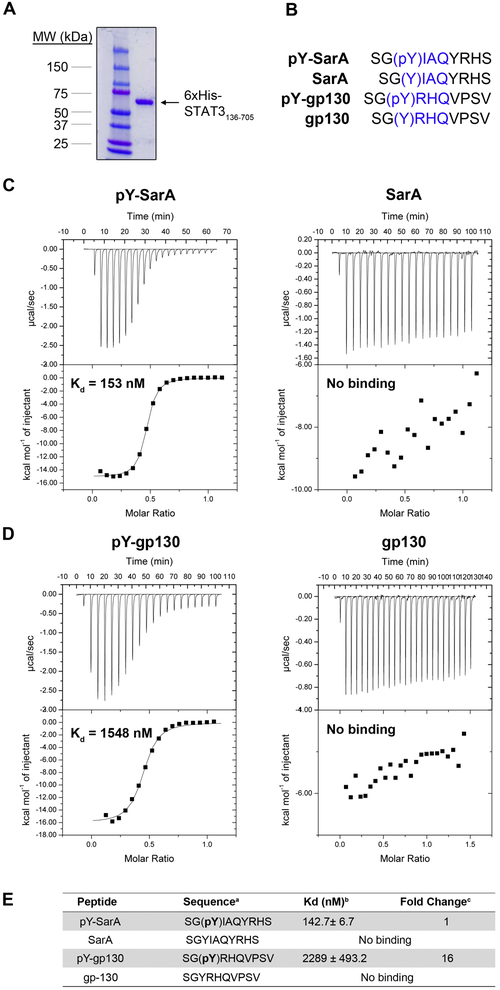
Figure 3.. Quantification of binding affinities of STAT3 to YxxQ containing peptides demonstrates STAT3 binds SarA with greater affinity than gp130.
(A) Purified 6xHis-STAT3136-705. (B) Sequences of the SarA and gp130 peptides used for ITC measurements. YxxQ motifs are highlighted in blue. (C) Y167-phosphorylated SarA peptide binds STAT3 with high affinity. (D) gp130 peptide binds STAT3 in a manner dependent on phosphorylation of Y767. (E) Mean Kd measurements of SarA, pSarA, gp130, and pgp130 binding to STAT3 ± SEM. Fold change represents the ratio of the Kd of the pY-gp130 peptide bound to STAT3 to the Kd of pY-SarA peptide bound to STAT3. Each ITC experiment was repeated 3-5 times with a representative titration curve shown. Thermograms and integrated heats are shown in the top and bottom of each panel, respectively. Solid lines represent the best fit to the corresponding data points using a non-linear least squares fit with the one-set-of-sites model.
Figure 4.
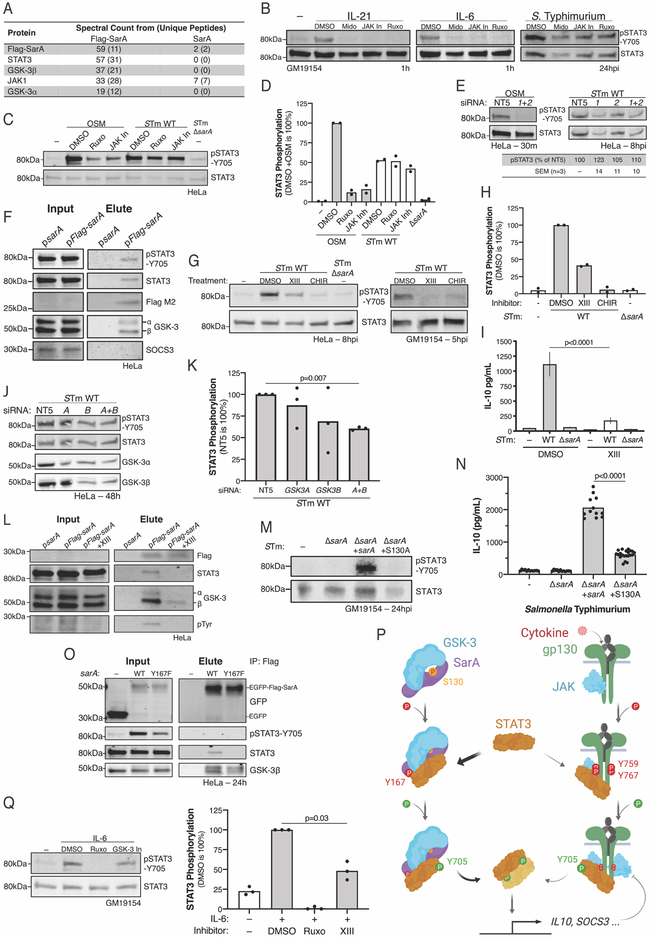
Figure 4.. SarA interaction with GSK-3, but not JAK1, is required for STAT3 activation.
(A) IP-MS identified SarA-STAT3 signaling complex components. Peptide spectral counts from the indicated number of unique peptides. (B-D) JAK inhibitors block gp130-ligands’ induction of STAT3 phosphorylation without affecting SarA-mediated STAT3 phosphorylation in LCL (B) and in HeLa (C, D). LCL GM19154 was pre-treated for 1 hr with 50 μM Midostaurin (Mido), 50 μM JAK Inhibitor I (JAK In), or 50 μM Ruxolitinib (Ruxo) before 1 hr stimulation with IL-6 (50ng/ml) or IL-21 (50ng/ml) or infection with S. Typhimurium (STm). HeLa cells were identically pre-treated before 30 min stimulation with OSM (10ng/mL) or infection with STm. (E) RNAi confirms STAT3 phosphorylation by SarA is JAK independent, unlike OSMR signaling. HeLas were pre-treated with JAK1 and/or JAK2 siRNA for 48 hrs before infection with STm or stimulation with OSM (10ng/mL) for indicated time. qPCR confirmed knockdown exceeded 3-fold each time. (F) Co-immunoprecipitation (coIP) confirms GSK-3α and β, but not SOCS3, interact with SarA. HeLa cells were transfected with codon-optimized pcDNA3.1-sarA or pcDNA3.1-Flag-sarA. (G-I) GSK-3 inhibition demonstrates that GSK-3 enzymatic activity is necessary for SarA-induced STAT3 phosphorylation in HeLa and LCL GM19154. HeLas were pre-treated with 15 μM GSK-3 Inhibitor XIII (XIII) or 15 μM CHIR-98014 (CHIR) for 1 hr before STm infection (MOI 5) and harvested 8 hpi. LCLs were pre-treated for 1 hr with 12 μM GSK-3 Inhibitor XIII or 500 nM CHIR-98014 before STm infection (MOI 30) and lysed 5 hpi. IL-10 in LCL supernatant (I) is eight replicates across three experiments. P value from Sidak’s post-hoc comparison of WT infection after two-way ANOVA (STm genotype, treatment, and interaction term all significant with p<0.0001). Bars are mean ±SEM. (J, K) Knockdown of GSK3A and GSK3B confirms partial dependence of SarA on GSK-3. HeLa were pre-treated identically to D. (L) GSK-3 inhibitor blocks SarA interaction with STAT3 and GSK-3, which prevent STAT3 and SarA phosphorylation. coIP performed like E with 5 μM GSK-3 Inhibitor XIII added 1 h after transfection. (M, N) S130A mutation reduces complementation during STm infection. P value from Welch’s t test. (O) SarA Y167F still associates with GSK-3. Anti-Flag M2 coIP and blotting performed same as figure 2D. (P) Model of the SarA-GSK-3 complex activating STAT3 compared to JAK1-gp130 activation of STAT3. (Q) GSK-3 inhibition reduces IL-6-induced STAT3 phosphorylation in LCLs. GM19154 was pre-treated with 15 μM GSK-3 inhibitor XIII or 50 μM Ruxolitinib for 1 hr before stimulation with IL-6 (100ng/mL) for 1 hr. Blot is representative of three experiments which are quantified relative to uninhibited IL-6 treatment. P value from Welch’s t test on log transformed ratio.

References

    1. Alcami A (2003). Viral mimicry of cytokines, chemokines and their receptors. Nature reviews Immunology 3, 36–50. - PubMed
    1. Beausoleil SA, Villen J, Gerber SA, Rush J, and Gygi SP (2006). A probability-based approach for high-throughput protein phosphorylation analysis and site localization. Nature biotechnology 24, 1285–1292. - PubMed
    1. Beurel E, and Jope RS (2008). Differential regulation of STAT family members by glycogen synthase kinase-3. J Biol Chem 283, 21934–21944. - PMC - PubMed
    1. Cole A, Frame S, and Cohen P (2004). Further evidence that the tyrosine phosphorylation of glycogen synthase kinase-3 (GSK3) in mammalian cells is an autophosphorylation event. The Biochemical journal 377, 249–255. - PMC - PubMed
    1. Collazo CM, and Galan JE (1996). Requirement for exported proteins in secretion through the invasion-associated type III system of Salmonella typhimurium. Infect Immun 64, 3524–3531. - PMC - PubMed

Publication types

MeSH terms