Review
. 2019 Dec 29;9(1):89.
doi: 10.3390/jcm9010089.

Radiolabeled PET/MRI Nanoparticles for Tumor Imaging

Affiliations
Review

Radiolabeled PET/MRI Nanoparticles for Tumor Imaging

Ernesto Forte et al. J Clin Med. .

Abstract

The development of integrated positron emission tomography (PET)/ magnetic resonance imaging (MRI) scanners opened a new scenario for cancer diagnosis, treatment, and follow-up. Multimodal imaging combines functional and morphological information from different modalities, which, singularly, cannot provide a comprehensive pathophysiological overview. Molecular imaging exploits multimodal imaging in order to obtain information at a biological and cellular level; in this way, it is possible to track biological pathways and discover many typical tumoral features. In this context, nanoparticle-based contrast agents (CAs) can improve probe biocompatibility and biodistribution, prolonging blood half-life to achieve specific target accumulation and non-toxicity. In addition, CAs can be simultaneously delivered with drugs or, in general, therapeutic agents gathering a dual diagnostic and therapeutic effect in order to perform cancer diagnosis and treatment simultaneous. The way for personalized medicine is not so far. Herein, we report principles, characteristics, applications, and concerns of nanoparticle (NP)-based PET/MRI CAs.

Keywords: 3D reconstruction; hybrid imaging; in vivo imaging; multimodal imaging; nanoparticles; positron emission tomography/magnetic resonance imaging (PET/MRI), nanotechnology.


Conflict of interest statement

The authors declare no conflict of interest.

Figures
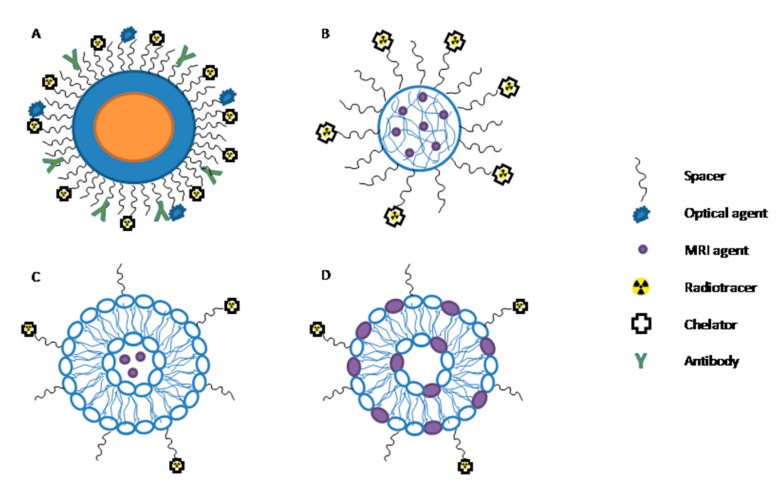
Figure 1
Figure 1
Multimodal nanoparticles. (A) Multimodal nanoparticle composed by a core (representing the magnetic resonance imaging (MRI) component) and a shell functionalized with an antibody. The positron emission tomography (PET) radiotracer is chelated and bound to the spacer. (B) A polymeric nanoparticle entrapping paramagnetic moieties is represented, where the PET radiotracer is chelated and bound to the spacer. (C) Liposomal formulation entraps paramagnetic moieties in the aqueous inner core, while the PET component is covalently linked to the spacer. (D) Liposomal formulation with paramagnetic ion inserted in the bilayer.
Figure 2
Figure 2
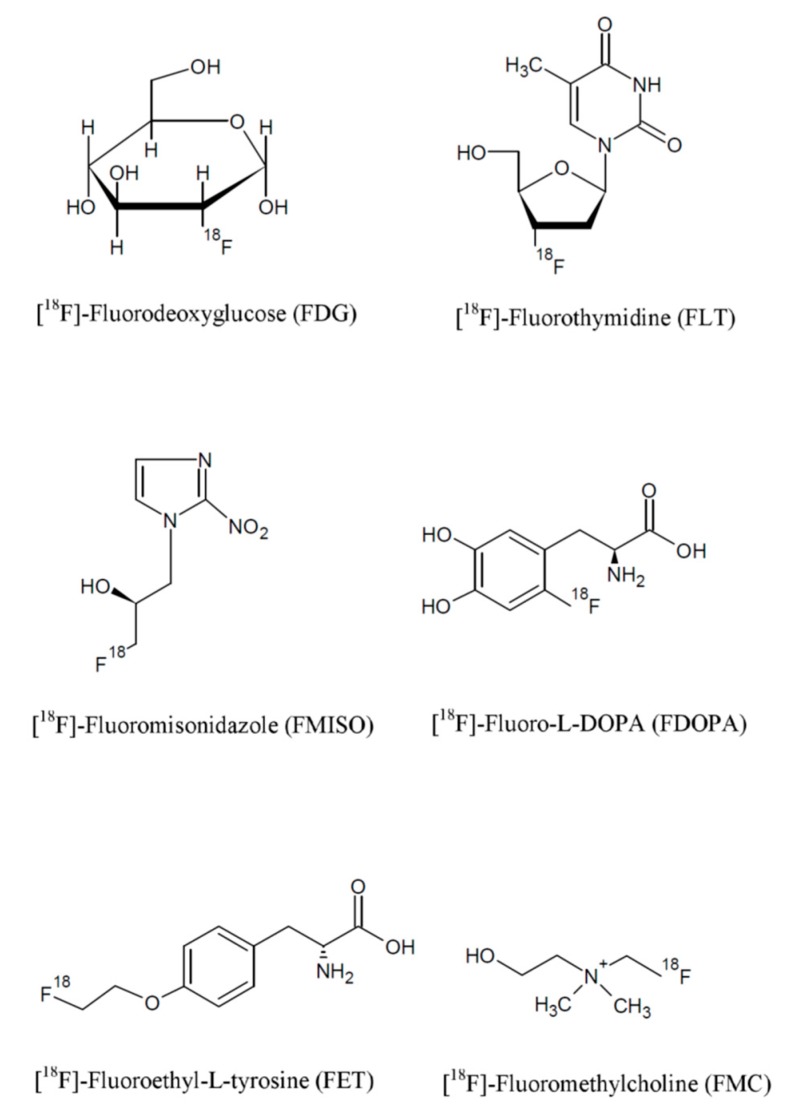
Chemical structure of fluorine-based radiopharmaceuticals.
Figure 3
Figure 3
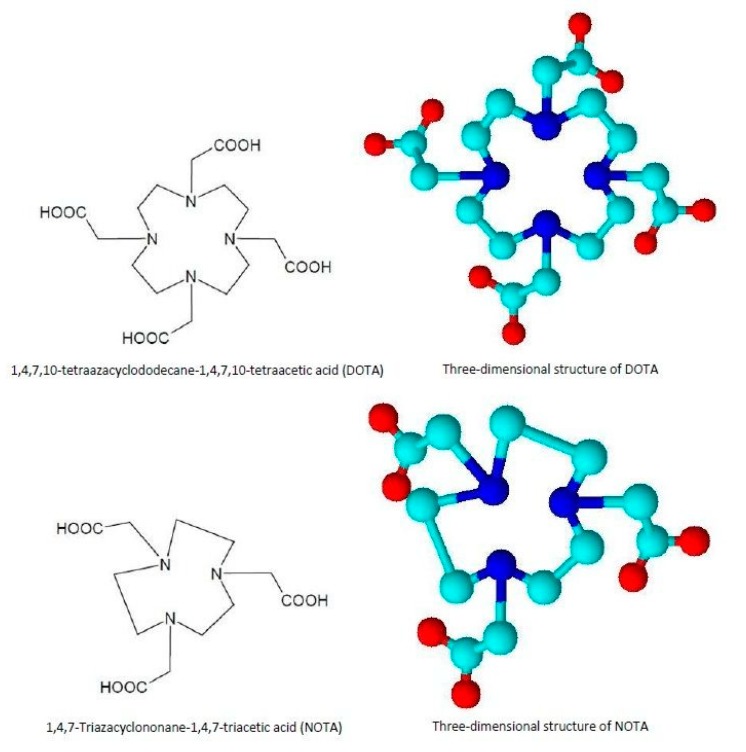
DOTA and NOTA chelators: chemical and three-dimensional structures. 1,4,7-triazacyclononane-N,N’,N’’-triacetic acid (NOTA) and 1,4,7,10-Tetraazacyclododecane-1,4,7,10-tetraacetic acid (DOTA).
Figure 4
Figure 4
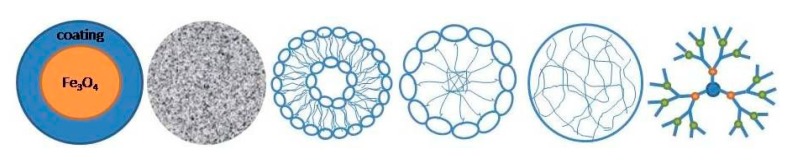
Typical nanocarriers: (from left) superparamagnetic iron-oxide nanoparticles, silica-based nanoparticles, liposomes, micelles, polymeric nanoparticles, and dendrimers.

References

    1. Orlacchio A., Ciarrapico A.M., Schillaci O., Chegai F., Tosti D., D’Alba F., Guazzaroni M., Simonetti G. PET-CT in oncological patients: Analysis of informal care costs in cost-benefit assessment. Radiol. Med. 2014;119:283–289. doi: 10.1007/s11547-013-0340-5. - DOI - PubMed
    1. Schillaci O., Scimeca M., Toschi N., Bonfiglio R., Urbano N., Bonanno E. Combining Diagnostic Imaging and Pathology for Improving Diagnosis and Prognosis of Cancer. Contrast Media Mol. Imaging. 2019 doi: 10.1155/2019/9429761. - DOI - PMC - PubMed
    1. Vaquero J.J., Kinahan P. Positron Emission Tomography: Current Challenges and Opportunities for Technological Advances in Clinical and Preclinical Imaging Systems. Annu. Rev. Biomed. Eng. 2015;17:385–414. doi: 10.1146/annurev-bioeng-071114-040723. - DOI - PMC - PubMed
    1. Liu H., Chen Y., Wu S., Song F.H., Zhang H., Tian M. Molecular imaging using PET and SPECT for identification of breast cancer subtypes. Nucl. Med. Commun. 2016;37:1116–1124. doi: 10.1097/MNM.0000000000000576. - DOI - PubMed
    1. Grueneisen J., Nagarajah J., Buchbender C., Hoffmann O., Schaarschmidt B.M., Poeppel T., Forsting M., Quick H., Umutlu L., Kinner S. Positron Emission Tomography/Magnetic Resonance Imaging for Local Tumor Staging in Patients With Primary Breast Cancer A Comparison With Positron Emission Tomography/Computed Tomography and Magnetic Resonance Imaging. Investig. Radiol. 2015;50:505–513. doi: 10.1097/RLI.0000000000000197. - DOI - PubMed

LinkOut - more resources