


Polyethylene Glycol-Chitosan Oligosaccharide-Coated Superparamagnetic Iron Oxide Nanoparticles: A Novel Drug Delivery System for Curcumin Diglutaric Acid
- PMID: 31906490
- PMCID: PMC7023009
- DOI: 10.3390/biom10010073
Polyethylene Glycol-Chitosan Oligosaccharide-Coated Superparamagnetic Iron Oxide Nanoparticles: A Novel Drug Delivery System for Curcumin Diglutaric Acid
Abstract
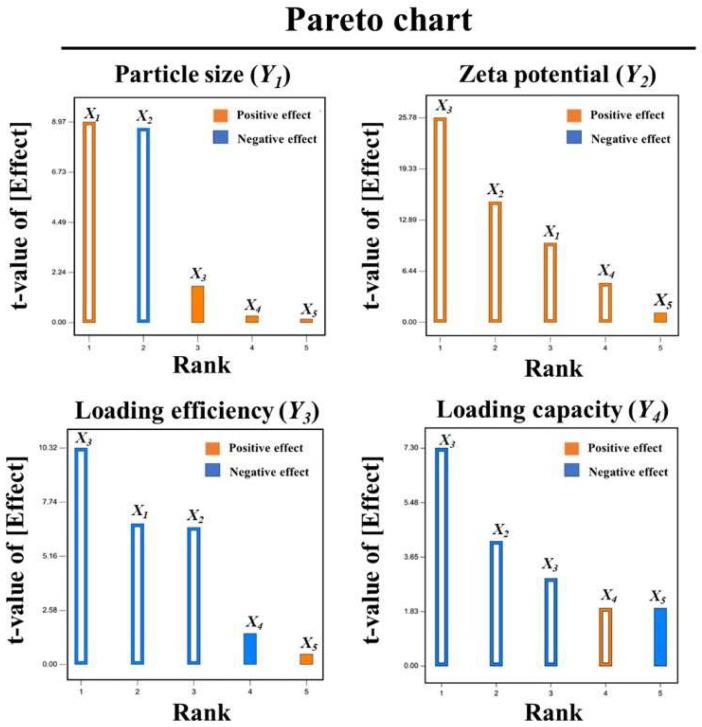
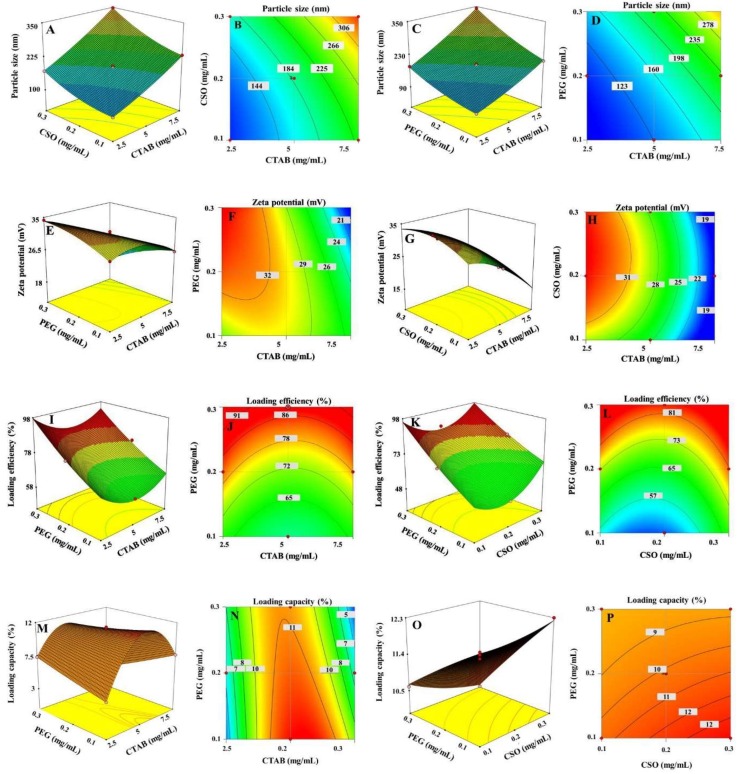
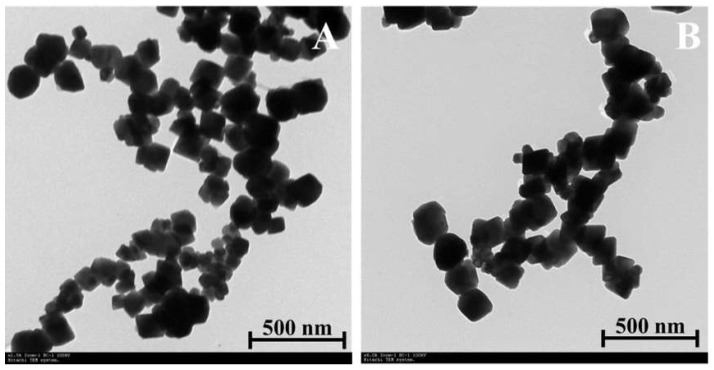
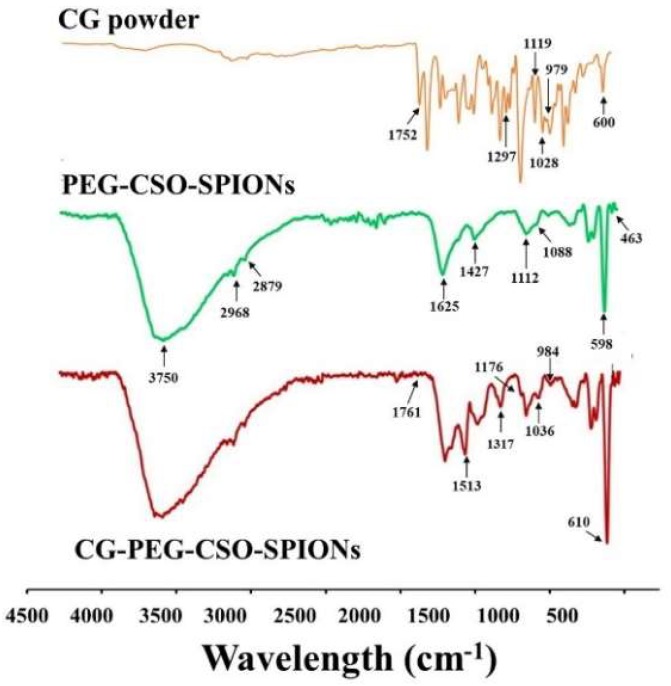
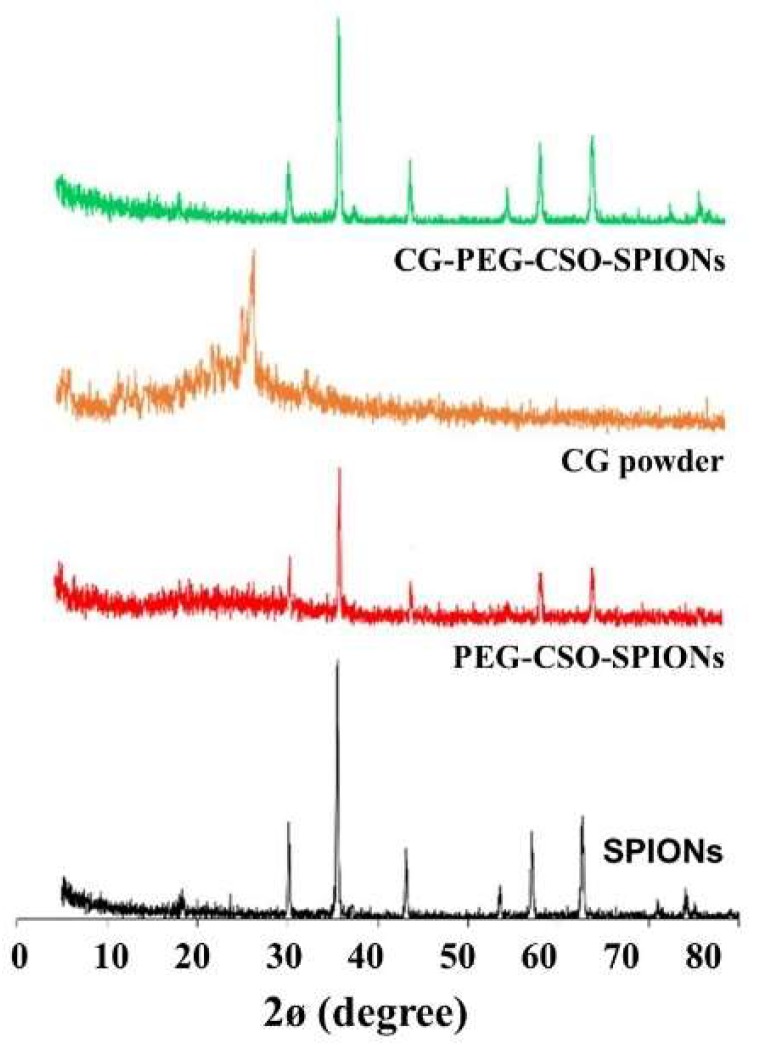
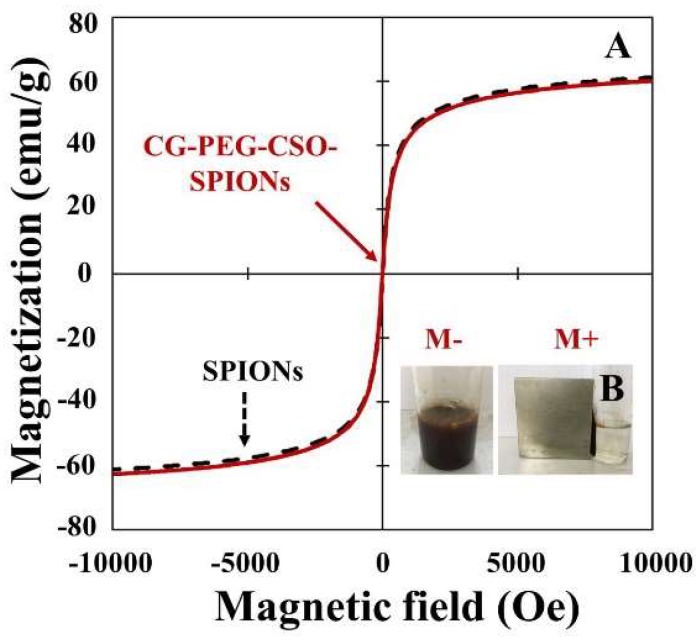
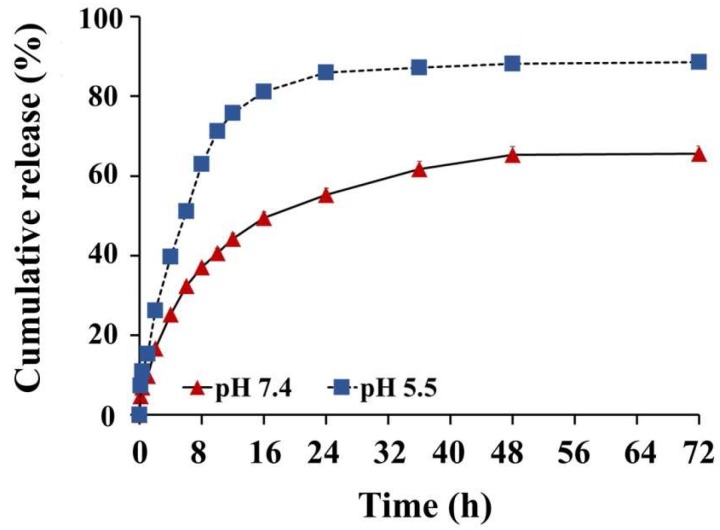
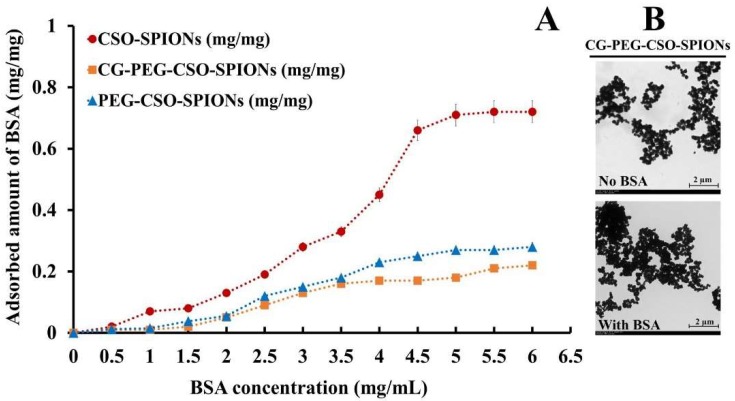
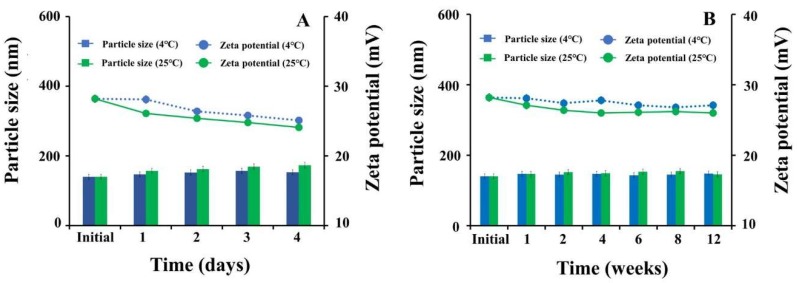
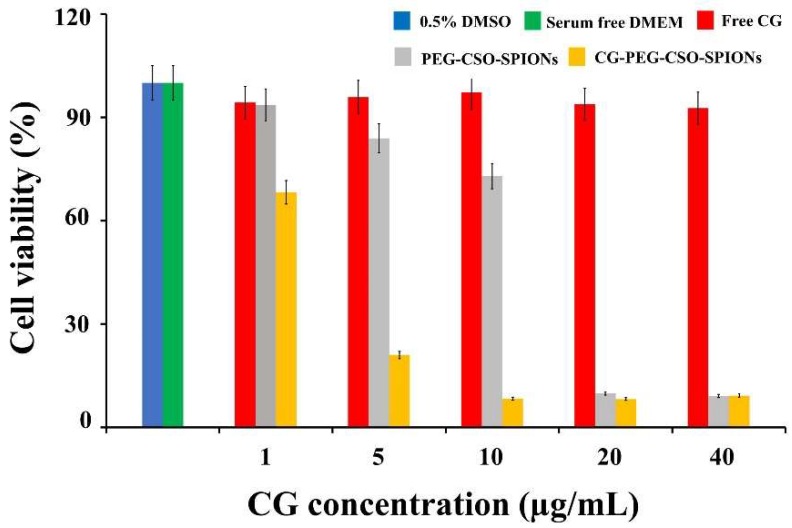
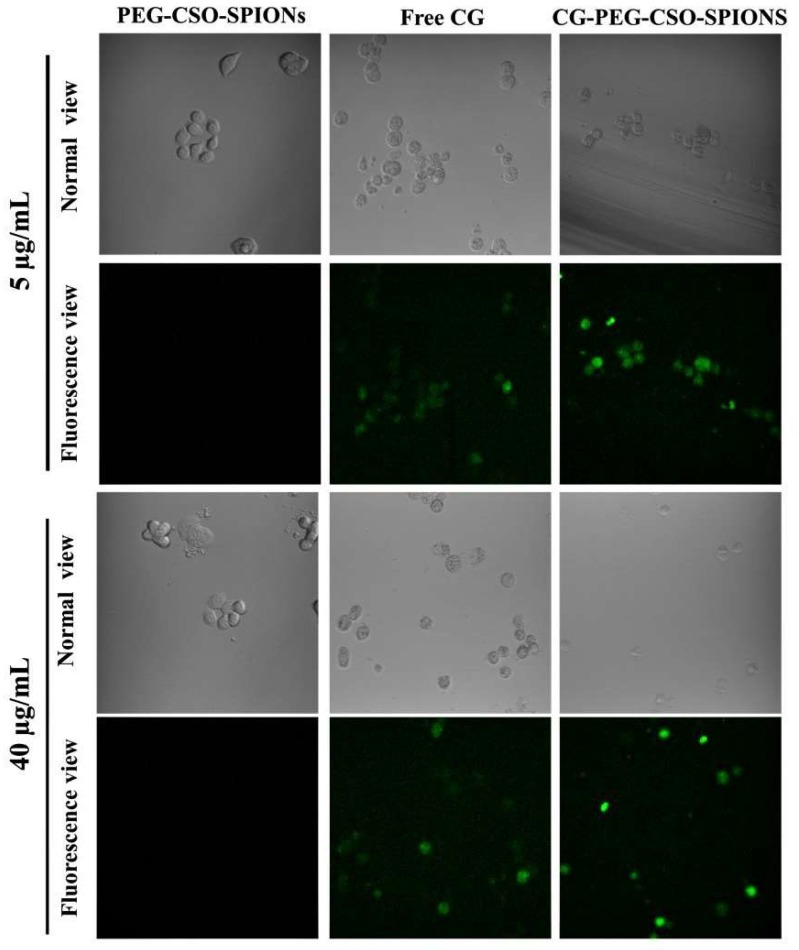
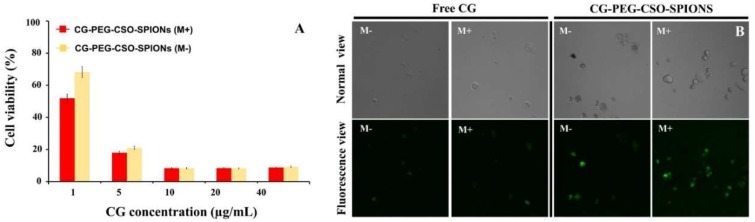
Curcumin diglutaric acid-loaded polyethylene glycol-chitosan oligosaccharide-coated superparamagnetic iron oxide nanoparticles (CG-PEG-CSO-SPIONs) were fabricated by co-precipitation and optimized using a Box-Behnken statistical design in order to achieve the minimum size, optimal zeta potential (≥ ±20 mV), and maximum loading efficiency and capacity. The results demonstrated that CG-PEG-CSO-SPIONs prepared under the optimal condition were almost spherical in shape with a smooth surface, a diameter of 130 nm, zeta potential of 30.6 mV, loading efficiency of 83.3%, and loading capacity of 8.3%. The vibrating sample magnetometer results of the optimized CG-PEG-CSO-SPIONs showed a superparamagnetic behavior. Fourier transform infrared spectroscopy and X-ray diffraction analyses indicated that the CG physically interacted with PEG-CSO-SPIONs. In addition, the CG-PEG-CSO-SPIONs could be stored dry for up to 12 weeks or in aqueous solution for up to 4 days at either 4 °C or 25 °C with no loss of stability. The CG-PEG-CSO-SPIONs exhibited a sustained release profile up to 72 h under simulated physiological (pH 7.4) and tumor extracellular (pH 5.5) environments. Furthermore, the CG-PEG-CSO-SPIONs showed little non-specific protein binding in the simulated physiological environment. The CG-PEG-CSO-SPIONs enhanced the cellular uptake and cytotoxicity of CG against human colorectal adenocarcinoma HT-29 cells compared to free CG, and more CG was delivered to the cells after applying an external magnetic field. The overall results suggest that PEG-CSO-SPIONs have potential to be used as a novel drug delivery system for CG.
Keywords: chitosan oligosaccharide; curcumin diglutaric acid; drug delivery systems; polyethylene glycol; superparamagnetic iron oxide nanoparticles.
Conflict of interest statement
The authors declare no conflict of interest.
Figures

References
-
- Miranda M.S., Rodrigues M.T., Domingues R.M.A., Costa R.R., Paz E., Rodríguez-Abreu C., Freitas P., Almeida B.G., Carvalho M.A., Gonçalves C., et al. Development of inhalable superparamagnetic iron oxide nanoparticles (SPIONs) in microparticulate system for antituberculosis drug delivery. Adv. Healthc. Mater. 2018;7:1800124. - PubMed
-
- Satari M., Haghighat N., Jouni F.J., Abodolmaleki P. Effects of synthesized superparamagnetic iron oxide nanoparticles and extremely low frequency. Multidiscip. Cancer Investig. 2018;2:13–21. doi: 10.30699/acadpub.mci.2.1.13. - DOI
Publication types
MeSH terms
Substances
Grants and funding
LinkOut - more resources
Full Text Sources
