


Implementation and impact of pediatric antimicrobial stewardship programs: a systematic scoping review
- PMID: 31911831
- PMCID: PMC6942341
- DOI: 10.1186/s13756-019-0659-3
Implementation and impact of pediatric antimicrobial stewardship programs: a systematic scoping review
Erratum in
-
Correction to: Implementation and impact of pediatric antimicrobial stewardship programs: a systematic scoping review.Antimicrob Resist Infect Control. 2020 May 7;9(1):59. doi: 10.1186/s13756-020-00720-x. Antimicrob Resist Infect Control. 2020. PMID: 32381059 Free PMC article.
Abstract
Background: Antibiotics are the most common medicines prescribed to children in hospitals and the community, with a high proportion of potentially inappropriate use. Antibiotic misuse increases the risk of toxicity, raises healthcare costs, and selection of resistance. The primary aim of this systematic review is to summarize the current state of evidence of the implementation and outcomes of pediatric antimicrobial stewardship programs (ASPs) globally.
Methods: MEDLINE, Embase and Cochrane Library databases were systematically searched to identify studies reporting on ASP in children aged 0-18 years and conducted in outpatient or in-hospital settings. Three investigators independently reviewed identified articles for inclusion and extracted relevant data.
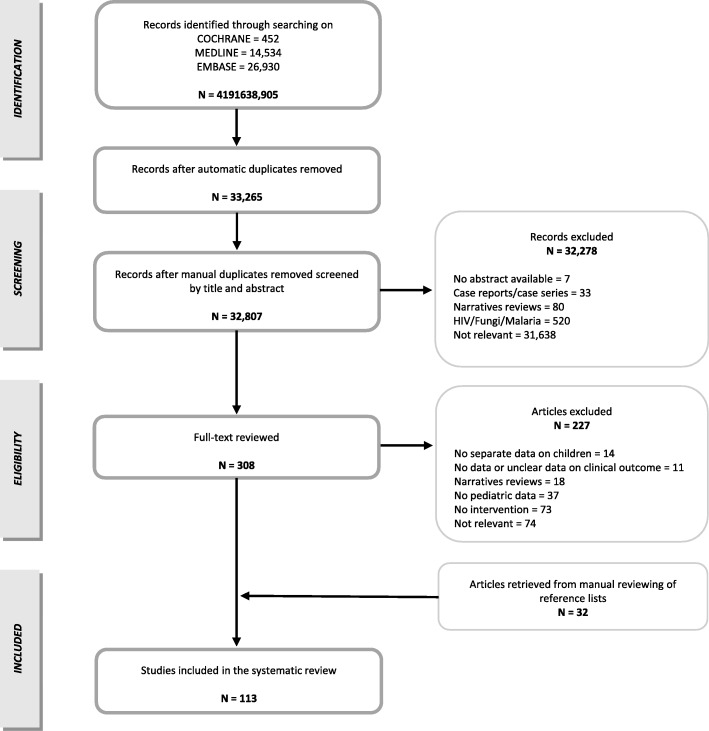
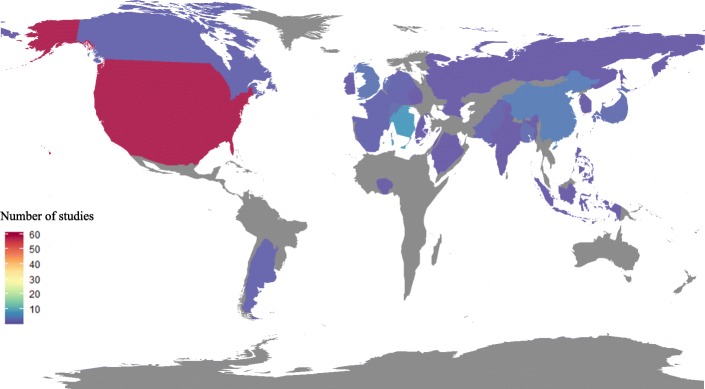
Results: Of the 41,916 studies screened, 113 were eligible for inclusion in this study. Most of the studies originated in the USA (52.2%), while a minority were conducted in Europe (24.7%) or Asia (17.7%). Seventy-four (65.5%) studies used a before-and-after design, and sixteen (14.1%) were randomized trials. The majority (81.4%) described in-hospital ASPs with half of interventions in mixed pediatric wards and ten (8.8%) in emergency departments. Only sixteen (14.1%) studies focused on the costs of ASPs. Almost all the studies (79.6%) showed a significant reduction in inappropriate prescriptions. Compliance after ASP implementation increased. Sixteen of the included studies quantified cost savings related to the intervention with most of the decreases due to lower rates of drug administration. Seven studies showed an increased susceptibility of the bacteria analysed with a decrease in extended spectrum beta-lactamase producers E. coli and K. pneumoniae; a reduction in the rate of P. aeruginosa carbapenem resistance subsequent to an observed reduction in the rate of antimicrobial days of therapy; and, in two studies set in outpatient setting, an increase in erythromycin-sensitive S. pyogenes following a reduction in the use of macrolides.
Conclusions: Pediatric ASPs have a significant impact on the reduction of targeted and empiric antibiotic use, healthcare costs, and antimicrobial resistance in both inpatient and outpatient settings. Pediatric ASPs are now widely implemented in the USA, but considerable further adaptation is required to facilitate their uptake in Europe, Asia, Latin America and Africa.
Keywords: Antibiotic stewardship; Antimicrobial stewardship; Infectious diseases; Pediatrics.
© The Author(s). 2019.
Conflict of interest statement
Competing interestsThe authors declare that they have no competing interests.
Figures
References
-
- Versporten A, Bielicki J, Drapier N, Sharland M. Goossens H; ARPEC project group. The Worldwide Antibiotic Resistance and Prescribing in European Children (ARPEC) point prevalence survey: developing hospital-quality indicators of antibiotic prescribing for children. J Antimicrob Chemother. 2016;71(4):1106–1117. doi: 10.1093/jac/dkv418. - DOI - PubMed
-
- Potocki M, Goette J, Szucs TD, Nadal D. Prospective Survey of Antibiotic Utilization in Pediatric Hospitalized Patients to IdentifyTargets for Improvement of Prescription. Infection. 31(6):398–403. doi:10.1007/s15010-003-4130-1 - PubMed
Publication types
MeSH terms
Substances
LinkOut - more resources
Full Text Sources
Medical
