


Chromatin remodeling dysfunction extends the etiological spectrum of schizophrenia: a case report
- PMID: 31914951
- PMCID: PMC6950831
- DOI: 10.1186/s12881-019-0946-0
Chromatin remodeling dysfunction extends the etiological spectrum of schizophrenia: a case report
Abstract
Background: The role of deleterious copy number variations in schizophrenia is well established while data regarding pathogenic variations remain scarce. We report for the first time a case of schizophrenia in a child with a pathogenic mutation of the chromodomain helicase DNA binding protein 2 (CHD2) gene.
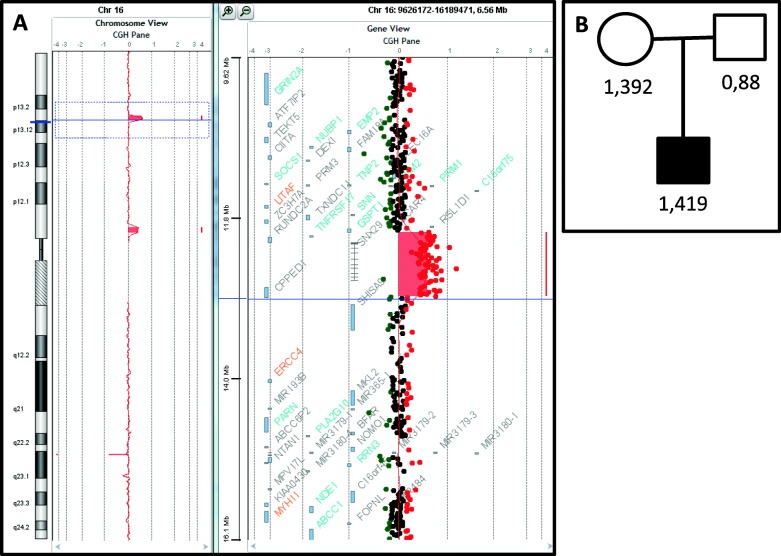
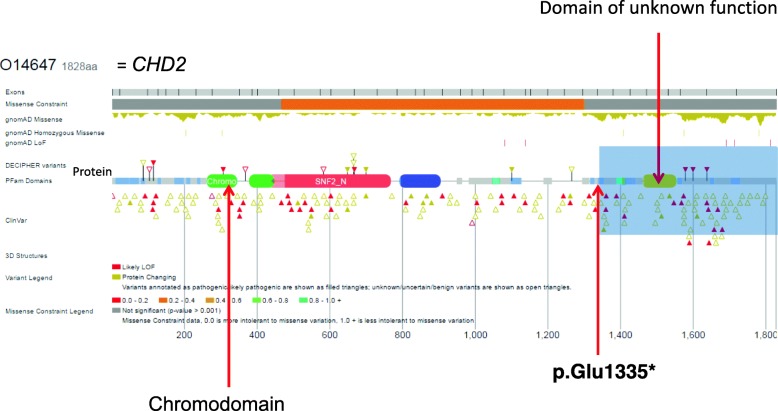
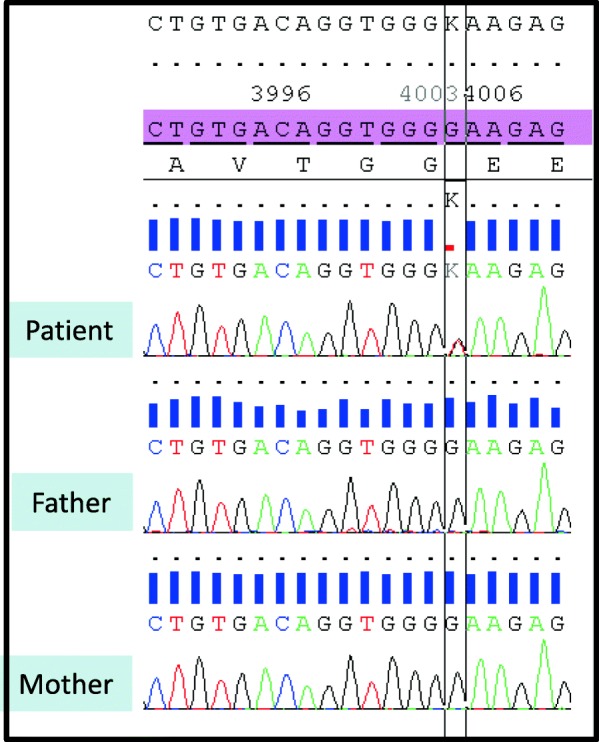
Case presentation: The proband was the second child of unrelated parents. Anxiety and sleep disorders appeared at the age of 10 months. He presented febrile seizures and, at the age of 8, two generalized tonic-clonic seizures. At the age of 10, emotional withdrawal emerged, along with a flat affect, disorganization and paranoid ideation, without seizures. He began to talk and giggle with self. Eventually, the patient presented daily auditory and visual hallucinations. The diagnosis of childhood onset schizophrenia (DSM V) was then evoked. Brain imaging was unremarkable. Wakefulness electroencephalography showed a normal background and some bilateral spike-wave discharges that did not explain the psychosis features. A comparative genomic hybridization array (180 K, Agilent, Santa Clara, CA, USA) revealed an 867-kb 16p13.3 duplication, interpreted as a variant of unknown significance confirmed by a quantitative PCR that also showed its maternal inheritance. Risperidone (1,5 mg per day), led to clinical improvement. At the age of 11, an explosive relapse of epilepsy occurred with daily seizures of various types. The sequencing of a panel for monogenic epileptic disorders and Sanger sequencing revealed a de novo pathogenic heterozygous transition in CHD2 (NM_001271.3: c.4003G > T).
Conclusions: This case underlines that schizophrenia may be, sometimes, underpinned by a Mendelian disease. It addresses the question of systematic genetic investigations in the presence of warning signs such as a childhood onset of the schizophrenia or a resistant epilepsy. It points that, in the absence of pathogenic copy number variation, the investigations should also include a search for pathogenic variations, which means that some of the patients with schizophrenia should benefit from Next Generation Sequencing tools. Last but not least, CHD2 encodes a member of the chromodomain helicase DNA-binding (CHD) family involved in chromatin remodeling. This observation adds schizophrenia to the phenotypic spectrum of chromodomain remodeling disorders, which may lead to innovative therapeutic approaches.
Keywords: CHD2; Childhood onset schizophrenia; Chromatin; Chromodomain helicase DNA-binding; Genetic counselling; Schizophrenia.
Conflict of interest statement
The authors declare that they have no competing interests.
Figures
References
MeSH terms
Substances
LinkOut - more resources
Full Text Sources
Medical
