


Workload Differentiates Breast Surgical Procedures: NSM Associated with Higher Workload Demand than SSM
- PMID: 31916090
- PMCID: PMC7138769
- DOI: 10.1245/s10434-019-08159-0
Workload Differentiates Breast Surgical Procedures: NSM Associated with Higher Workload Demand than SSM
Abstract
Background: Breast surgery has evolved with more focus on improving cosmetic outcomes, which requires increased operative time and technical complexity. Implications of these technical advances in surgery for the surgeon are unclear, but they may increase intraoperative demands, both mentally and physically. We prospectively evaluated mental and physical demand across breast surgery procedures, and compared surgeon ergonomic risk between nipple-sparing (NSM) and skin-sparing mastectomy (SSM) using subjective and objective measures.
Methods: From May 2017 to July 2017, breast surgeons completed modified NASA-Task Load Index (TLX) workload surveys after cases. From January 2018 to July 2018, surgeons completed workload surveys and wore inertial measurement units to evaluate their postures during NSM and SSM cases. Mean angles of surgical postures, ergonomic risk, survey items, and patient factors were analyzed.
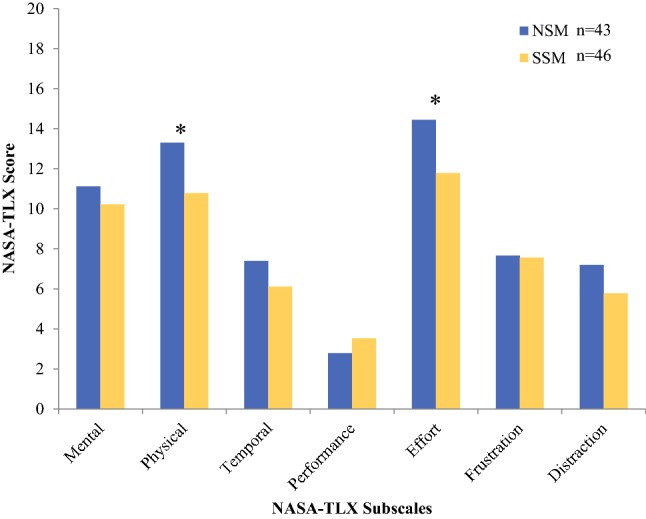
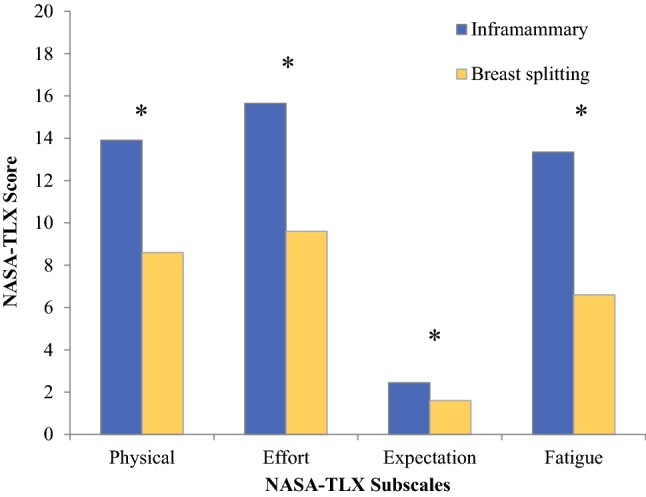
Results: Procedural duration was moderately related to surgeon frustration, mental and physical demand, and fatigue (p < 0.001). NSMs were rated 23% more physically demanding (M = 13.3, SD = 4.3) and demanded 28% more effort (M = 14.4, SD = 4.6) than SSMs (M = 10.8, SD = 4.7; M = 11.8, SD = 5.0). Incision type was a contributing factor in workload and procedural difficulty. Left arm mean angle was significantly greater for NSM (M = 30.1 degrees, SD = 6.6) than SSMs (M = 18.2 degrees, SD = 4.3). A higher musculoskeletal disorder risk score for the trunk was significantly associated with higher surgeon physical workload (p = 0.02).
Conclusion: Nipple-sparing mastectomy required the highest surgeon-reported workload of all breast procedures, including physical demand and effort. Objective measures identified the surgeons' left upper arm as being at the greatest risk for a work-related musculoskeletal disorder, specifically from performing NSMs.
Figures
References
-
- Hart SG, Staveland LE. Development of NASA-TLX (Task Load Index): results of empirical and theoretical research. Adv Psychol. 1988;52:139–183. doi: 10.1016/S0166-4115(08)62386-9. - DOI
-
- Hart SG. NASA-task load index (NASA-TLX): 20 years later. In: Proceedings of the human factors and ergonomics society annual meeting. Los Angeles, CA: Sage Publications; 2006. p. 904–8.
Publication types
MeSH terms
LinkOut - more resources
Full Text Sources
Medical
