


A non-randomised trial of video and written educational adjuncts in undergraduate ophthalmology
- PMID: 31918692
- PMCID: PMC6953281
- DOI: 10.1186/s12909-019-1923-1
A non-randomised trial of video and written educational adjuncts in undergraduate ophthalmology
Abstract
Background: Provision of relevant pre-learning materials has been shown to increase student engagement and improve outcomes in medical education. This non-randomised study attempts to quantify the educational gains, and relative efficacy of video and written pre-learning materials, in ophthalmology undergraduate teaching.
Methods: Ninety-eight final year medical students were contacted prior to their three-day ophthalmology placements at a British tertiary ophthalmology unit. All participants were sent welcome packs prior to arrival requesting they undertake 90 min of work focusing on a list of specified ophthalmic conditions. One cohort (N = 33) were sent written materials, another (N = 32) was provided with video materials and a third cohort (N = 33) were not sent any materials. On arrival participants completed a simple knowledge test, a questionnaire estimating the time they spent preparing for the placement and a self-reported knowledge score. The teaching on placement was the same for all cohorts. At the conclusion of each placement participants completed a challenging knowledge test, a clinical skills test and repeated self-reported knowledge scores.
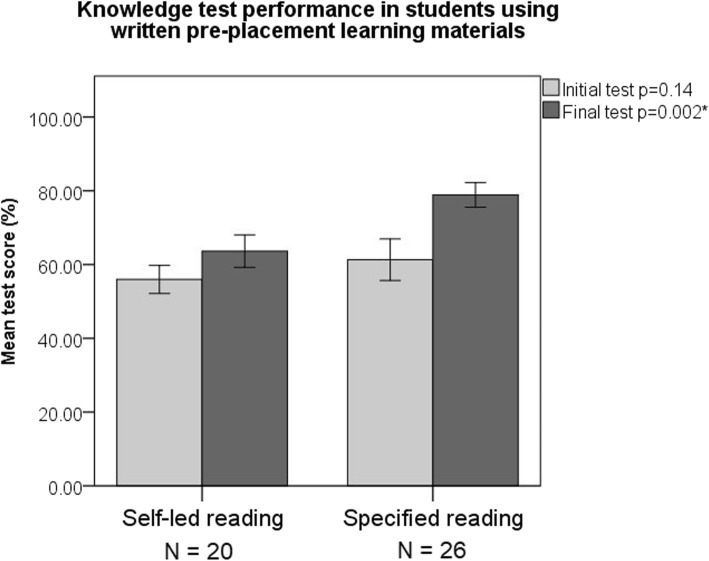
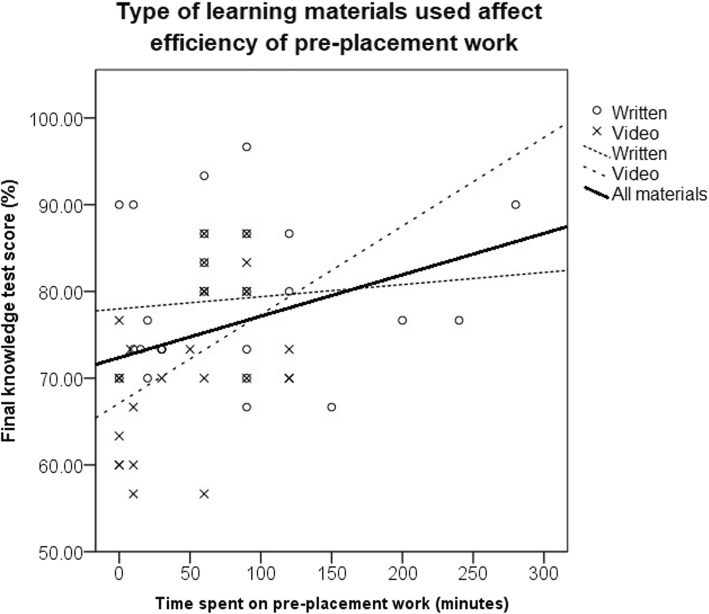
Results: Eighty seven percent of students receiving specified materials claimed to complete pre-placement work compared to 70% of those receiving learning outcomes alone (p = 0.05). Students receiving learning materials scored higher in the post-placement tests of knowledge (p < 0.001), 74.8% (72.4-77.2%) vs 63.6% (95%CI 59.3-67.9%) and skills (p = 0.04), 86.9% (83.9-89.9%) vs 81.3% (77.2-85.4%). Students using video resources outperformed students using written materials in their visual acuity assessment test (p = 0.03), 90.4% (86.6-94.2%) vs 83.6% (80.1-87.1%) whilst those receiving written rather than video material performed better in the end of placement knowledge test (p = 0.03), 77.7% (74.3-81.1%) vs 72.0% (68.9-75.1%).
Conclusion: This study showed that providing pre-placement learning materials improves undergraduates' commitment and achievement. Written materials better facilitate knowledge acquisition while video materials preferentially promote skill acquisition. This is a novel demonstration within ophthalmology and can help address the imbalance between the expectations placed on undergraduates and the resources committed to ensuring they are met.
Keywords: Learning resources; Ophthalmology; Technology enhanced learning; Undergraduate education; Video resources.
Conflict of interest statement
The authors declare that they have no competing interests.
Figures
References
Publication types
MeSH terms
LinkOut - more resources
Full Text Sources
Miscellaneous
