


Physiological and Epigenetic Features of Yoyo Dieting and Weight Control
- PMID: 31921275
- PMCID: PMC6917653
- DOI: 10.3389/fgene.2019.01015
Physiological and Epigenetic Features of Yoyo Dieting and Weight Control
Abstract
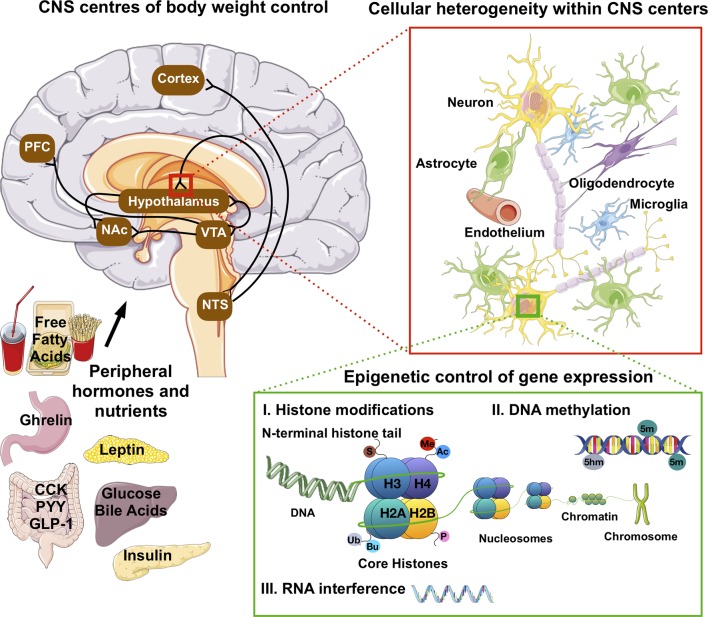
Obesity and being overweight have become a worldwide epidemic affecting more than 1.9 billion adults and 340 million children. Efforts to curb this global health burden by developing effective long-term non-surgical weight loss interventions continue to fail due to weight regain after weight loss. Weight cycling, often referred to as Yoyo dieting, is driven by physiological counter-regulatory mechanisms that aim at preserving energy, i.e. decreased energy expenditure, increased energy intake, and impaired brain-periphery communication. Models based on genetically determined set points explained some of the weight control mechanisms, but exact molecular underpinnings remained elusive. Today, gene-environment interactions begin to emerge as likely drivers for the obesogenic memory effect associated with weight cycling. Here, epigenetic mechanisms, including histone modifications and DNA methylation, appear as likely factors that underpin long-lasting deleterious adaptations or an imprinted obesogenic memory to prevent weight loss maintenance. The first part summarizes our current knowledge on the physiology of weight cycling by discussing human and murine studies on the Yoyo-dieting phenomenon and physiological adaptations associated with weight loss and weight re-gain. The second part provides an overview on known associations between obesity and epigenetic modifications. We further interrogate the roles of epigenetic mechanisms in the CNS control of cognitive functions as well as reward and addictive behaviors, and subsequently discuss whether such mechanisms play a role in weight control. The final two parts describe major opportunities and challenges associated with studying epigenetic mechanisms in the CNS with its highly heterogenous cell populations, and provide a summary of recent technological advances that will help to delineate whether an obese memory is based upon epigenetic mechanisms.
Keywords: CNS; Yoyo dieting; epigenetic mechanisms; obesogenic memory; weight loss.
Copyright © 2019 Contreras, Schriever and Pfluger.
Figures
References
-
- Alsiö J., Olszewski P. K., Norbäck A. H., Gunnarsson Z. E. A., Levine A. S., Pickering C., et al. (2010). Dopamine D1 receptor gene expression decreases in the nucleus accumbens upon long-term exposure to palatable food and differs depending on diet-induced obesity phenotype in rats. Neuroscience 171, 779–787. 10.1016/j.neuroscience.2010.09.046 - DOI - PubMed
Publication types
LinkOut - more resources
Full Text Sources
