


Binge eating and binge-eating disorder in Black women: A systematic review
- PMID: 31922293
- PMCID: PMC8010989
- DOI: 10.1002/eat.23217
Binge eating and binge-eating disorder in Black women: A systematic review
Abstract
Objective: Although several effective behavioral treatments for binge-eating disorder (BED) exist, there are racial disparities in treatment access, with African-Americans and/or Black individuals having some of the lowest rates of access to care. Little is known about the experience and treatment of binge eating (BE) and BED among Black women.
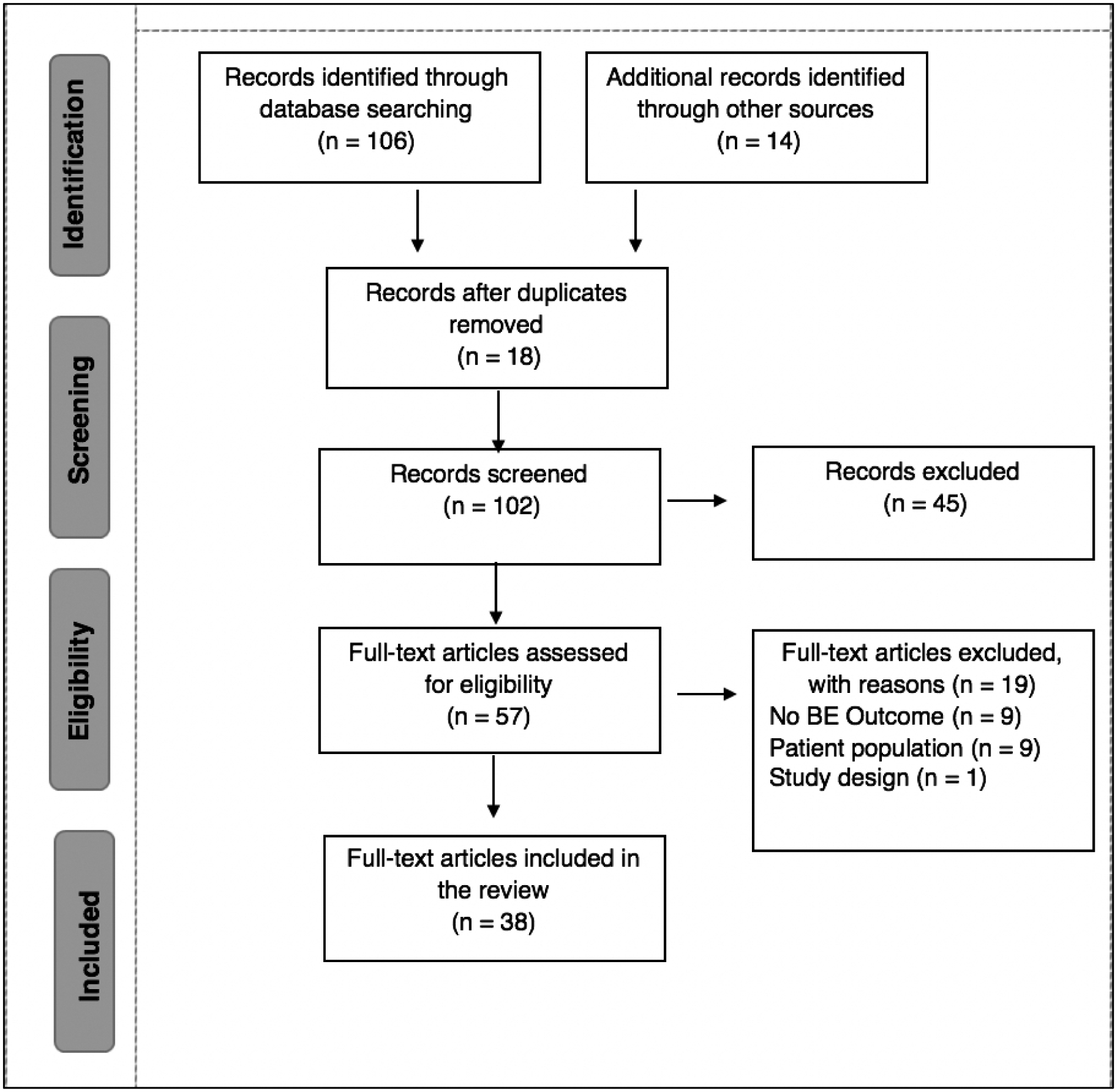
Method: This systematic review, conducted according to PRISMA guidelines, synthesizes information related to BE and BED in Black women.
Results: A total of N = 38 studies met our eligibility criteria. We did not identify any systematic risk of bias across studies. The majority of included studies used cross-sectional survey methodology, and relied on interview (EDE) and self-report measures (particularly the Binge Eating Scale, BES) for the assessment of BE. Outcomes were inconsistently measured across trials, and there are limited data on the results of evidence-based treatments for BE/BED in Black women.
Discussion: Although Black women have similar or higher rates of BE than White women, most research on BE and BED has focused on White women, with Black individuals underrepresented in clinical trials. Future research should examine evidence-based treatments to prevent and treat BED in this population.
Objetivo: Aunque existen varios tratamientos conductuales que son efectivos para el Trastorno de Atracones (BED, por sus siglas en inglés), existen disparidades raciales en el acceso a tratamiento, con individuos Afroamericanos y/o personas de color teniendo algunas de las tasas más bajas de acceso al cuidado de la salud. Se sabe muy poco acerca de la experiencia y tratamiento del comer en atracones (BE, por sus siglas en inglés) y BED entre mujeres afroamericanas y/o de color. MÉTODO: Esta revisión sistemática, realizada bajo lineamientos de las guías PRISMA, sintetiza información relacionada con BE y BED en mujeres afroamericanas y/o de color.
Resultados: Un total de N = 38 estudios cumplieron con nuestros criterios de elegibilidad. No identificamos ningún riesgo sistemático de sesgo entre los estudios. La mayoría de los estudios incluidos utilizaron una metodología de encuesta transversal y se basaron en la entrevista (EDE) y las medidas de autoinforme (en particular, la Binge Eating Scale, BES) para la evaluación de BE. Los resultados se midieron de manera inconsistente entre los ensayos, y hay datos limitados sobre los resultados de los tratamientos basados en la evidencia para BE/BED en mujeres afroamericanas y/o de color. DISCUSIÓN: Aunque las mujeres afroamericanas y/o de color tienen tasas similares o más altas de BE que las mujeres blancas, la mayoría de las investigaciones sobre BE y BED se han centrado en las mujeres blancas, con individuos afroamericanos y/o de color subrepresentados en ensayos clínicos. La investigación futura debería examinar los tratamientos basados en la evidencia para prevenir y tratar el BED en esta población.
Keywords: African-American women; Black; binge eating; binge eating disorder; systematic review.
© 2020 Wiley Periodicals, Inc.
Figures
References
-
- American Psychiatric Association. (2000). Diagnostic and statistical manual of mental disorders (4th ed., Text Revision). Washington, DC.
-
- American Psychiatric Association. (2013). Feeding and Eating Disorders. In Diagnostic and statistical manual of mental disorders (5th ed.). Washington, DC.
Publication types
MeSH terms
Grants and funding
LinkOut - more resources
Full Text Sources
Research Materials
Miscellaneous
