


Race and Ethnicity, Medical Insurance, and Within-Hospital Severe Maternal Morbidity Disparities
- PMID: 31923076
- PMCID: PMC7117864
- DOI: 10.1097/AOG.0000000000003667
Race and Ethnicity, Medical Insurance, and Within-Hospital Severe Maternal Morbidity Disparities
Abstract
Objective: To examine within-hospital racial and ethnic disparities in severe maternal morbidity rates and determine whether they are associated with differences in types of medical insurance.
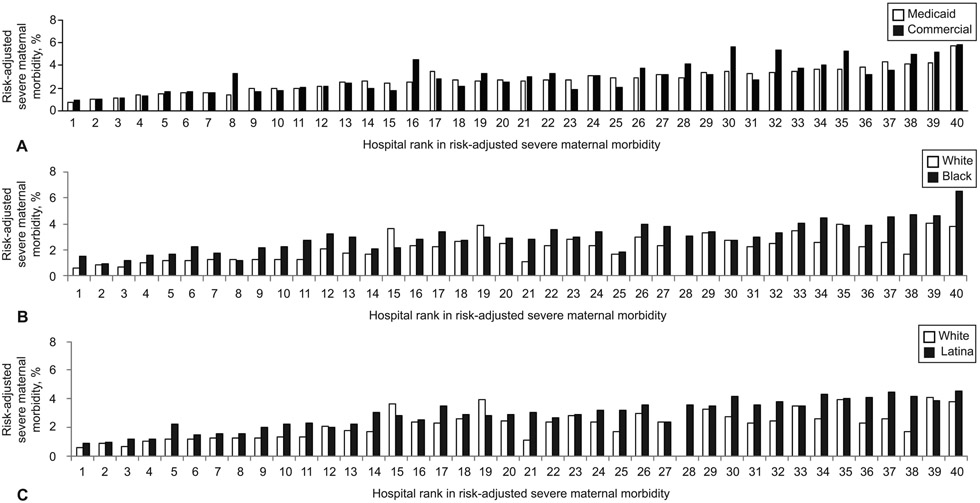
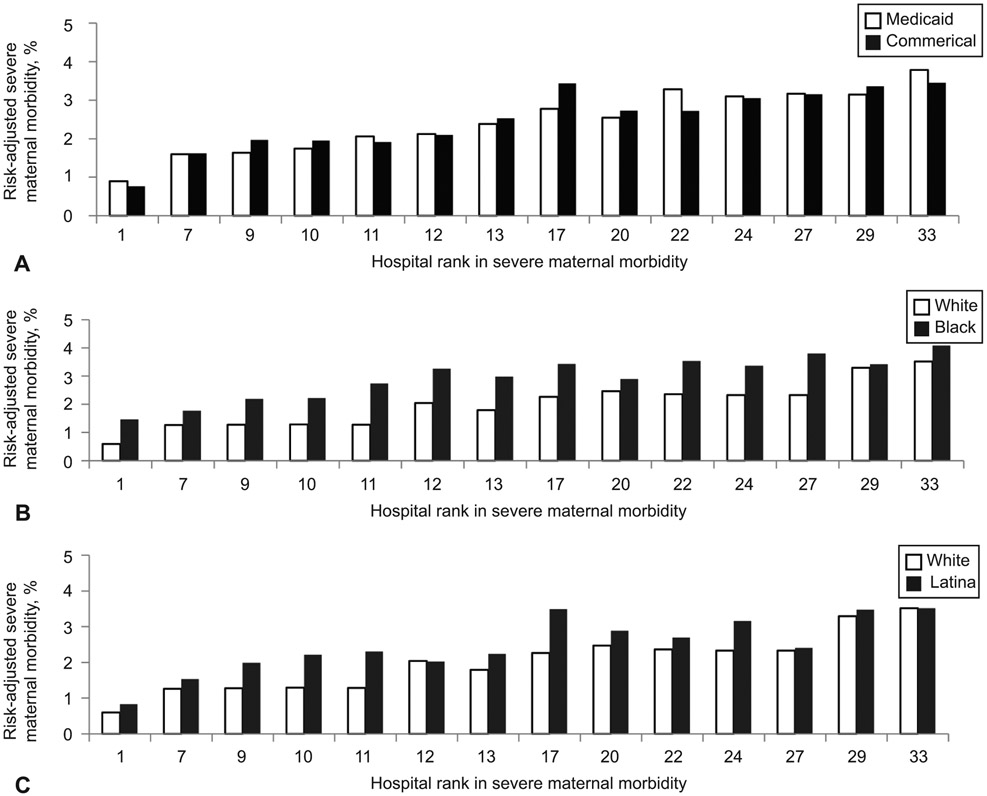
Methods: We conducted a population-based, cross-sectional study using linked 2010-2014 New York City discharge and birth certificate data sets (N=591,455 deliveries) to examine within-hospital black-white, Latina-white, and Medicaid-commercially insured differences in severe maternal morbidity. We used logistic regression to produce risk-adjusted rates of severe maternal morbidity for patients with commercial and Medicaid insurance and for black, Latina, and white patients within each hospital. We compared these within-hospital adjusted rates using paired t-tests and conditional logit models.
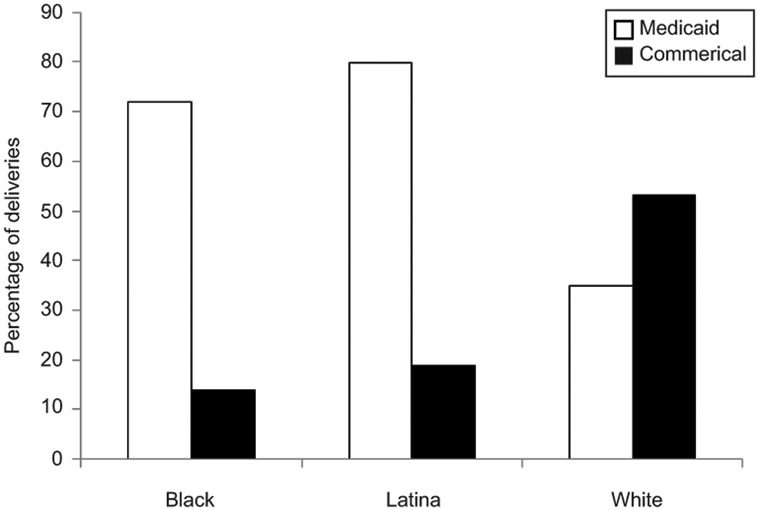
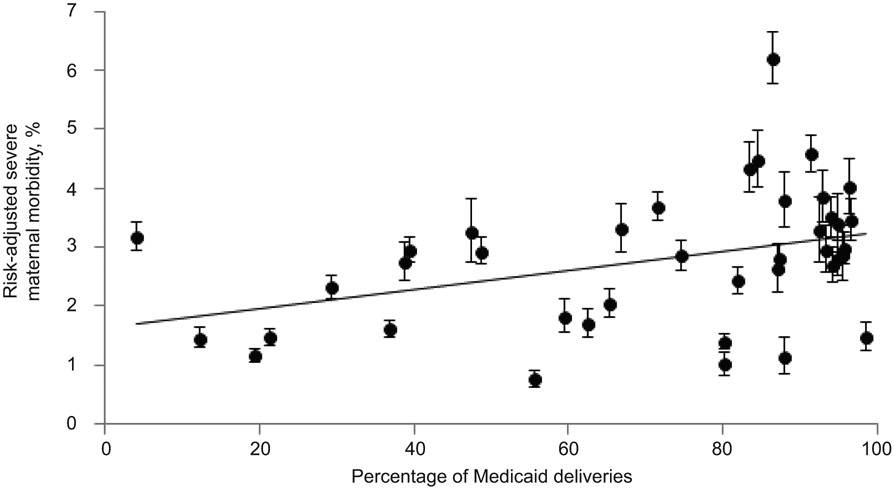
Results: Severe maternal morbidity was higher among black and Latina women than white women (4.2% and 2.9% vs 1.5%, respectively, P<.001) and among women insured by Medicaid than those commercially insured (2.8% vs 2.0%, P<.001). Women insured by Medicaid compared with those with commercial insurance had similar risk for severe maternal morbidity within the same hospital (P=.54). In contrast, black women compared with white women had significantly higher risk for severe maternal morbidity within the same hospital (P<.001), as did Latina women (P<.001). Conditional logit analyses confirmed these findings, with black and Latina women compared with white women having higher risk for severe maternal morbidity (adjusted odds ratio [aOR] 1.52; 95% CI 1.46-1.62 and aOR 1.44; 95% CI 1.36-1.53, respectively) and women insured by Medicaid compared with those commercially insured having similar risk.
Conclusion: Within hospitals in New York City, black and Latina women are at higher risk of severe maternal morbidity than white women; this is not associated with differences in types of insurance.
Conflict of interest statement
Financial Disclosure
The authors did not report any potential conflicts of interest.
Figures
References
-
- Markus AR, Andres E, West KD, Garro N, Pellegrini C. Medicaid covered births, 2008 through 2010, in the context of the implementation of health reform. Womens Health Issues 2013;23:e273–80. - PubMed
-
- Spencer CS, Gaskin DJ, Roberts ET. The quality of care delivered to patients within the same hospital varies by insurance type. Health Aff (Millwood) 2013;32:1731–9. - PubMed
Publication types
MeSH terms
Grants and funding
LinkOut - more resources
Full Text Sources
Medical
