. 2020 Apr;10(4):526-535.
doi: 10.1158/2159-8290.CD-19-1209. Epub 2020 Jan 10.

Characteristics and Outcome of AKT1 E17K-Mutant Breast Cancer Defined through AACR Project GENIE, a Clinicogenomic Registry

Affiliations

Characteristics and Outcome of AKT1 E17K-Mutant Breast Cancer Defined through AACR Project GENIE, a Clinicogenomic Registry

Lillian M Smyth et al. Cancer Discov. 2020 Apr.

Abstract

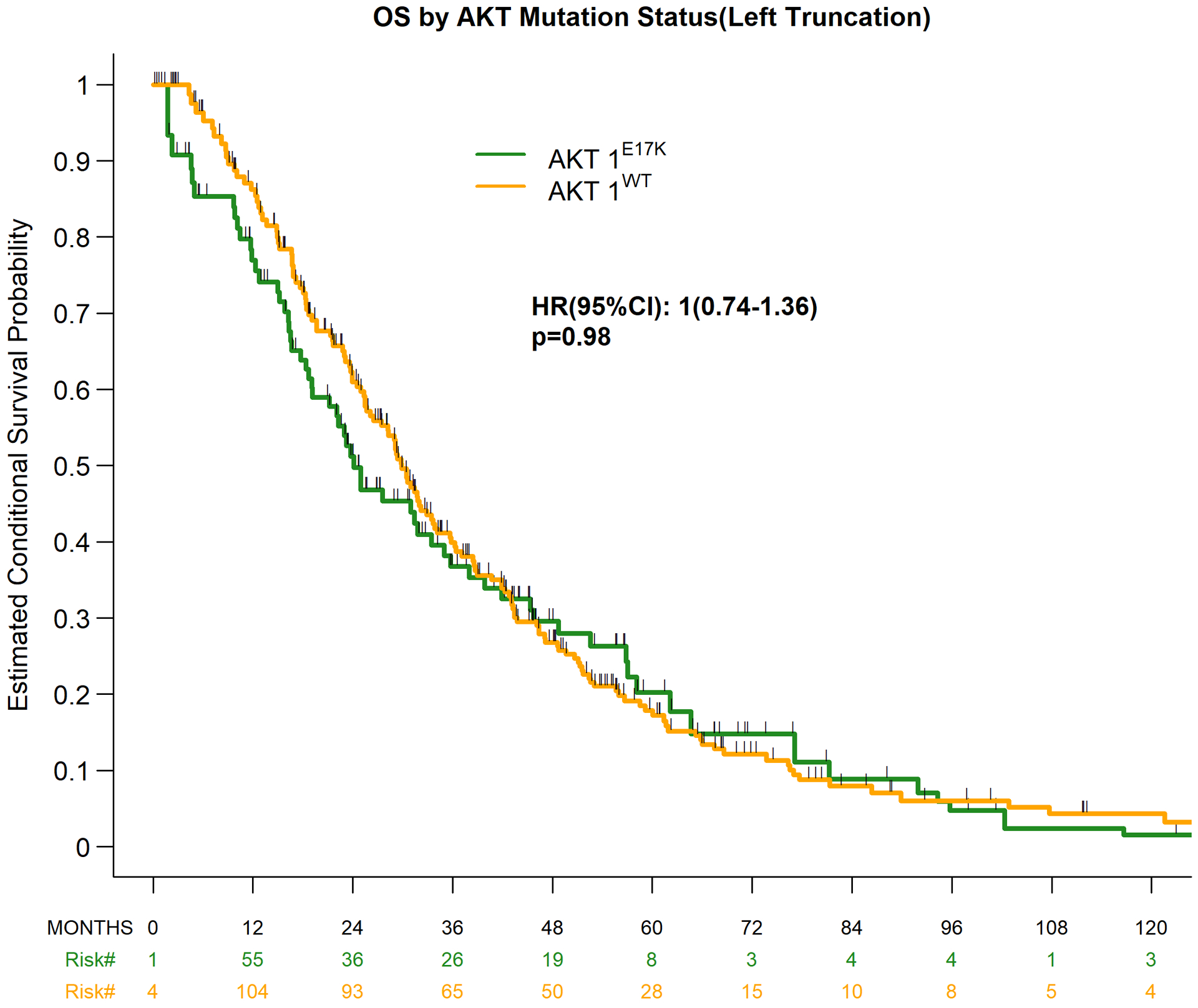
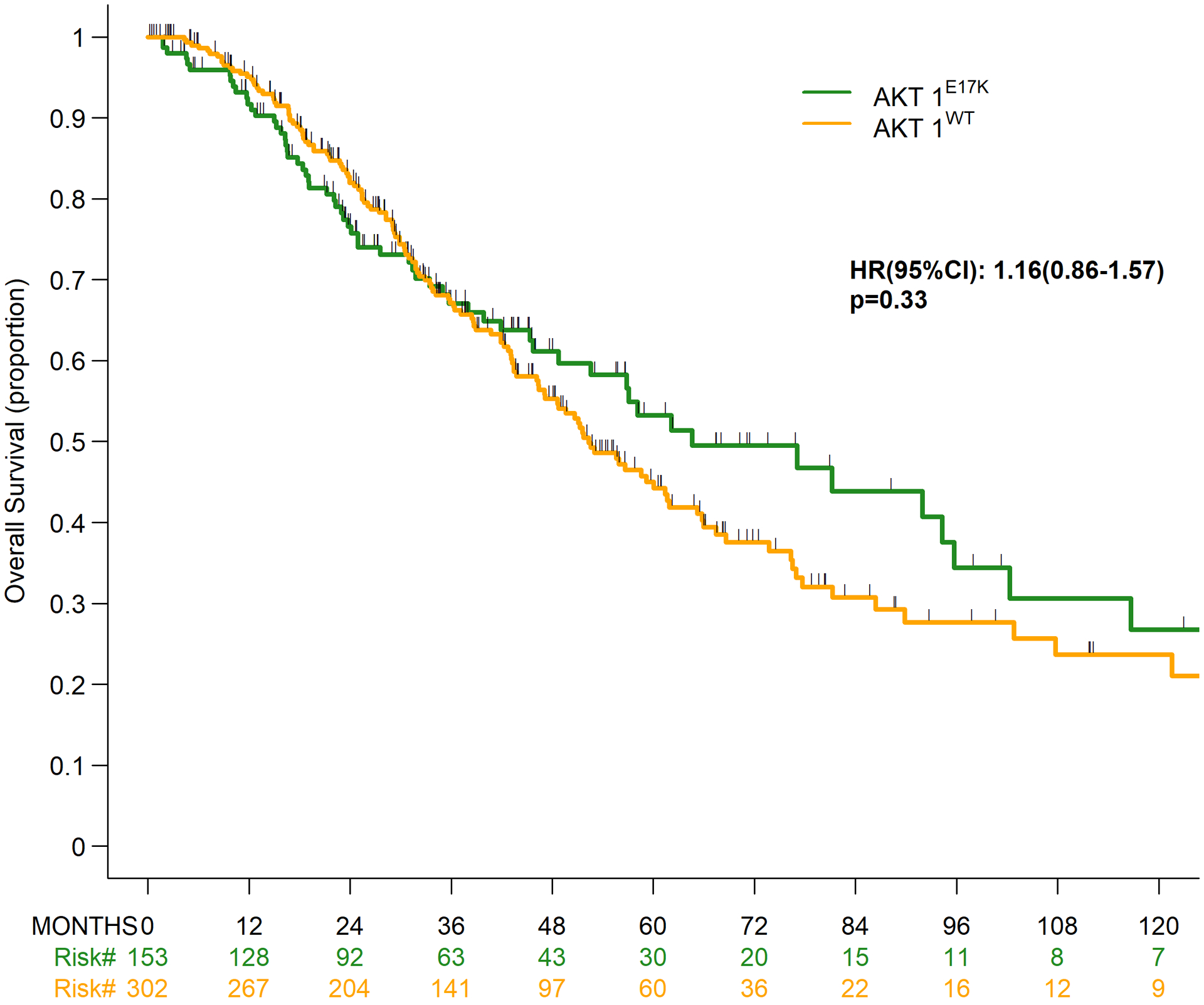
AKT inhibitors have promising activity in AKT1 E17K-mutant estrogen receptor (ER)-positive metastatic breast cancer, but the natural history of this rare genomic subtype remains unknown. Utilizing AACR Project GENIE, an international clinicogenomic data-sharing consortium, we conducted a comparative analysis of clinical outcomes of patients with matched AKT1 E17K-mutant (n = 153) and AKT1-wild-type (n = 302) metastatic breast cancer. AKT1-mutant cases had similar adjusted overall survival (OS) compared with AKT1-wild-type controls (median OS, 24.1 vs. 29.9, respectively; P = 0.98). AKT1-mutant cases enjoyed longer durations on mTOR inhibitor therapy, an observation previously unrecognized in pivotal clinical trials due to the rarity of this alteration. Other baseline clinicopathologic features, as well as durations on other classes of therapy, were broadly similar. In summary, we demonstrate the feasibility of using a novel and publicly accessible clincogenomic registry to define outcomes in a rare genomically defined cancer subtype, an approach with broad applicability to precision oncology. SIGNIFICANCE: We delineate the natural history of a rare genomically distinct cancer, AKT1 E17K-mutant ER-positive breast cancer, using a publicly accessible registry of real-world patient data, thereby illustrating the potential to inform drug registration through synthetic control data.See related commentary by Castellanos and Baxi, p. 490.


Conflict of interest statement

Conflict of Interest Statement: Dr. Hyman reports research funding and consulting/advisory fees from AstraZeneca. Outside the submitted work, Dr. Hyman reports stock/other ownership interest in Fount; consulting/advisory role for Chugai Pharma, Boehringer Ingelheim, Pfizer, Bayer, Genentech, and Fount; travel/accommodations from Genentech and Chugai Pharma; and research funding from Puma Biotechnology, Loxo, and Bayer. Dr. F. Meric-Bernstam reports receiving commercial research grants from Novartis, AstraZeneca, Calithera, Aileron, Bayer, Jounce, CytoMx, eFFECTOR, Zymeworks, PUMA Biotechnology, Curis, Millennium, Daiichi Sankyo, Abbvie, Guardant Health, Takeda, and GlaxoSmithKline, as well as grants and travel-related fees from Taiho and Seattle Genetics. She also served as a consultant to Pieris, Dialectica, Sumitomo Dainippon, Samsung Bioepis, Aduro, OrigiMed, Xencor, Jackson Laboratory, Zymeworks, Kolon Life Science, and Parexel International, and advisor to Inflection Biosciences, GRAIL, Darwin Health, Spectrum, Mersana, Seattle Genetics, and Immunomedics. L.M.S. has received research grants/funding (to her institution) from AstraZeneca, Puma Biotechnology Inc., and Roche Genentech. L.M.S has received payment for consultancy or advisory roles from AstraZeneca, Roche Genentech, Pfizer, and Novartis, honoraria from AstraZeneca, Roche Genentech and Pfizer, and support covering travel, accommodations, and expenses from Pfizer, Puma Biotechnology Inc., and Roche Genentech.

The other authors have no relevant conflict of interests to disclose.

Figures
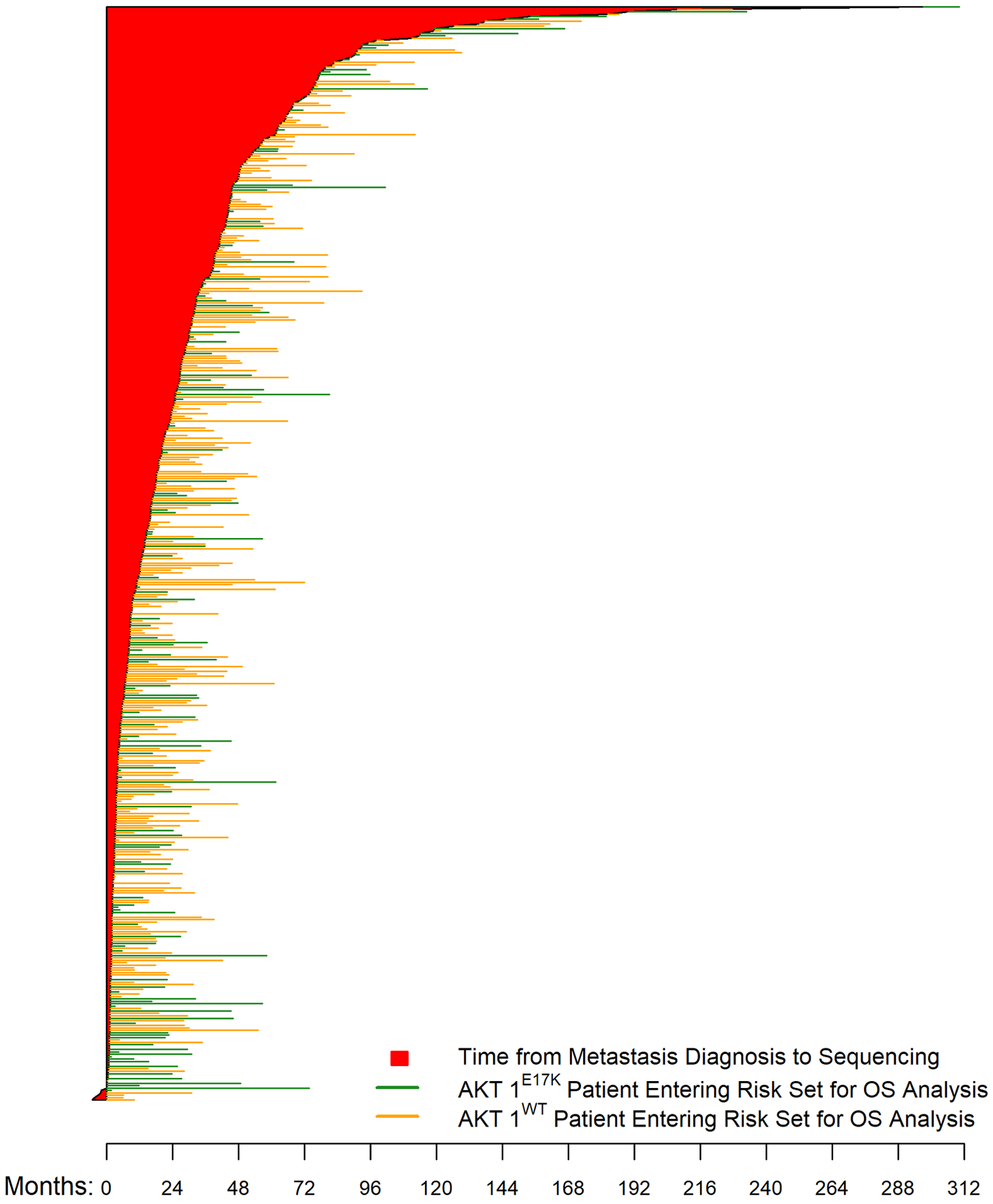
Figure 1.
Figure 1.
Overall survival by AKT1 mutation status. (A) Time from metastatic diagnosis to death or last follow-up, as well as tumor sequencing*; (B) Overall survival using left truncation; (C) Overall survival without left truncation. *5 patients underwent tumor sequencing before their metastatic diagnosis
Figure 1.
Figure 1.
Overall survival by AKT1 mutation status. (A) Time from metastatic diagnosis to death or last follow-up, as well as tumor sequencing*; (B) Overall survival using left truncation; (C) Overall survival without left truncation. *5 patients underwent tumor sequencing before their metastatic diagnosis
Figure 1.
Figure 1.
Overall survival by AKT1 mutation status. (A) Time from metastatic diagnosis to death or last follow-up, as well as tumor sequencing*; (B) Overall survival using left truncation; (C) Overall survival without left truncation. *5 patients underwent tumor sequencing before their metastatic diagnosis
Figure 2.
Figure 2.
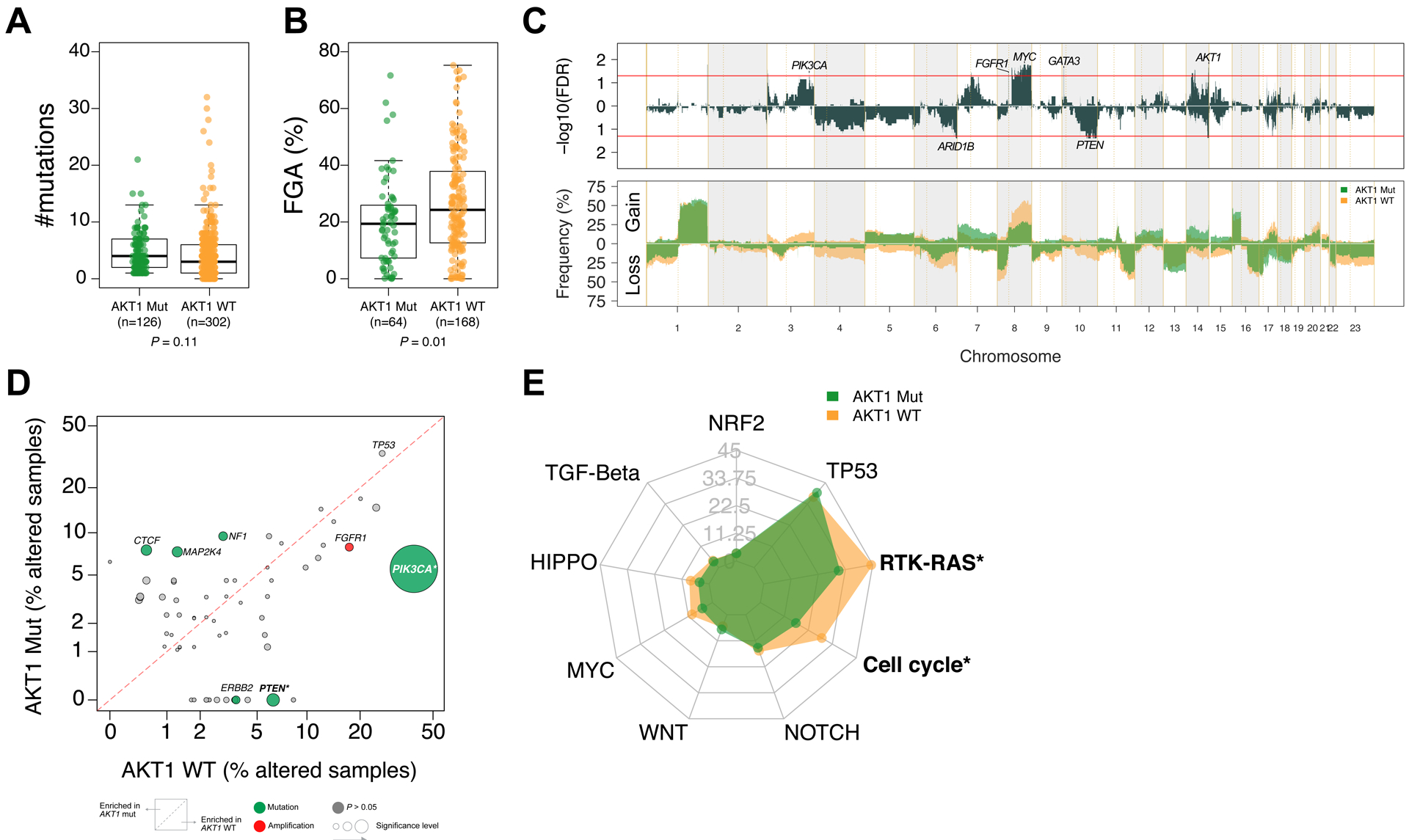
Genomic landscape of breast cancer according to AKT1 mutations. Comparison of (A) mutation number; (B) fraction of genome altered (FGA); (C) copy number alteration (CNA) frequencies in AKT1-mutant (MT, green) vs AKT1-wildtype (WT, orange). False discovery rate (FDR) derived from the Fisher exact test. The red lines indicate significance FDR < 0.05; (D) Comparison of the alteration frequency for 72 genomic alterations in AKT1-MT vs. AKT1-WT tumors. *FDR < 0.1; (E) Radar plots showing the percentage of patients with alterations in the corresponding canonical oncogenic signaling pathways according to AKT1 mutation. Statistically significant pathways associated with AKT1 mutation are indicated with an asterisk (*; FDR < .05).

Comment in

References

    1. Razavi P, Chang MT, Xu G, Bandlamudi C, Ross DS, Vasan N, et al. The Genomic Landscape of Endocrine-Resistant Advanced Breast Cancers. Cancer Cell 2018;34:427–38.e6. - PMC - PubMed
    1. André F, Ciruelos E, Rubovszky G, Campone M, Loibl S, Rugo HS, et al. Alpelisib for PIK3CA-Mutated, Hormone Receptor-Positive Advanced Breast Cancer. N Engl J Med 2019;380:1929–40. - PubMed
    1. Carpten JD, Faber AL, Horn C, Donoho GP, Briggs SL, Robbins CM, et al. A transforming mutation in the pleckstrin homology domain of AKT1 in cancer. Nature 2007;448:439–44. - PubMed
    1. Kim MS, Jeong EG, Yoo NJ, Lee SH. Mutational analysis of oncogenic AKT E17K mutation in common solid cancers and acute leukaemias. Br J Cancer 2008;98:1533–5. - PMC - PubMed
    1. Cancer Genome Atlas Network. Comprehensive molecular portraits of human breast tumours. Nature 2012;490:61–70. - PMC - PubMed

Publication types

Substances