


Loss of PARP-1 attenuates diabetic arteriosclerotic calcification via Stat1/Runx2 axis
- PMID: 31924749
- PMCID: PMC6954221
- DOI: 10.1038/s41419-019-2215-8
Loss of PARP-1 attenuates diabetic arteriosclerotic calcification via Stat1/Runx2 axis
Erratum in
-
Correction: Loss of PARP-1 attenuates diabetic arteriosclerotic calcification via Stat1/Runx2 axis.Cell Death Dis. 2020 Feb 6;11(2):97. doi: 10.1038/s41419-020-2292-8. Cell Death Dis. 2020. PMID: 32029701 Free PMC article.
Abstract
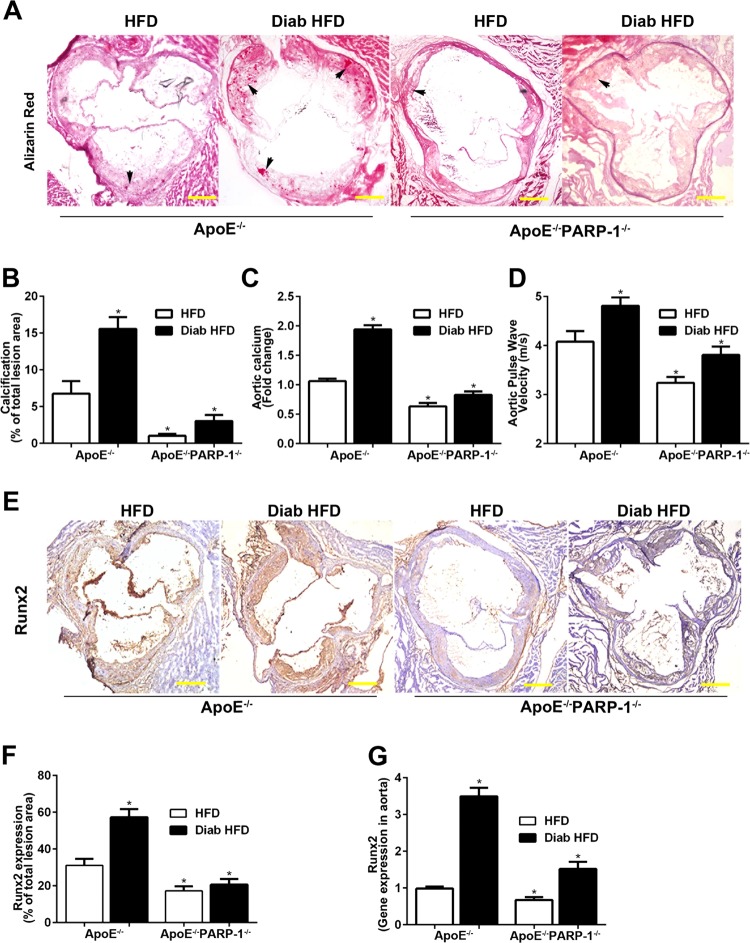
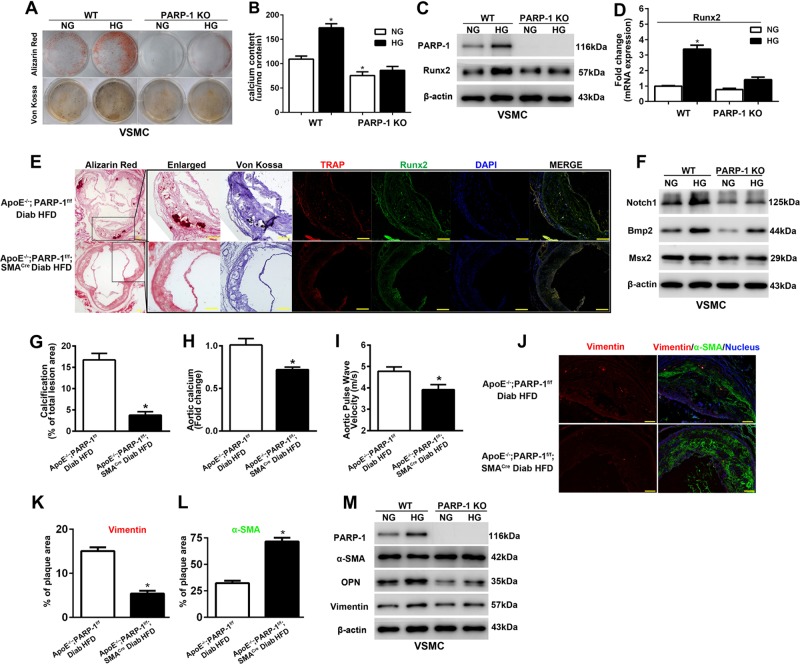
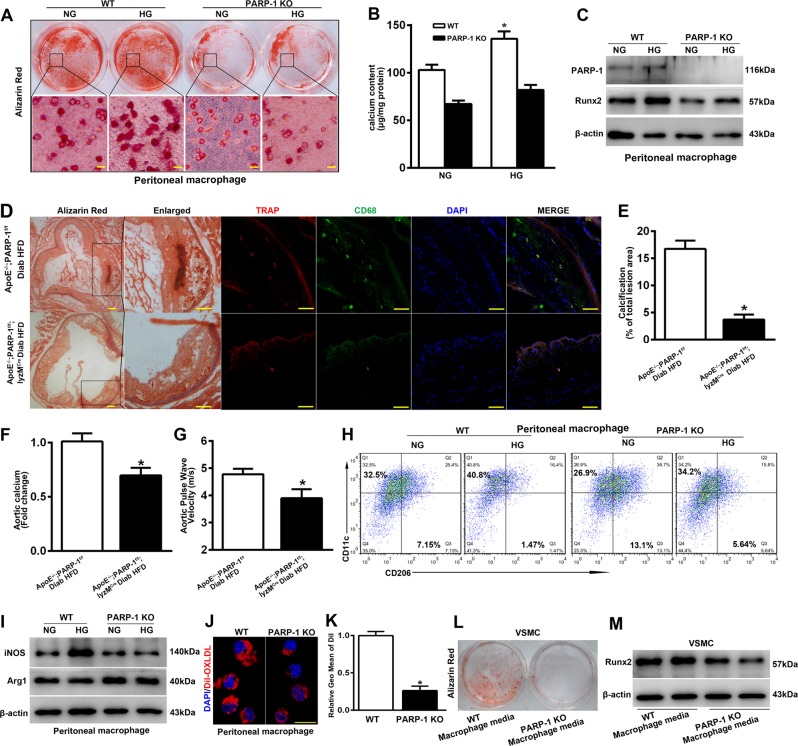
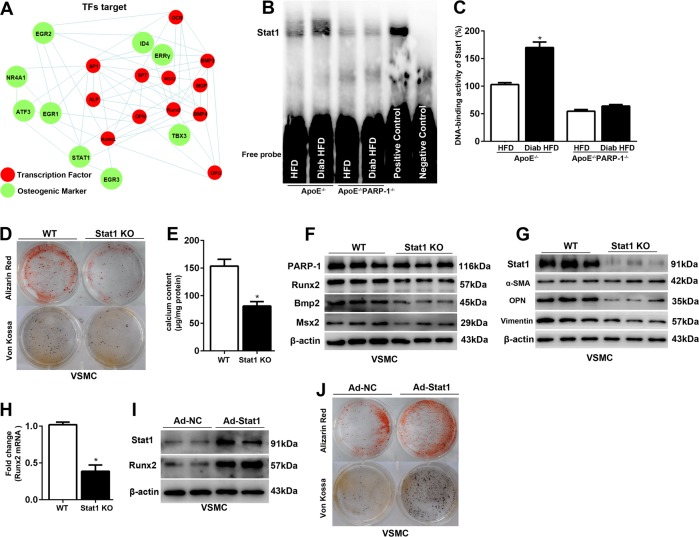
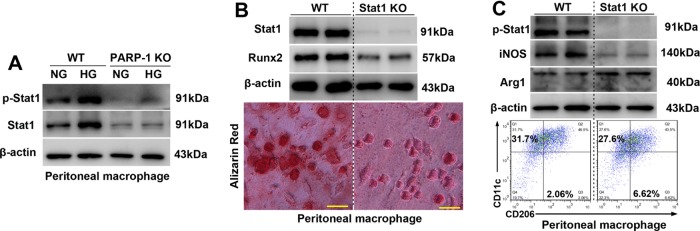
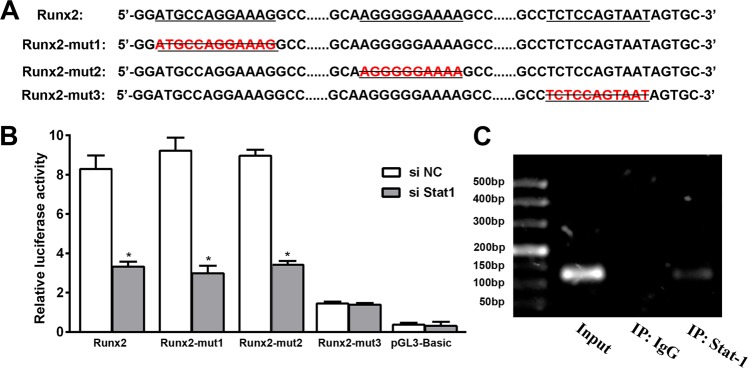
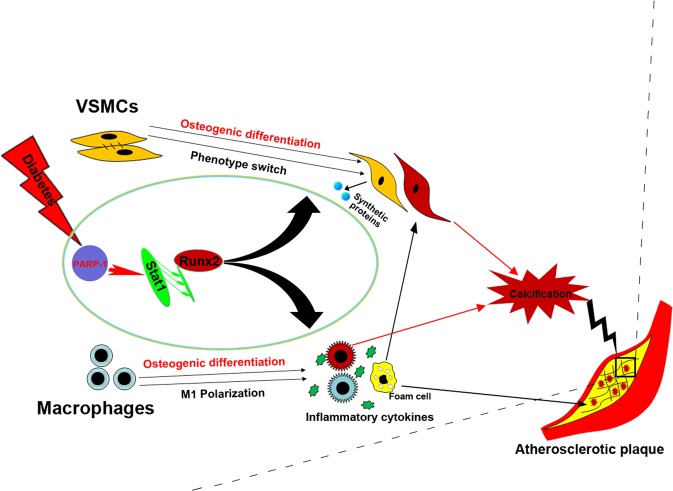
Accelerated atherosclerotic calcification is responsible for plaque burden, especially in diabetes. The regulatory mechanism for atherosclerotic calcification in diabetes is poorly characterized. Here we show that deletion of PARP-1, a main enzyme in diverse metabolic complications, attenuates diabetic atherosclerotic calcification and decreases vessel stiffening in mice through Runx2 suppression. Specifically, PARP-1 deficiency reduces diabetic arteriosclerotic calcification by regulating Stat1-mediated synthetic phenotype switching of vascular smooth muscle cells and macrophage polarization. Meanwhile, both vascular smooth muscle cells and macrophages manifested osteogenic differentiation in osteogenic media, which was attenuated by PARP-1/Stat1 inhibition. Notably, Stat1 acts as a positive transcription factor by directly binding to the promoter of Runx2 and promoting atherosclerotic calcification in diabetes. Our results identify a new function of PARP-1, in which metabolism disturbance-related stimuli activate the Runx2 expression mediated by Stat1 transcription to facilitate diabetic arteriosclerotic calcification. PARP-1 inhibition may therefore represent a useful therapy for this challenging complication.
Conflict of interest statement
The authors declare that they have no conflict of interest.
Figures
References
Publication types
MeSH terms
Substances
LinkOut - more resources
Full Text Sources
Medical
Molecular Biology Databases
Research Materials
Miscellaneous
