


Mortality associated with wildfire smoke exposure in Washington state, 2006-2017: a case-crossover study
- PMID: 31931820
- PMCID: PMC6958692
- DOI: 10.1186/s12940-020-0559-2
Mortality associated with wildfire smoke exposure in Washington state, 2006-2017: a case-crossover study
Abstract
Background: Wildfire events are increasing in prevalence in the western United States. Research has found mixed results on the degree to which exposure to wildfire smoke is associated with an increased risk of mortality.
Methods: We tested for an association between exposure to wildfire smoke and non-traumatic mortality in Washington State, USA. We characterized wildfire smoke days as binary for grid cells based on daily average PM2.5 concentrations, from June 1 through September 30, 2006-2017. Wildfire smoke days were defined as all days with assigned monitor concentration above a PM2.5 value of 20.4 μg/m3, with an additional set of criteria applied to days between 9 and 20.4 μg/m3. We employed a case-crossover study design using conditional logistic regression and time-stratified referent sampling, controlling for humidex.
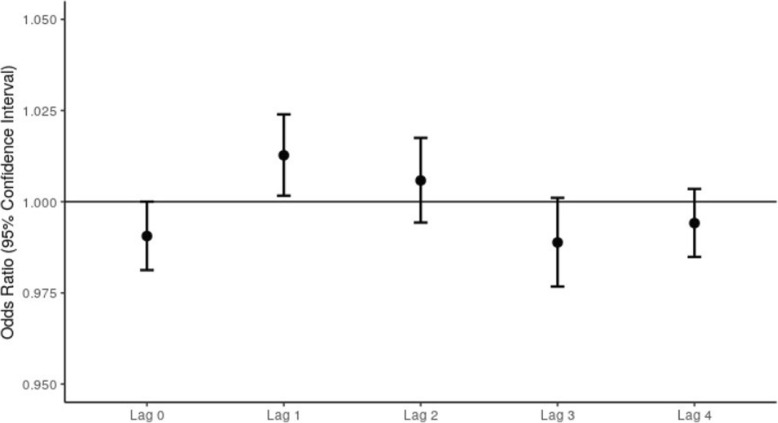
Results: The odds of all-ages non-traumatic mortality with same-day exposure was 1.0% (95% CI: - 1.0 - 4.0%) greater on wildfire smoke days compared to non-wildfire smoke days, and the previous day's exposure was associated with a 2.0% (95% CI: 0.0-5.0%) increase. When stratified by cause of mortality, odds of same-day respiratory mortality increased by 9.0% (95% CI: 0.0-18.0%), while the odds of same-day COPD mortality increased by 14.0% (95% CI: 2.0-26.0%). In subgroup analyses, we observed a 35.0% (95% CI: 9.0-67.0%) increase in the odds of same-day respiratory mortality for adults ages 45-64.
Conclusions: This study suggests increased odds of mortality in the first few days following wildfire smoke exposure. It is the first to examine this relationship in Washington State and will help inform local and state risk communication efforts and decision-making during future wildfire smoke events.
Keywords: Environmental epidemiology; Mortality; Wildfire; Wildfire smoke.
Conflict of interest statement
The authors declare that they have no competing interests.
Figures
References
-
- Dennison PE, Brewer SC, Arnold JD, Moritz MA. Geophysical research letters. Geophys Prospect. 2014;41:2928–2933.
-
- Joyce L, Running S, Breshears D, Dale V, Malmsheimer R, Sampson R, et al. Ch. 7: Forests. Climate change impacts in the United States: the third national climate assessment. 2014.
MeSH terms
Substances
LinkOut - more resources
Full Text Sources
Medical
