Propofol for endotracheal intubation in neonates: a dose-finding trial
- PMID: 31932363
- PMCID: PMC7547906
- DOI: 10.1136/archdischild-2019-318474
Propofol for endotracheal intubation in neonates: a dose-finding trial
Abstract
Objective: To find propofol doses providing effective sedation without side effects in neonates of different gestational ages (GA) and postnatal ages (PNA).
Design and setting: Prospective multicentere dose-finding study in 3 neonatal intensive care units.
Patients: Neonates with a PNA <28 days requiring non-emergency endotracheal intubation.
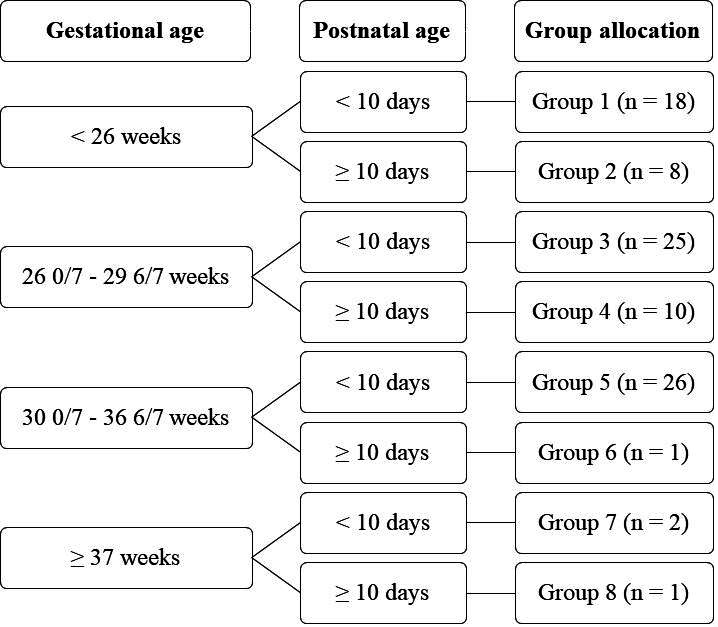
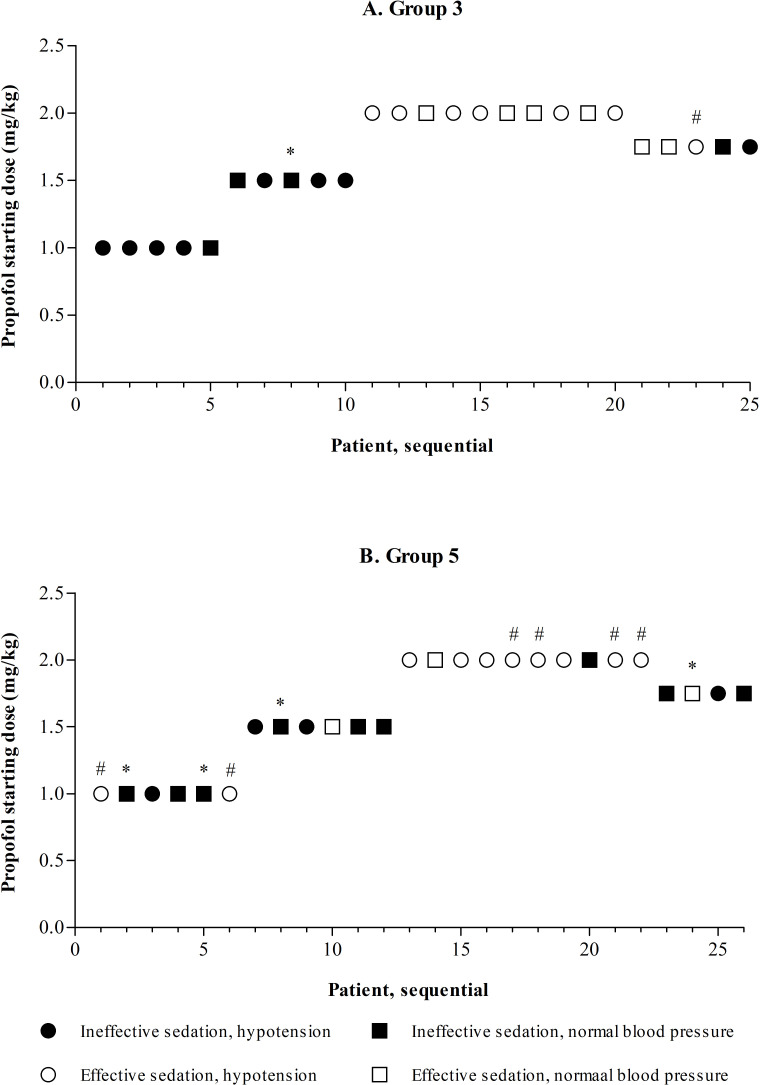
Interventions: Neonates were stratified into 8 groups based on GA and PNA. The first 5 neonates in every group received a dose of 1.0 mg/kg propofol. Based on sedative effect and side effects, the dose was increased or decreased in the next 5 patients until the optimal dose was found.
Main outcome measures: The primary outcome was the optimal single propofol starting dose that provides effective sedation without side effects in each age group.
Results: After inclusion of 91 patients, the study was prematurely terminated because the primary outcome was only reached in 13% of patients. Dose-finding was completed in 2 groups, but no optimal propofol dose was found. Effective sedation without side effects was achieved more often after a starting dose of 2.0 mg/kg (28%) than after 1.0 mg/kg (3%) and 1.5 mg/kg (9%). Propofol-induced hypotension occurred in 59% of patients. Logistic regression analyses showed that GA and PNA did not predict effective sedation or the occurrence of hypotension.
Conclusions: Effective sedation without side effects is difficult to achieve with propofol and the optimal dose in different age groups of neonates could not be determined. The sedative effect of propofol and the occurrence of hypotension are unpredictable and show large inter-individual variability in the neonatal population.
Keywords: analgesia; neonatology; pain; pharmacology.
© Author(s) (or their employer(s)) 2020. Re-use permitted under CC BY. Published by BMJ.
Conflict of interest statement
Competing interests: None declared.
Figures
References
Publication types
MeSH terms
Substances
LinkOut - more resources
Full Text Sources