


PIC, a paediatric-specific intensive care database
- PMID: 31932583
- PMCID: PMC6957490
- DOI: 10.1038/s41597-020-0355-4
PIC, a paediatric-specific intensive care database
Abstract
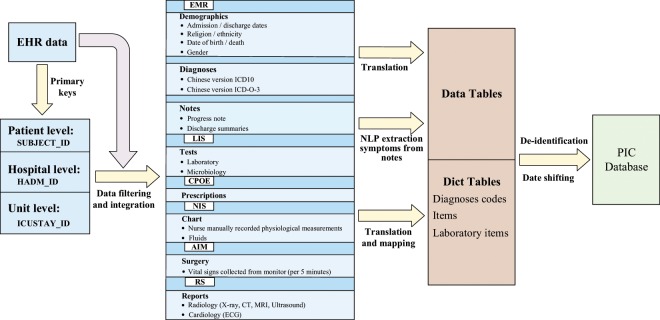
PIC (Paediatric Intensive Care) is a large paediatric-specific, single-centre, bilingual database comprising information relating to children admitted to critical care units at a large children's hospital in China. The database is deidentified and includes vital sign measurements, medications, laboratory measurements, fluid balance, diagnostic codes, length of hospital stays, survival data, and more. The data are publicly available after registration, which includes completion of a training course on research with human subjects and signing of a data use agreement mandating responsible handling of the data and adherence to the principle of collaborative research. Although the PIC can be considered an extension of the widely used MIMIC (Medical Information Mart for Intensive Care) database in the field of paediatric critical care, it has many unique characteristics and can support database-based academic and industrial applications such as machine learning algorithms, clinical decision support tools, quality improvement initiatives, and international data sharing.
Conflict of interest statement
The authors declare no competing interests.
Figures


References
-
- Henry, J., Pylypchuk, Y., Searcy, T. & Patel, V. Adoption of Electronic Health Record Systems among U.S. Non-Federal Acute Care Hospitals: 2008–2015. ONC Data Brief, no. 35. (The Office of the National Coordinator for Health Information Technology, 2016).
-
- MIT Critical Data. Secondary Analysis of Electronic Health Records. Secondary Analysis of Electronic Health Records (Springer International Publishing, 2016). - PubMed
Publication types
MeSH terms
Grants and funding
LinkOut - more resources
Full Text Sources
Other Literature Sources
Medical
