


Biofortification of Pulse Crops: Status and Future Perspectives
- PMID: 31935879
- PMCID: PMC7020478
- DOI: 10.3390/plants9010073
Biofortification of Pulse Crops: Status and Future Perspectives
Abstract
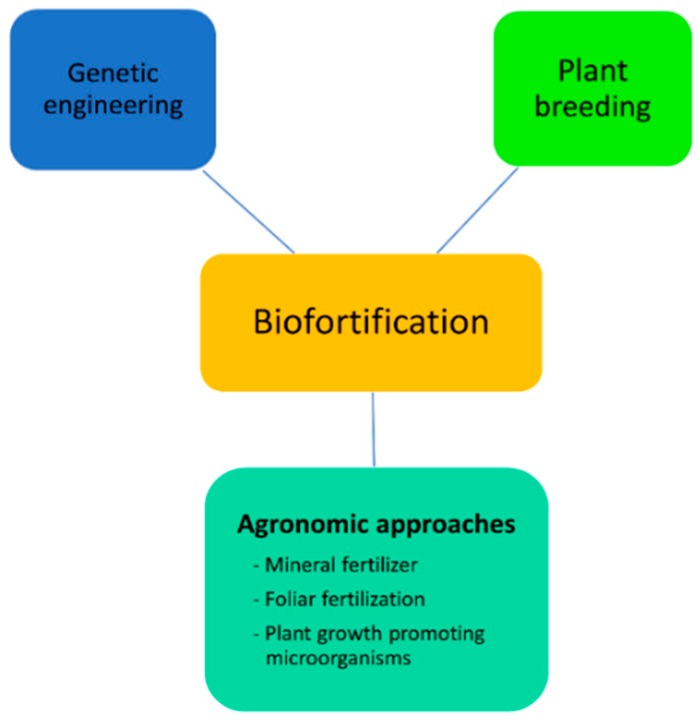
Biofortification through plant breeding is a sustainable approach to improve the nutritional profile of food crops. The majority of the world's population depends on staple food crops; however, most are low in key micronutrients. Biofortification to improve the nutritional profile of pulse crops has increased importance in many breeding programs in the past decade. The key micronutrients targeted have been iron, zinc, selenium, iodine, carotenoids, and folates. In recent years, several biofortified pulse crops including common beans and lentils have been released by HarvestPlus with global partners in developing countries, which has helped in overcoming micronutrient deficiency in the target population. This review will focus on recent research advances and future strategies for the biofortification of pulse crops.
Keywords: biofortification; carotenoid; folate; iodine; iron; pulse; selenium; zinc.
Conflict of interest statement
The authors declare no conflict of interest.
Figures
References
-
- FAO . The State of Food and Agriculture. Food and Agriculture Organization; Rome, Italy: 2013.
Publication types
Grants and funding
LinkOut - more resources
Full Text Sources
Miscellaneous
