


Prognostic role of pretreatment blood lymphocyte count in patients with solid tumors: a systematic review and meta-analysis
- PMID: 31938023
- PMCID: PMC6954501
- DOI: 10.1186/s12935-020-1094-5
Prognostic role of pretreatment blood lymphocyte count in patients with solid tumors: a systematic review and meta-analysis
Abstract
Background: To evaluate the prognostic value of pretreatment lymphocyte counts with respect to clinical outcomes in patients with solid tumors.
Methods: Systematic literature search of electronic databases (Pubmed, Embase and Web of Science) up to May 1, 2018 was carried out by two independent reviewers. We included Eligible studies assessed the prognostic impact of pretreatment lymphocytes and had reported hazard ratios (HR) with 95% confidence intervals (CIs) for endpoints including overall survival (OS) and progression-free survival (PFS). Only English publications were included.
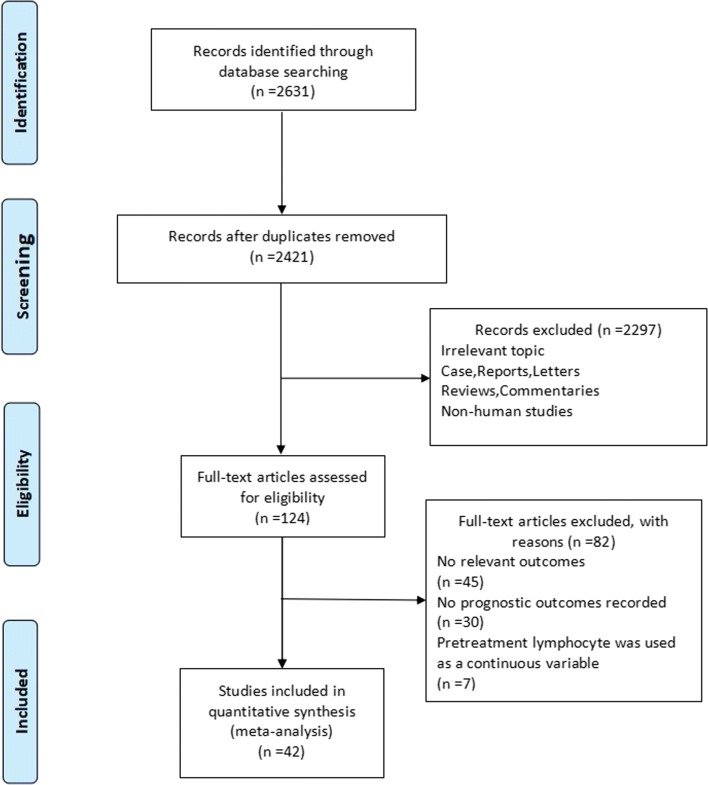
Results: A total of 42 studies comprising 13,272 patients were included in this systematic review and meta-analysis. Low pretreatment lymphocyte count was associated with poor OS (HR = 1.27, 95% CI 1.16-1.39, P < 0.001, I2 = 58.5%) and PFS (HR = 1.27, 95% CI 1.15-1.40, P < 0.001, I2 = 25.7%). Subgroup analysis disaggregated by cancer type indicated that low pretreatment lymphocytes were most closely associated with poor OS in colorectal cancer followed by breast cancer and renal cancer.
Conclusions: Low pretreatment lymphocyte count may represent an unfavorable prognostic factor for clinical outcomes in patients with solid tumors.
Keywords: Lymphocyte; Pretreatment; Prognosis; Solid tumor.
© The Author(s) 2020.
Conflict of interest statement
Competing interestsThe authors declared no potential competing interests with respect to the research, authorship, publication of this article.
Figures


References
LinkOut - more resources
Full Text Sources
