


Global reach of ageism on older persons' health: A systematic review
- PMID: 31940338
- PMCID: PMC6961830
- DOI: 10.1371/journal.pone.0220857
Global reach of ageism on older persons' health: A systematic review
Abstract
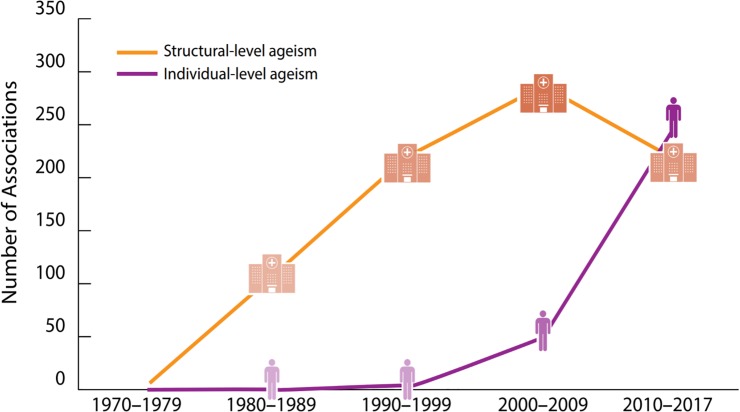
Objective: Although there is anecdotal evidence of ageism occurring at both the structural level (in which societal institutions reinforce systematic bias against older persons) and individual level (in which older persons take in the negative views of aging of their culture), previous systematic reviews have not examined how both levels simultaneously influence health. Thus, the impact of ageism may be underestimated. We hypothesized that a comprehensive systematic review would reveal that these ageism levels adversely impact the health of older persons across geography, health outcomes, and time.
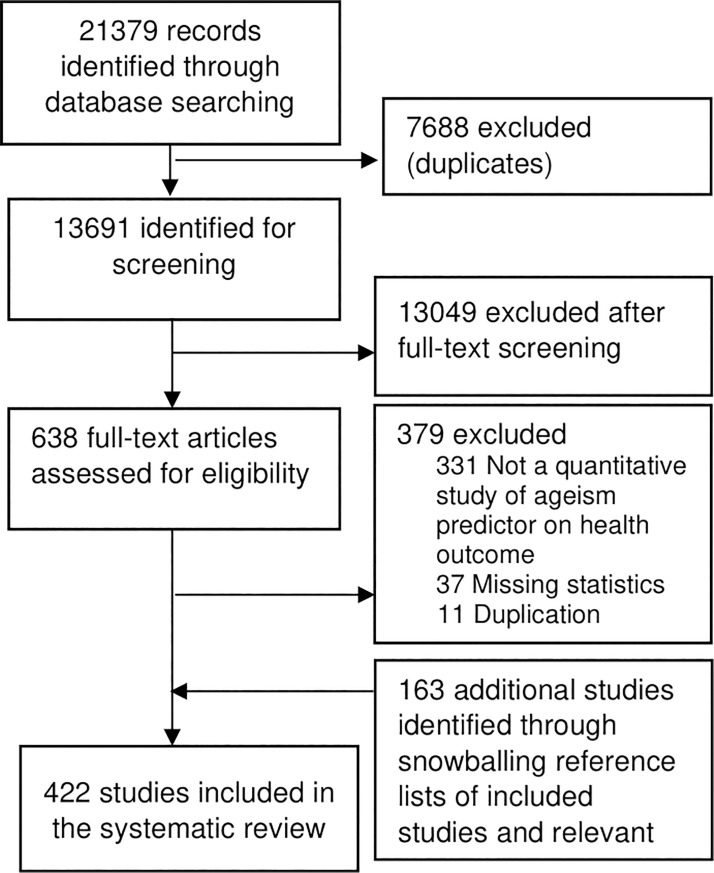
Method: A literature search was performed using 14 databases with no restrictions on region, language, and publication type. The systematic search yielded 13,691 papers for screening, 638 for full review, and 422 studies for analyses. Sensitivity analyses that adjusted for sample size and study quality were conducted using standardized tools. The study protocol is registered (PROSPERO CRD42018090857).
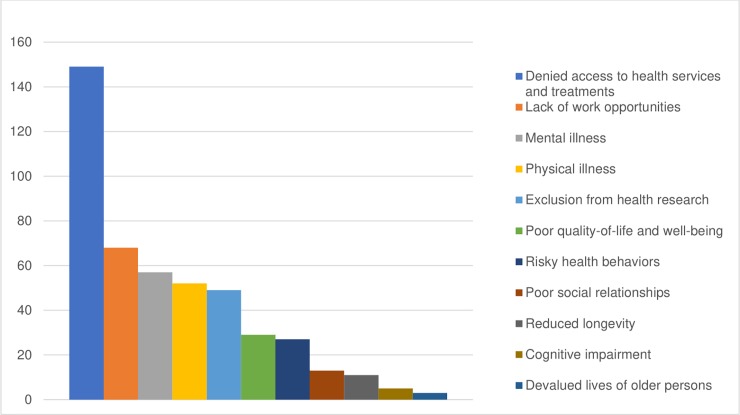
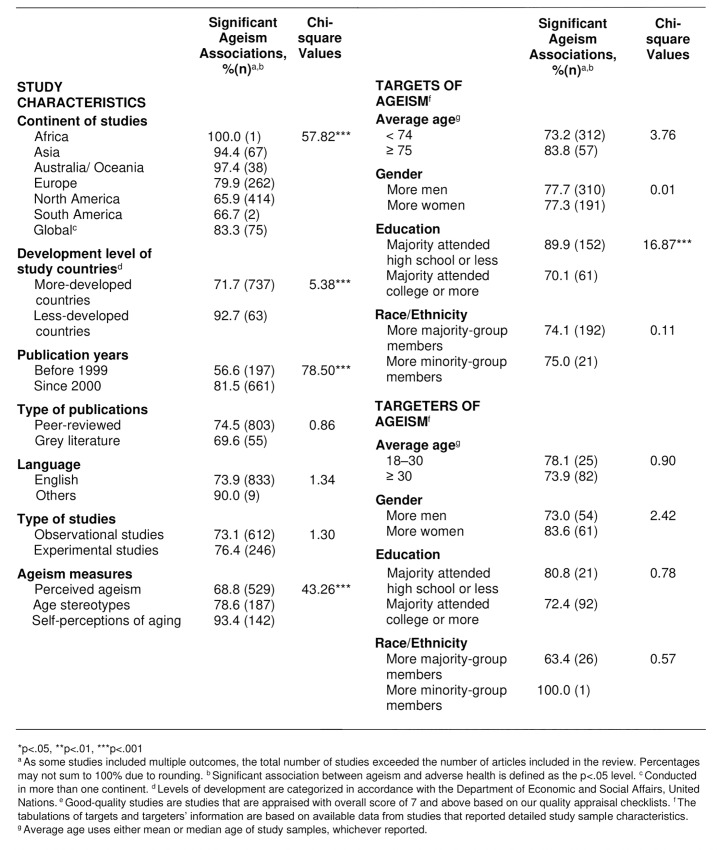
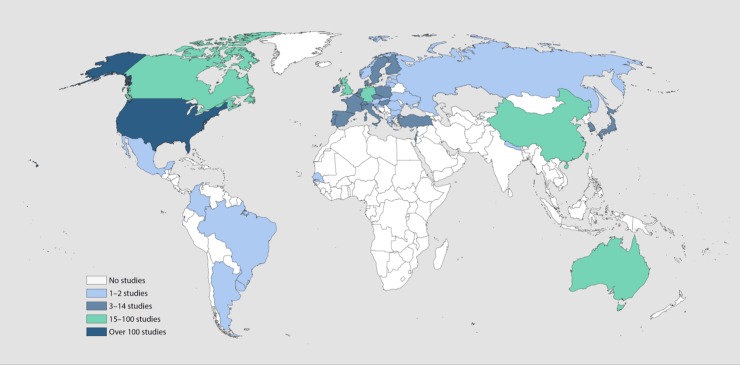
Results: Ageism led to significantly worse health outcomes in 95.5% of the studies and 74.0% of the 1,159 ageism-health associations examined. The studies reported ageism effects in all 45 countries, 11 health domains, and 25 years studied, with the prevalence of significant findings increasing over time (p < .0001). A greater prevalence of significant ageism-health findings was found in less-developed countries than more-developed countries (p = .0002). Older persons who were less educated were particularly likely to experience adverse health effects of ageism. Evidence of ageism was found across the age, sex, and race/ethnicity of the targeters (i.e., persons perpetrating ageism).
Conclusion: The current analysis which included over 7 million participants is the most comprehensive review of health consequences of ageism to date. Considering that the analysis revealed that the detrimental impact of ageism on older persons' health has been occurring simultaneously at the structural and individual level in five continents, our systematic review demonstrates the pernicious reach of ageism.
Conflict of interest statement
The authors have declared that no competing interests exist.
Figures
References
Publication types
MeSH terms
Grants and funding
LinkOut - more resources
Full Text Sources
Medical
