


Fundamentals for a Systematic Approach to Mild and Moderate Inherited Bleeding Disorders: An EHA Consensus Report
- PMID: 31942541
- PMCID: PMC6919472
- DOI: 10.1097/HS9.0000000000000286
Fundamentals for a Systematic Approach to Mild and Moderate Inherited Bleeding Disorders: An EHA Consensus Report
Abstract
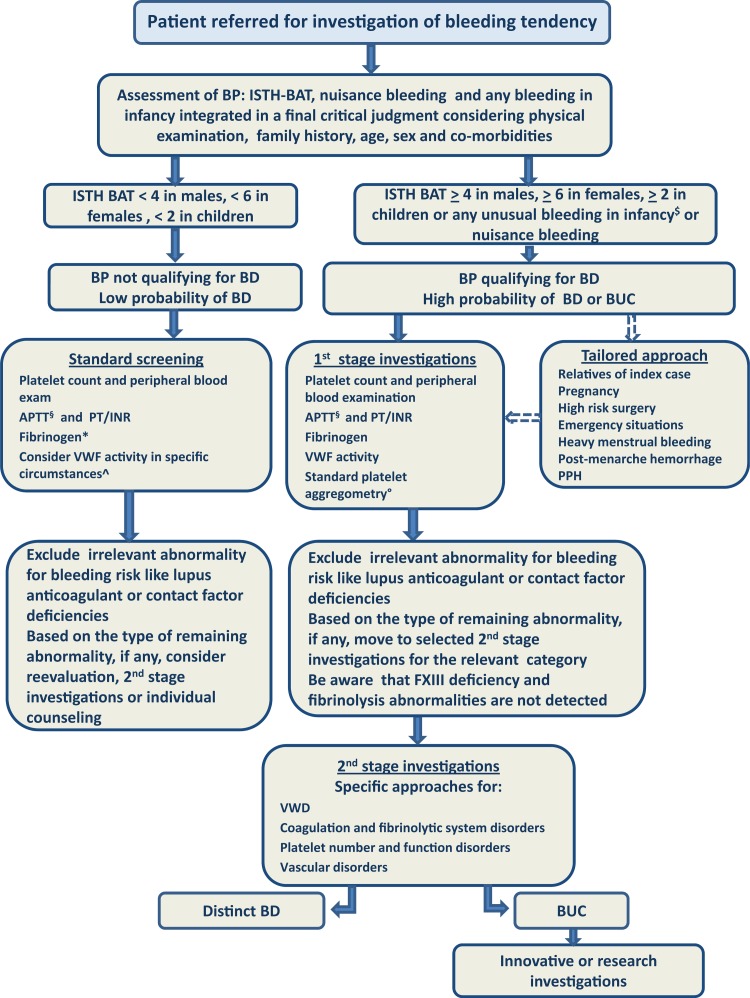
Healthy subjects frequently report minor bleedings that are frequently 'background noise' of normality rather than a true disorder. Nevertheless, unexpected or unusual bleeding may be alarming. Thus, the distinction between normal and pathologic bleeding is critical. Understanding the underlying pathologic mechanism in patients with an excessive bleeding is essential for their counseling and treatment. Most of these patients with significant bleeding will result affected by non-severe inherited bleeding disorders (BD), collectively denominated mild or moderate BD for their relatively benign course. Unfortunately, practical recommendations for the management of these disorders are still lacking due to the current state of fragmented knowledge of pathophysiology and lack of a systematic diagnostic approach. To address this gap, an International Working Group (IWG) was established by the European Hematology Association (EHA) to develop consensus-based guidelines on these disorders. The IWG agreed that grouping these disorders by their clinical phenotype under the single category of mild-to-moderate bleeding disorders (MBD) reflects current clinical practice and will facilitate a systematic diagnostic approach. Based on standardized and harmonized definitions a conceptual unified framework is proposed to distinguish normal subjects from affected patients. The IWG proposes a provisional comprehensive patient-centered initial diagnostic approach that will result in classification of MBD into distinct clinical-pathological entities under the overarching principle of clinical utility for the individual patient. While we will present here a general overview of the global management of patients with MBD, this conceptual framework will be adopted and validated in the evidence-based, disease-specific guidelines under development by the IWG.
Copyright © 2019 the Author(s). Published by Wolters Kluwer Health, Inc. on behalf of the European Hematology Association.
Conflict of interest statement
The authors have indicated they have no potential conflicts of interest to disclose.
Figures
References
-
- Rodeghiero F, Tosetto A, Castaman G. How to estimate bleeding risk in mild bleeding disorders. J Thromb Haemost. 2007;5 Suppl 1:157–166. - PubMed
-
- Boender J, Kruip MJ, Leebeek FW. A diagnostic approach to mild bleeding disorders. J Thromb Haemost. 2016;14:1507–1516. - PubMed
-
- Gebhart J, Hofer S, Panzer S, et al. High proportion of patients with bleeding of unknown cause in persons with a mild-to-moderate bleeding tendency: Results from the Vienna Bleeding Biobank (VIBB). Haemophilia. 2018;24:405–413. - PubMed
Publication types
Grants and funding
LinkOut - more resources
Full Text Sources
Miscellaneous