


Trends and Patterns of Phthalates and Phthalate Alternatives Exposure in Pregnant Women from Mexico City during 2007-2010
- PMID: 31944681
- PMCID: PMC7094762
- DOI: 10.1021/acs.est.9b05836
Trends and Patterns of Phthalates and Phthalate Alternatives Exposure in Pregnant Women from Mexico City during 2007-2010
Abstract
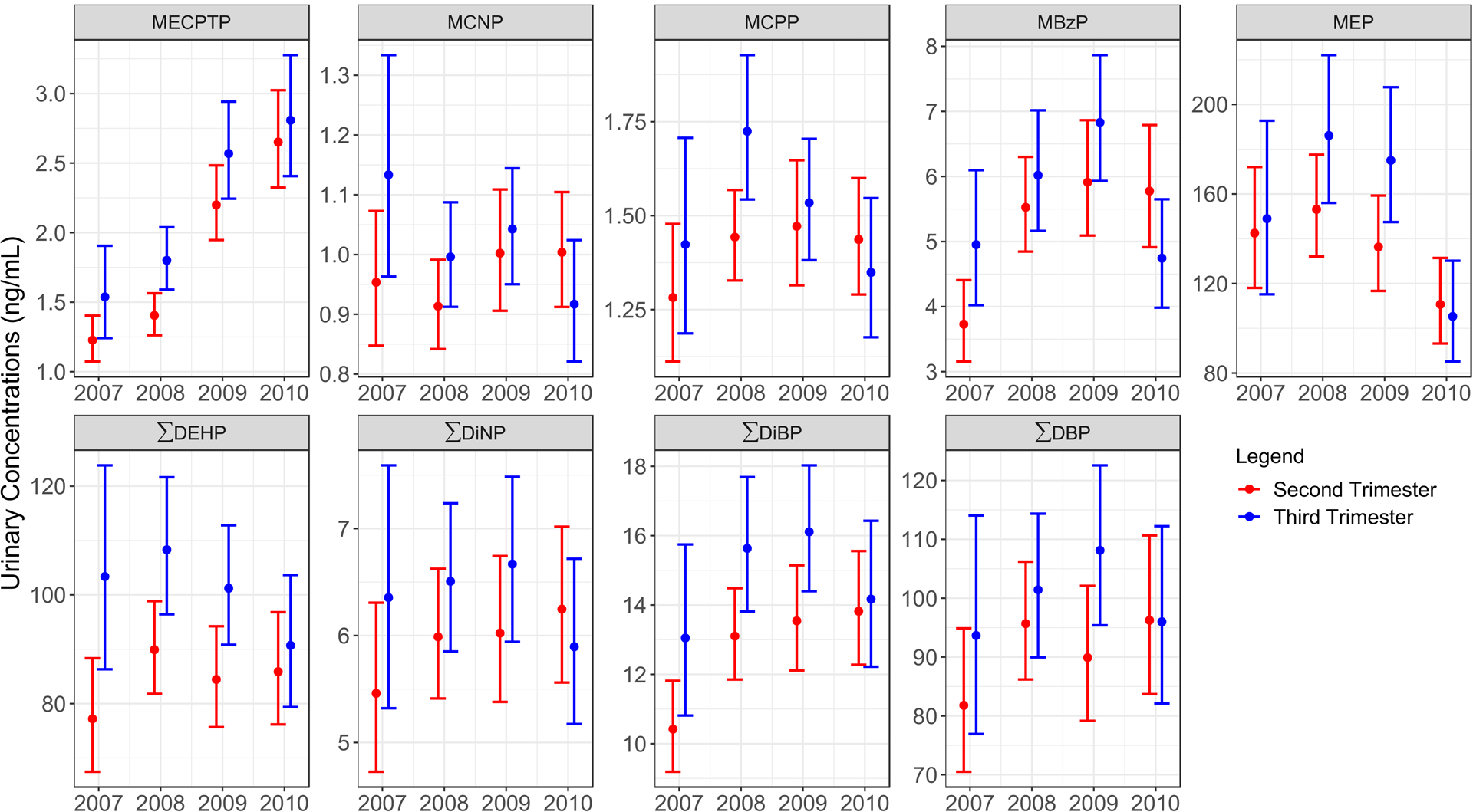
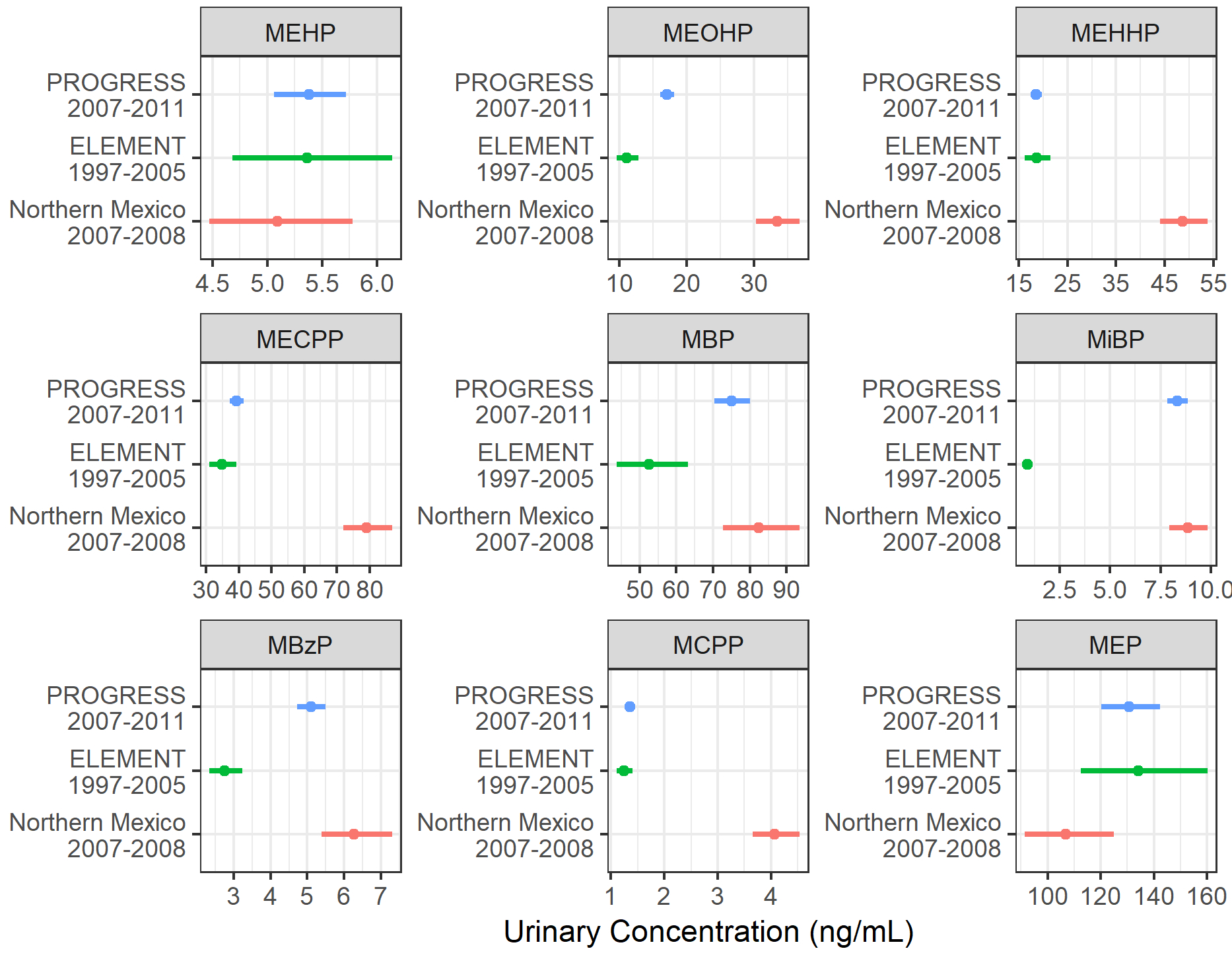
Phthalates are associated with several adverse health outcomes, but few studies have evaluated phthalate exposures in Mexican populations, particularly pregnant women. Between 2007 and 2011, 948 pregnant women from Mexico City were recruited as part of the PROGRESS cohort. We quantified 17 metabolites of phthalates and phthalate alternatives in urine samples collected during the second and third trimesters and examined temporal trends of metabolite concentrations, within-person reproducibility, and relations of individual metabolites with sociodemographic, lifestyle, and occupational factors. Concentrations of mono-2-ethyl-5-carboxypentyl terephthalate, a metabolite of the alternative phthalate di-2-ethylhexyl terephthalate, increased monotonically from 2007 to 2010 (31% per year; 95% confidence interval = 23 and 39%). We observed moderate to high correlations among metabolites collected at the same visit, but there was high variability between second and third trimester phthalate metabolite concentrations (intraclass correlation coefficients = 0.17-0.35). In general, higher socioeconomic status was associated with higher phthalate concentrations. Some metabolites were associated with maternal age and education, but no consistent patterns were observed. Women working in the home and those who worked in administration had higher concentrations of several phthalate metabolites relative to students, professionals, and those in customer service. Biomonitoring efforts are warranted to investigate present and future exposure trends and patterns.
Figures
References
-
- Phthalates, N. R. C. (US) C. on the H. R. of Phthalate Exposure Assessment in Humans; National Academies Press; (US: ), 2008.
MeSH terms
Substances
Grants and funding
LinkOut - more resources
Full Text Sources
