


Inhibition of TrkB kinase activity impairs transdiaphragmatic pressure generation
- PMID: 31944892
- PMCID: PMC7052584
- DOI: 10.1152/japplphysiol.00564.2019
Inhibition of TrkB kinase activity impairs transdiaphragmatic pressure generation
Abstract
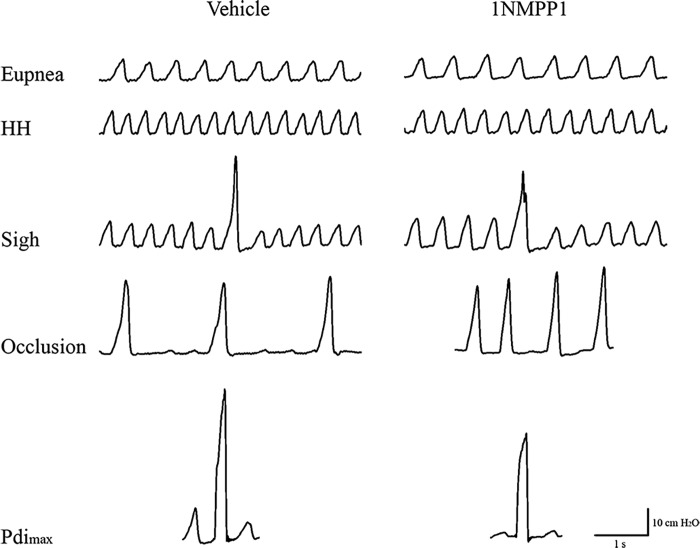
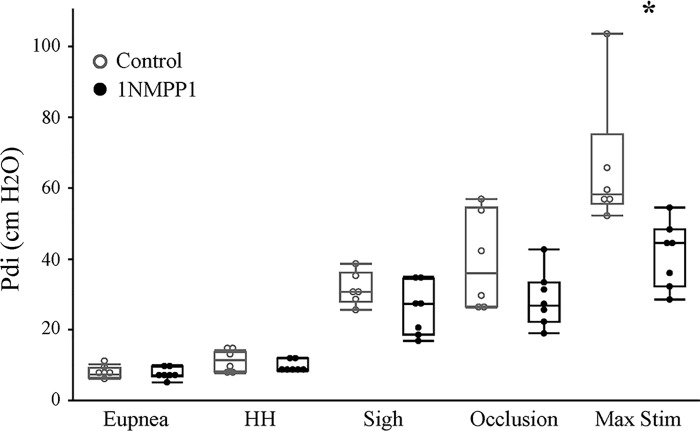
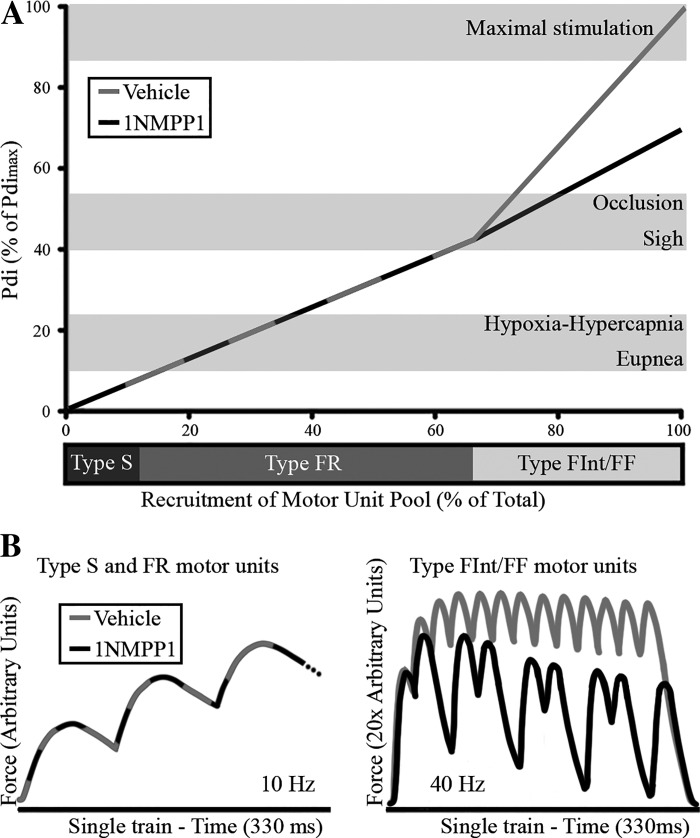
Signaling via the tropomyosin-related kinase receptor subtype B (TrkB) regulates neuromuscular transmission, and inhibition of TrkB kinase activity by 1NMPP1 in TrkBF616A mice worsens neuromuscular transmission failure (NMTF). We hypothesized that acute inhibition of TrkB kinase activity will impair the ability of the diaphragm muscle to produce maximal transdiaphragmatic pressure (Pdi) without impacting the ability to generate forces associated with ventilation, consistent with the greater susceptibility to NMTF in motor units responsible for higher-force nonventilatory behaviors. Adult male and female TrkBF616A mice were injected with 1NMPP1 (n = 8) or vehicle (DMSO; n = 8) 1 h before Pdi measurements during eupneic breathing, hypoxia/hypercapnia (10% O2/5% CO2), tracheal occlusion, spontaneous deep breaths ("sighs") and during maximal activation elicited by bilateral phrenic nerve stimulation. In the vehicle-treated group, Pdi increased from ~10 cmH2O during eupnea and hypoxia/hypercapnia, to ~35 cmH2O during sighs and tracheal occlusion, and to ~65 cm H2O during maximal stimulation. There was no effect of acute 1NMPP1 treatment on Pdi generated during most behaviors, except during maximal stimulation (~30% reduction; P < 0.05). This reduction in maximal Pdi is generally similar to the worsening of NMTF previously reported with TrkB kinase inhibition in rodents. Accordingly, impaired TrkB signaling limits the range of motor behaviors accomplished by the diaphragm muscle and may contribute to neuromuscular dysfunction, primarily by impacting fatigable, higher force-generating motor units.NEW & NOTEWORTHY TrkB signaling plays an important role in maintaining neuromuscular function in the diaphragm muscle and may be necessary to accomplish the various motor behaviors ranging from ventilation to expulsive, behaviors requiring near-maximal forces. This study shows that inhibition of TrkB kinase activity impairs maximal pressure generation by the diaphragm muscle, but the ability to generate the lower pressures required for ventilatory behaviors is not impacted.
Keywords: diaphragm muscle; motor unit; neuromuscular junction; neuromuscular transmission; neurotrophins.
Conflict of interest statement
No conflicts of interest, financial or otherwise, are declared by the authors.
Figures
References
-
- Ermilov LG, Pulido JN, Atchison FW, Zhan WZ, Ereth MH, Sieck GC, Mantilla CB. Impairment of diaphragm muscle force and neuromuscular transmission after normothermic cardiopulmonary bypass: effect of low-dose inhaled CO. Am J Physiol Regul Integr Comp Physiol 298: R784–R789, 2010. doi:10.1152/ajpregu.00737.2009. - DOI - PMC - PubMed
Publication types
MeSH terms
Substances
Grants and funding
LinkOut - more resources
Full Text Sources
