


Economic burden of maternal morbidity - A systematic review of cost-of-illness studies
- PMID: 31945775
- PMCID: PMC6964978
- DOI: 10.1371/journal.pone.0227377
Economic burden of maternal morbidity - A systematic review of cost-of-illness studies
Abstract
Aim: To estimate the economic burden of common health problems associated with pregnancy and childbirth, such as incontinence, mental health problems, or gestational diabetes, excluding acute complications of labour or birth, or severe acute adverse maternal outcomes.
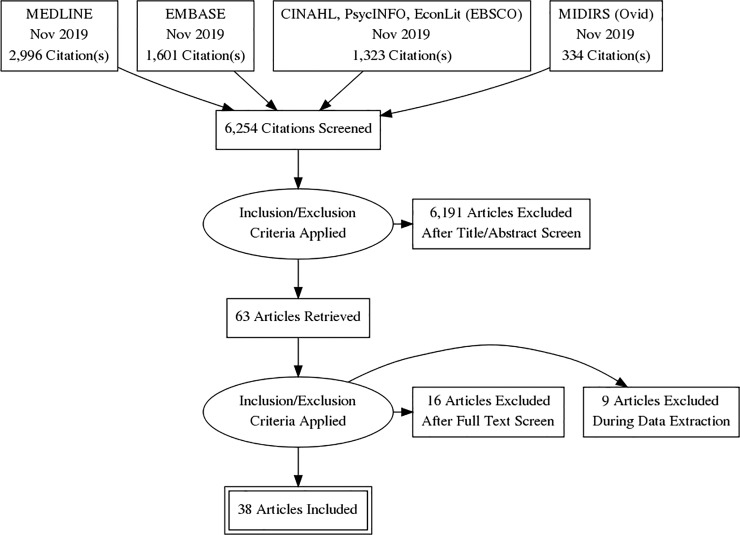
Methods: Searches for relevant studies were carried out to November 2019 in Medline, Embase, CINAHL, PsycINFO and EconLit databases. After initial screening, all results were reviewed for inclusion by two authors. An adapted version of a previously developed checklist for cost-of-illness studies was used for quality appraisal. All costs were converted to 2018 Euro using national consumer price indices and purchasing power parity conversion factors.
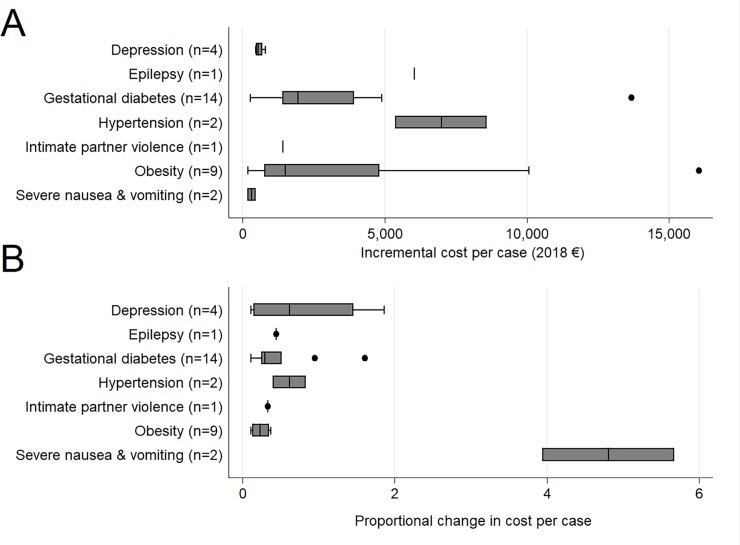
Results: Thirty-eight relevant studies were identified, some of which reported incremental costs for more than one health problem (16 gestational diabetes, 13 overweight/obesity, 8 mental health, 4 hypertensive disorders, 2 nausea and vomiting, 2 epilepsy, 1 intimate partner violence). A high level of heterogeneity was observed in both the methods used, and the incremental cost estimates obtained for each morbidity. Average incremental costs tended to be higher in studies that modelled a hypothetical cohort of women using data from a range of sources (compared to analyses of primary data), and in studies set in the United States. No studies that examined the economic burden of some common pregnancy-related morbidities, such as incontinence, pelvic girdle pain, or sexual health problems, were identified.
Conclusion: Our findings indicate that maternal morbidity is associated with significant costs to health systems and society, but large gaps remain in the evidence base for the economic burden of some common health problems associated with pregnancy and childbirth. More research is needed to examine the economic burden of a range of common maternal health problems, and future research should adopt consistent methodological approaches to ensure comparability of results.
Conflict of interest statement
The authors have declared that no competing interests exist.
Figures
References
-
- James SL, Abate D, Abate KH, Abay SM, Abbafati C, Abbasi N, et al. Global, regional, and national incidence, prevalence, and years lived with disability for 354 diseases and injuries for 195 countries and territories, 1990–2017: a systematic analysis for the Global Burden of Disease Study 2017. The Lancet. 2018;392(10159):1789–858. 10.1016/S0140-6736(18)32279-7 - DOI - PMC - PubMed
-
- Gon G, Leite A, Calvert C, Woodd S, Graham WJ, Filippi V. The frequency of maternal morbidity: A systematic review of systematic reviews. International journal of gynaecology and obstetrics: the official organ of the International Federation of Gynaecology and Obstetrics. 2018;141 Suppl 1:20–38. Epub 2018/06/01. 10.1002/ijgo.12468 - DOI - PMC - PubMed
-
- O'Malley D, Higgins A, Begley C, Daly D, Smith V. Prevalence of and risk factors associated with sexual health issues in primiparous women at 6 and 12 months postpartum; a longitudinal prospective cohort study (the MAMMI study). BMC pregnancy and childbirth. 2018;18(1):196 Epub 2018/06/02. 10.1186/s12884-018-1838-6 - DOI - PMC - PubMed
Publication types
MeSH terms
LinkOut - more resources
Full Text Sources
Medical
