


Sarcopenia and Heart Failure
- PMID: 31947528
- PMCID: PMC7019352
- DOI: 10.3390/nu12010211
Sarcopenia and Heart Failure
Abstract
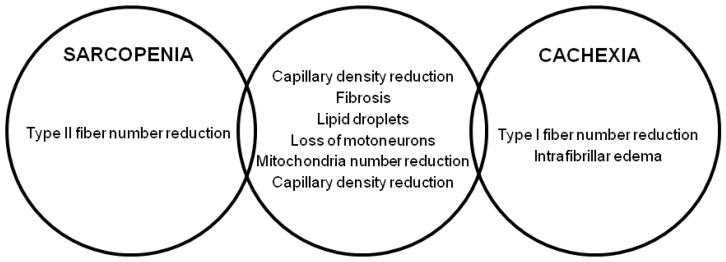
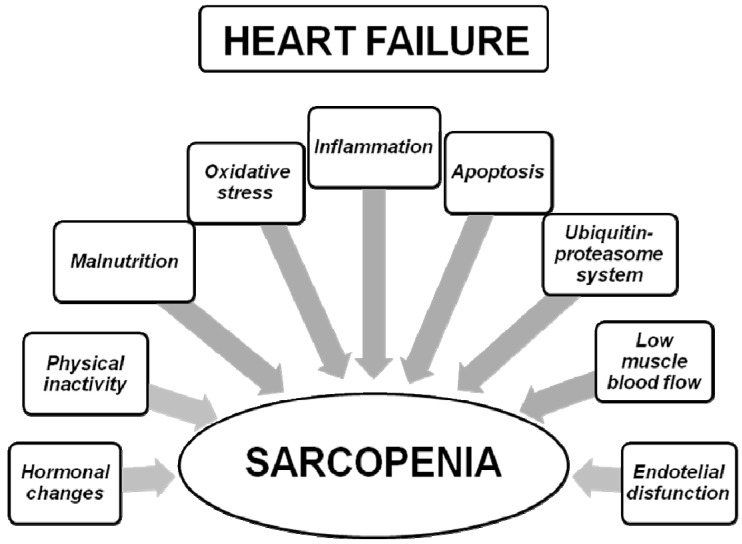
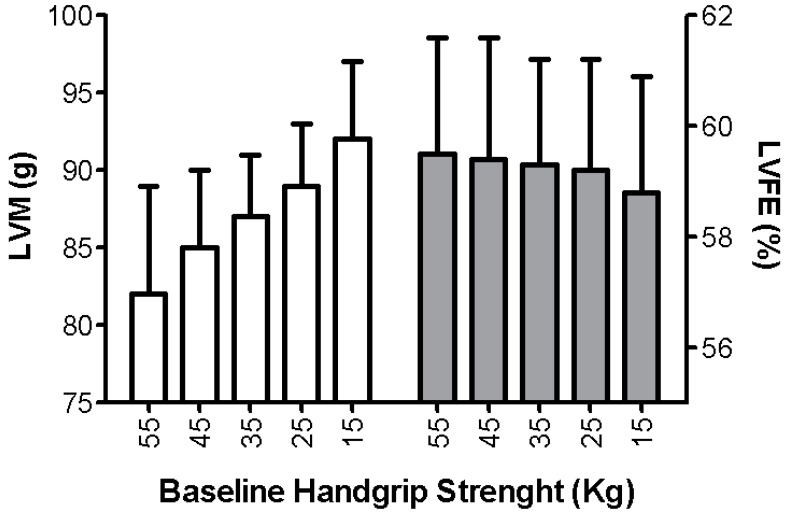
Modifications of lean mass are a frequent critical determinant in the pathophysiology and progression of heart failure (HF). Sarcopenia may be considered one of the most important causes of low physical performance and reduced cardiorespiratory fitness in older patients with HF. Sarcopenia is frequently misdiagnosed as cachexia. However, muscle wasting in HF has different pathogenetic features in sarcopenic and cachectic conditions. HF may induce sarcopenia through common pathogenetic pathways such as hormonal changes, malnutrition, and physical inactivity; mechanisms that influence each other. In the opposite way, sarcopenia may favor HF development by different mechanisms, including pathological ergoreflex. Paradoxically, sarcopenia is not associated with a sarcopenic cardiac muscle, but the cardiac muscle shows a hypertrophy which seems to be "not-functional." First-line agents for the treatment of HF, physical activity and nutritional interventions, may offer a therapeutic advantage in sarcopenic patients irrespective of HF. Thus, sarcopenia is highly prevalent in patients with HF, contributing to its poor prognosis, and both conditions could benefit from common treatment strategies based on pharmacological, physical activity, and nutritional approaches.
Keywords: cachexia; elderly; heart failure; malnutrition; physical activity; sarcopenia.
Conflict of interest statement
The authors declare that they have no conflict of interest.
Figures
References
-
- Ponikowski P., Voors Adriaan A., Anker S.D., Bueno H., Cleland J.G.F., Coats A.J.S., Falk V., Gonzlez-Juanatey J.R., Harjola V.-P., Jankowska E.A., et al. ESC Guidelines for the diagnosis and treatment of acute and chronic heart failure: The Task Force for the diagnosis and treatment of acute and chronic heart failure of the European Society of Cardiology (ESC). Developed with the special contribution of the Heart Failure Association (HFA) of the ESC. Eur. J. Heart Fail. 2016;18:891–975. - PubMed
-
- Go A.S., Mozaffarian D., Roger V.L., Benjamin E.J., Berry J.D., Blaha M.J., Dai S., Ford E.S., Fox C.S., Franco S., et al. Heart disease and stroke statistics—2014 update: A report from the American Heart Association. Circulation. 2014;129:e28–e292. doi: 10.1161/01.cir.0000441139.02102.80. - DOI - PMC - PubMed
-
- Muscaritoli M., Anker S.D., Argilés J., Aversa Z., Bauer J.M., Biolo G., Boirie Y., Bosaeus I., Cederholm T., Costelli P., et al. Consensus definition of sarcopenia, cachexia and pre-cachexia: Joint document elaborated by Special Interest Groups (SIG) “cachexia-anorexia in chronic wasting diseases” and “nutrition in geriatrics”. Clin. Nutr. 2010;29:154–159. doi: 10.1016/j.clnu.2009.12.004. - DOI - PubMed
Publication types
MeSH terms
LinkOut - more resources
Full Text Sources
Medical
Research Materials
Miscellaneous
