


Oxidative Stress-Responsive MicroRNAs in Heart Injury
- PMID: 31948131
- PMCID: PMC6981696
- DOI: 10.3390/ijms21010358
Oxidative Stress-Responsive MicroRNAs in Heart Injury
Abstract
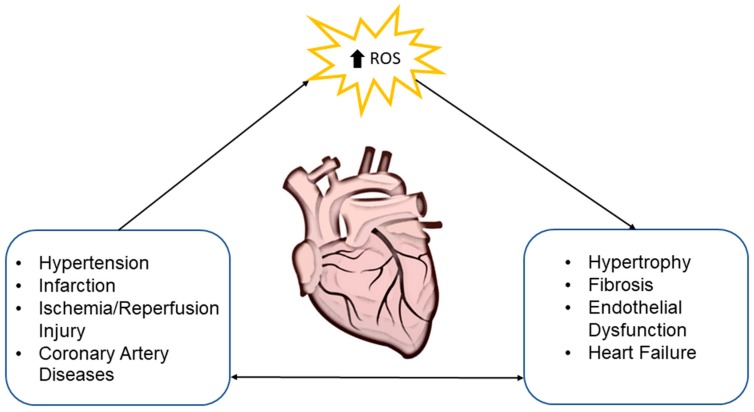
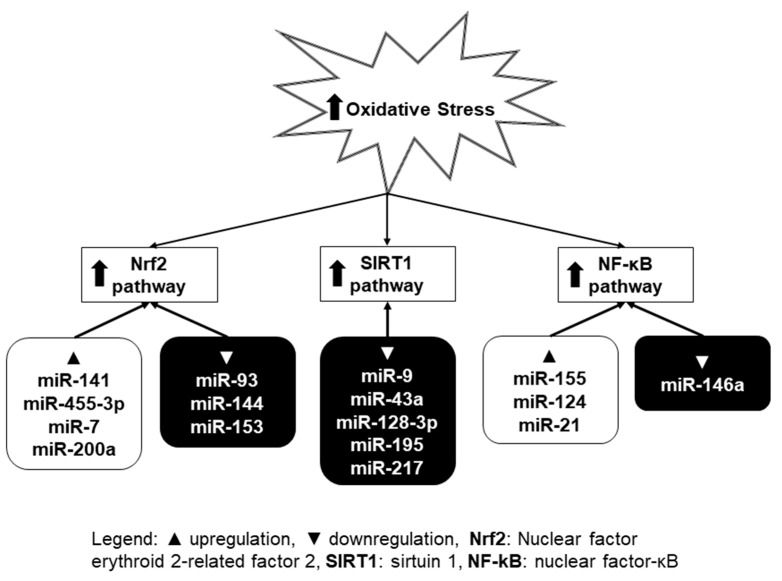
Reactive oxygen species (ROS) are important molecules in the living organisms as a part of many signaling pathways. However, if overproduced, they also play a significant role in the development of cardiovascular diseases, such as arrhythmia, cardiomyopathy, ischemia/reperfusion injury (e.g., myocardial infarction and heart transplantation), and heart failure. As a result of oxidative stress action, apoptosis, hypertrophy, and fibrosis may occur. MicroRNAs (miRNAs) represent important endogenous nucleotides that regulate many biological processes, including those involved in heart damage caused by oxidative stress. Oxidative stress can alter the expression level of many miRNAs. These changes in miRNA expression occur mainly via modulation of nuclear factor erythroid 2-related factor 2 (Nrf2), sirtuins, calcineurin/nuclear factor of activated T cell (NFAT), or nuclear factor kappa B (NF-κB) pathways. Up until now, several circulating miRNAs have been reported to be potential biomarkers of ROS-related cardiac diseases, including myocardial infarction, hypertrophy, ischemia/reperfusion, and heart failure, such as miRNA-499, miRNA-199, miRNA-21, miRNA-144, miRNA-208a, miRNA-34a, etc. On the other hand, a lot of studies are aimed at using miRNAs for therapeutic purposes. This review points to the need for studying the role of redox-sensitive miRNAs, to identify more effective biomarkers and develop better therapeutic targets for oxidative-stress-related heart diseases.
Keywords: cardiovascular diseases; ischemia/reperfusion injury; miRNA; oxidative stress; transplantation.
Conflict of interest statement
The authors declare no conflicts of interest.
Figures
References
-
- Roth G.A., Abate D., Abate K.H., Abay S.M., Abbafati C., Abbasi N., Abbastabar H., Abd-Allah F., Abdela J., Abdelalim A., et al. Global, regional, and national age-sex-specific mortality for 282 causes of death in 195 countries and territories, 1980–2017: A systematic analysis for the Global Burden of Disease Study 2017. Lancet. 2018;392:1736–1788. doi: 10.1016/S0140-6736(18)32203-7. - DOI - PMC - PubMed
-
- WHO About Cardiovascular Diseases. [(accessed on 30 October 2019)]; Available online: https://www.who.int/cardiovascular_diseases/about_cvd/en/
Publication types
MeSH terms
Substances
Grants and funding
LinkOut - more resources
Full Text Sources
Medical
Research Materials
