. 2020 Jan 17;15(1):e0227314.
doi: 10.1371/journal.pone.0227314. eCollection 2020.

Functional characterization of NK cells in Mexican pediatric patients with acute lymphoblastic leukemia: Report from the Mexican Interinstitutional Group for the Identification of the Causes of Childhood Leukemia

Affiliations

Functional characterization of NK cells in Mexican pediatric patients with acute lymphoblastic leukemia: Report from the Mexican Interinstitutional Group for the Identification of the Causes of Childhood Leukemia

Lucero Valenzuela-Vazquez et al. PLoS One. .

Abstract

Acute lymphoblastic leukemia (ALL) is the most common cancer in children around the globe. Mexico City has one of the highest incidence rates of childhood leukemia worldwide with 49.5 cases per million children under the age of 15 which is similar to that reported for Hispanic populations living in the United States. In addition, it has been noted a dismal prognosis in Mexican and Hispanic ALL pediatric population. Although ALL, like cancer in general, has its origins in endogenous, exogenous, and genetic factors, several studies have shown that the immune system also plays a deterministic role in cancer development. Among various elements of the immune system, T lymphocytes and NK cells seem to dominate the immune response against leukemia. The aim of the present study was to perform a phenotypic and functional characterization of NK cells in ALL Mexican children at the moment of diagnosis and before treatment initiation. A case-control study was conducted by the Mexican Interinstitutional Group for the Identification of the Causes of Childhood Leukemia (MIGICCL). 41 cases were incident ALL children younger than 17 years old and residents of Mexico City. 14 controls were children without leukemia, matched by age and sex with cases. NK cell function was evaluated by degranulation assays towards K562 cells and SLAM-associated protein (SAP) expression was measured by intracellular staining. All assays were performed using peripheral blood mononuclear cells from controls and patients. The results indicate that NK mediated cytotoxicity, measured by CD107a degranulation assays in response to K562 cells, was reduced in ALL patients compared to controls. Interestingly, an impaired NK cell killing of target cells was not equally distributed among ALL patients. In contrast to patients classified as high-risk, standard-risk patients did not display a significant reduction in NK cell-mediated cytotoxicity. Moreover, patients presenting a leukocyte count ≥ 50,000xmm3 displayed a reduction in NK-cell mediated cytotoxicity and a reduction in SAP expression, indicating a positive correlation between a reduced SAP expression and an impaired NK cell-mediated citotoxicity. In the present study it was observed that unlike patients with standard-risk, NK cells from children presenting high-risk ALL, harbor an impaired cytotoxicity towards K562 at diagnosis. In addition, NK cell function was observed to be compromised in patients with a leukocyte count ≥50,000xmm3, where also it was noticed a decreased expression of SAP compared to patients with a leukocyte count <50,000xmm3. These data indicate NK cell-mediated cytotoxicity is not equally affected in ALL patients, nevertheless a positive correlation between low SAP expression and decreased NK cell-mediated cytotoxicity was observed in ALL patients with a leukocyte count ≥50,000xmm3. Finally, an abnormal NK cell-mediated cytotoxicity may represent a prognostic factor for high-risk acute lymphoblastic leukemia.


Conflict of interest statement

The authors have declared that no competing interests exist.

Figures
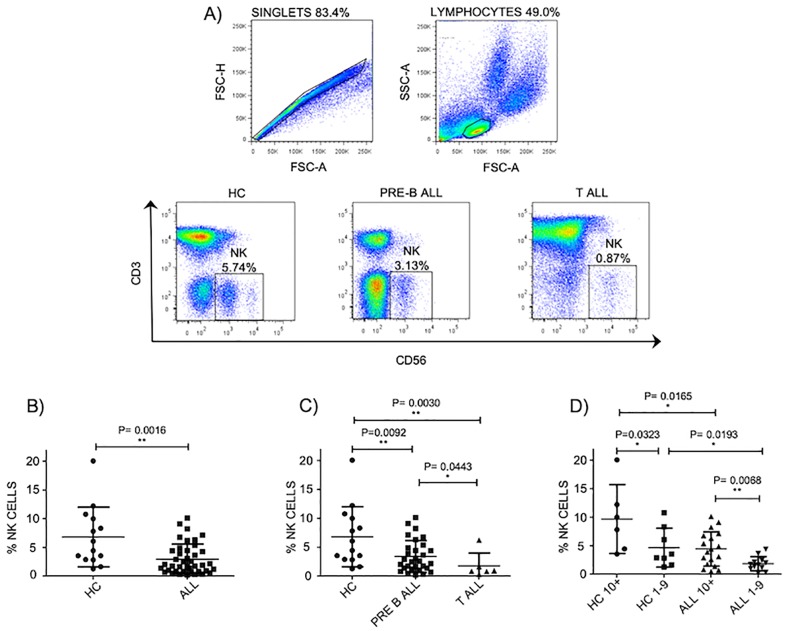
Fig 1
Fig 1. NK cell percentages are abnormal in pediatric ALL patients.
A) Gating strategy to obtain NK cell percentages and representative FACS plots. NK cells from pediatric patients or healthy controls were defined by gating on the CD3-CD56+ lymphocyte fraction of PBMCs. B) The Percentages of NK cells in the lymphocyte gates were analyzed in 41 patients with ALL at moment of diagnosis compared to 14 healthy age-matched controls. C) Percentages of NK cells were analyzed according to immunophenotype in 30 pre-B-ALL patients and 6 T-All patients. D) Percentages of NK cells were analyzed according to age in 30 pre-B-ALL patients compared to 14 age-matched controls. Error bars denote standard error of the mean between individuals within group. P values report significance according to U-Mann Whitney Test one-tail. All data were acquired on FACSCanto II (BD bioscience) and analyses with the use of FlowJo 7.6.5 software (Tree Star, Ashland, OR).
Fig 2
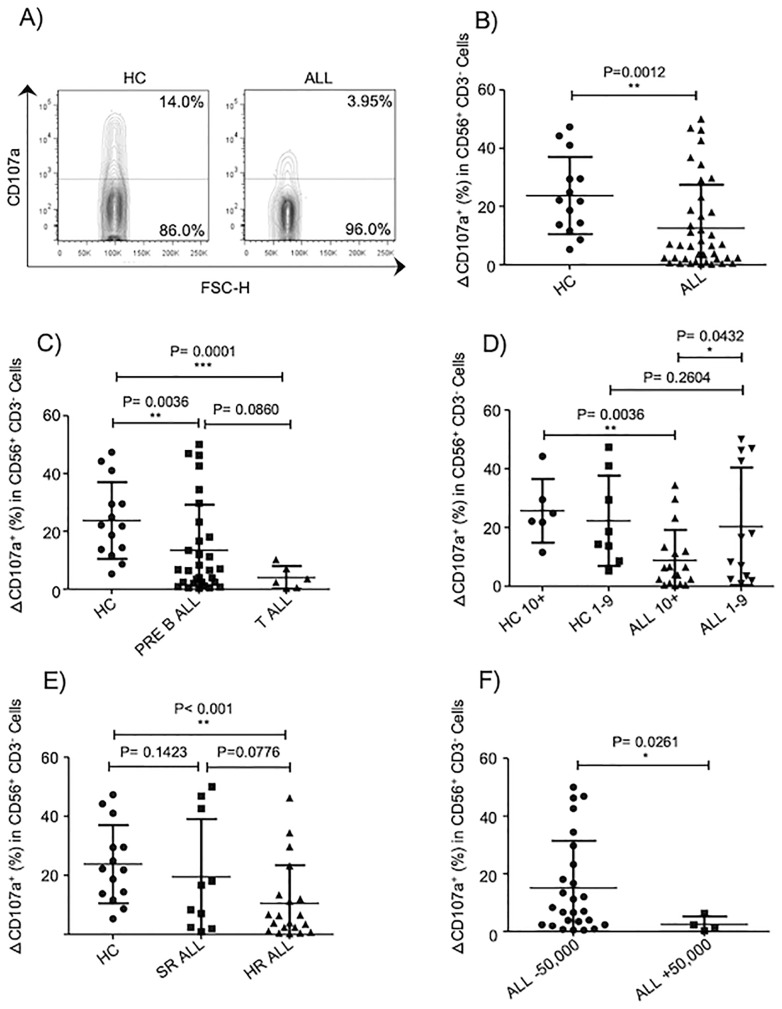
Fig 2. NK cell-mediated cytotoxicity is impaired in patients with ALL.
A) Representative FACS plots depict NK cell response (CD107a degranulation) against K562 cells. B) NK cell degranulation assays were performed in 41 acute leukemia patients and 14 healthy age-matched controls. C) NK cell degranulation assays were performed in 30 pre-B-ALL, 6 T-ALL patients and 14 age-matched controls. D) NK cell degranulation was analyzed according to age in 30 pre-B-ALL patients and 14 age-matched controls. E) NK cell degranulation was analyzed according to high risk or standard risk in 30 pre-B-ALL patients and 14 age-matched controls. F) NK cell degranulation was analyzed according to WBC in 30 pre-B-ALL patients and 14 age-matched controls. Degranulation was represented as ΔCD107a, which is the difference between the percentage of NK cells expressing surface CD107a after K562 stimulation and the percentage of NK cells expressing surface CD107a after incubation with medium alone. Error bars denote standard error of the mean between individuals within group. P values report significance according to U-Mann Whitney Test one-tail.
Fig 3
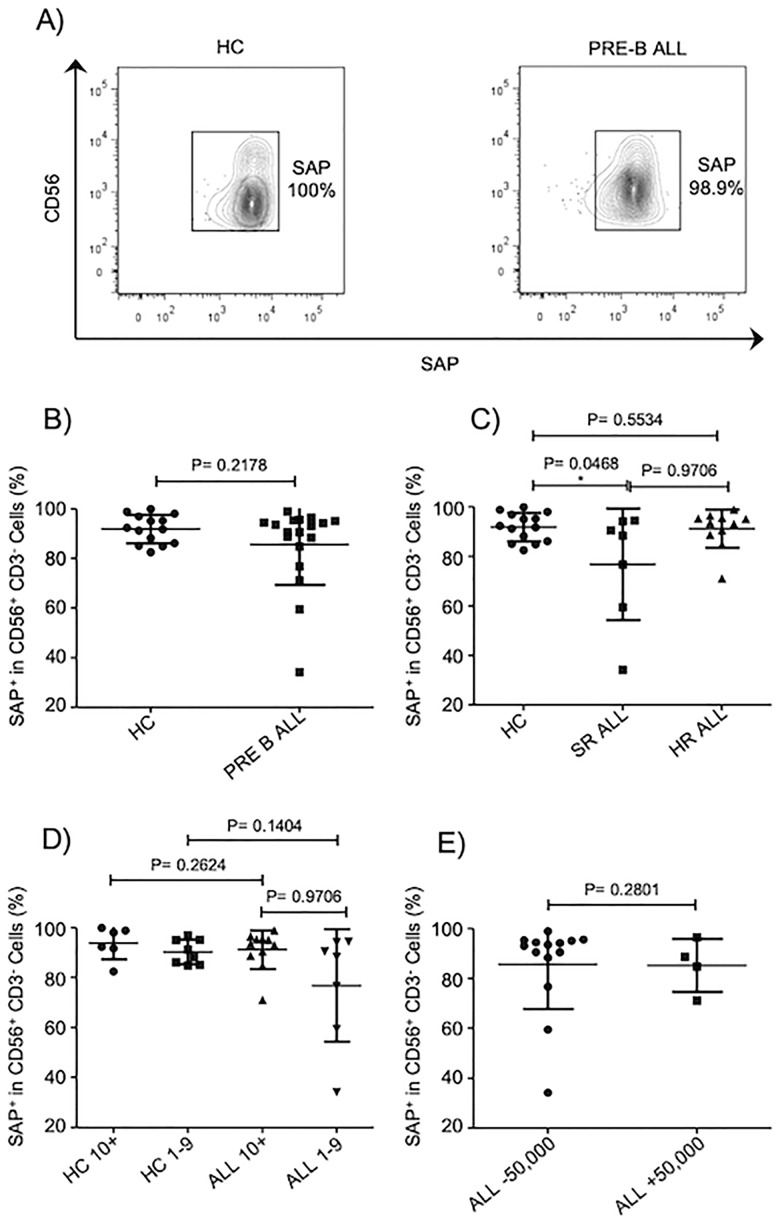
Fig 3. Frequencies of NK cells expressing SAP are normal in patients with B-ALL.
A) Representative FACS plots depict frequencies of SAP+ NK cells. B) Frequencies of CD3-CD56+ cells expressing SAP were analyzed in 18 pre-B-ALL patients compared to 14 age-matched controls. C) Frequencies of CD3-CD56+ cells expressing SAP were analyzed according to risk factor in 18 pre-B-ALL patients and 14 age-matched controls. D) Frequencies of CD3-CD56+ cells expressing SAP were analyzed according to age in 18 pre-B-ALL patients and 14 age-matched controls. E) Frequencies of CD3-CD56+ cells expressing SAP were analyzed according to WBC in 18 pre-B-ALL patients and 14 age-matched controls. Error bars denote standard error of the mean between individuals within group. P values report significance according to U-Mann Whitney Test one-tail.
Fig 4
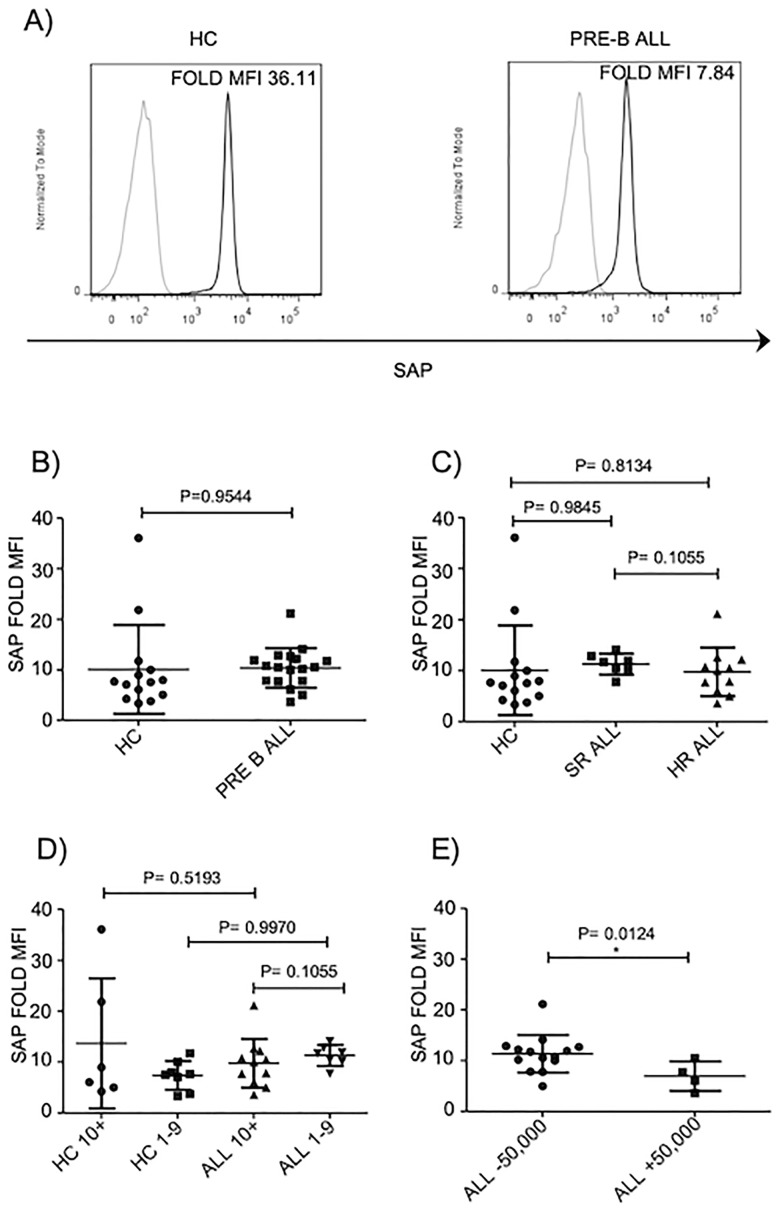
Fig 4. SAP expression is partially reduced in NK cells from B-ALL patients.
A) Representative FACS histogram depict MFI of SAP+ NK cells. B) SAP fold MFI for CD3-CD56+ cells was analyzed in 18 pre-B-ALL patients regarding 14 age-matched controls. C) SAP fold MFI for CD3-CD56+ cells was analyzed according to risk factor in 18 pre-B-ALL patients and 14 age-matched controls. D) SAP fold MFI for CD3-CD56+ cells was analyzed according to age of 18 pre-B-ALL patients and 14 age-matched controls. E) SAP fold MFI for CD3-CD56+ cells was analyzed according to WBC in 18 pre-B-ALL patients. Error bars denote standard error of the mean between individuals within group. P values report significance according to U-Mann Whitney Test one-tail.
Fig 5
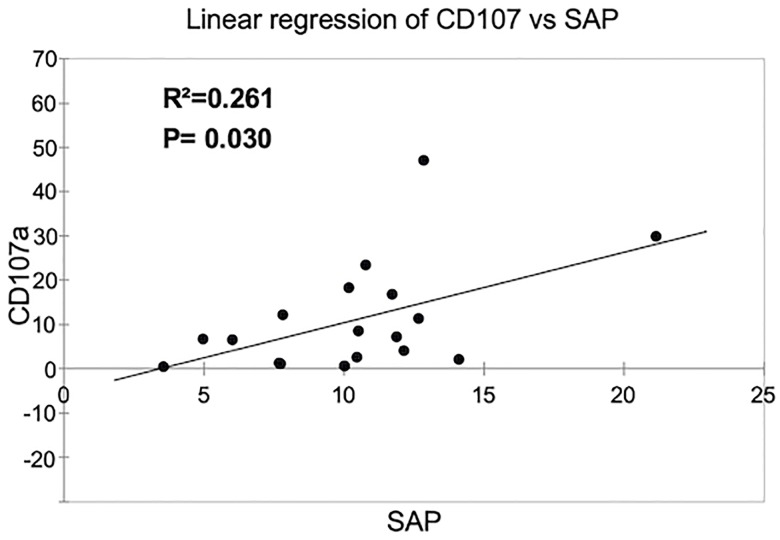
Fig 5. A positive correlation between SAP expression and a reduced NK cell cytotoxicity is revealed in B-ALL patients with WBC over 50,000xmm3.
A positive correlation study was applied to 18 pre-B-ALL patients, where was possible to determine both NK cell-mediated cytotoxicity and SAP analysis expression. The R2- and P values are indicated.

References

    1. Greaves M. A causal mechanism for childhood acute lymphoblastic leukaemia. Nat Rev Cancer. 2018;18(8):471–84. Epub 2018/05/23. 10.1038/s41568-018-0015-6 . - DOI - PMC - PubMed
    1. Friedmann AM, Weinstein HJ. The role of prognostic features in the treatment of childhood acute lymphoblastic leukemia. Oncologist. 2000;5(4):321–8. Epub 2000/08/31. 10.1634/theoncologist.5-4-321 . - DOI - PubMed
    1. Carroll WL, Bhojwani D, Min DJ, Raetz E, Relling M, Davies S, et al. Pediatric acute lymphoblastic leukemia. Hematology Am Soc Hematol Educ Program. 2003:102–31. Epub 2003/11/25. 10.1182/asheducation-2003.1.102 . - DOI - PubMed
    1. Perez-Saldivar ML, Fajardo-Gutierrez A, Bernaldez-Rios R, Martinez-Avalos A, Medina-Sanson A, Espinosa-Hernandez L, et al. Childhood acute leukemias are frequent in Mexico City: descriptive epidemiology. BMC Cancer. 2011;11:355 Epub 2011/08/19. 10.1186/1471-2407-11-355 - DOI - PMC - PubMed
    1. Wilkinson JD, Gonzalez A, Wohler-Torres B, Fleming LE, MacKinnon J, Trapido E, et al. Cancer incidence among Hispanic children in the United States. Rev Panam Salud Publica. 2005;18(1):5–13. Epub 2005/08/18. 10.1590/s1020-49892005000600002 . - DOI - PubMed

Publication types

MeSH terms

Substances