


Increased Detection of Viruses in Children with Respiratory Tract Infection Using PCR
- PMID: 31952364
- PMCID: PMC7013517
- DOI: 10.3390/ijerph17020564
Increased Detection of Viruses in Children with Respiratory Tract Infection Using PCR
Abstract
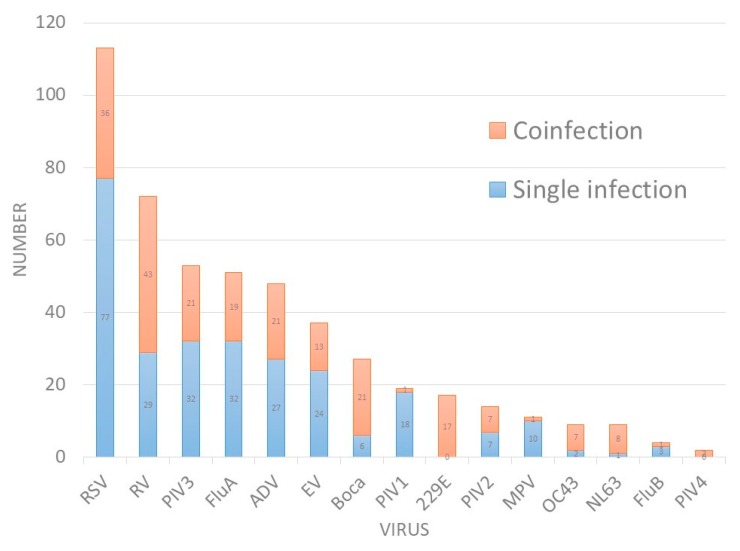
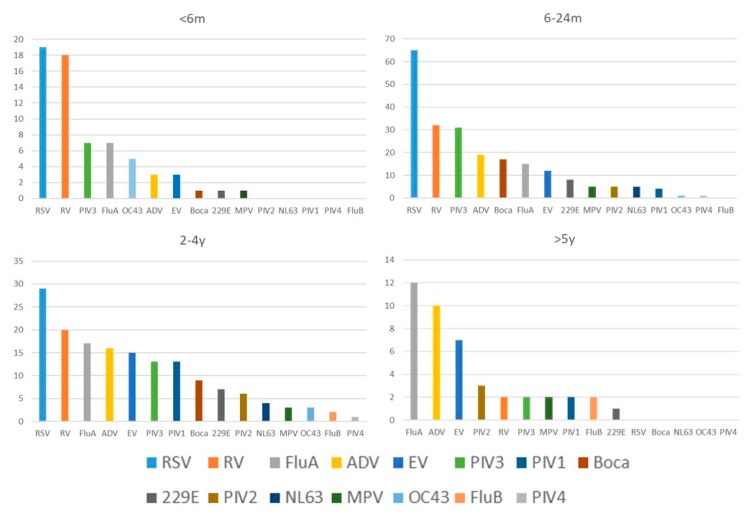
Respiratory viruses are a common cause of respiratory tract infection (RTI), particularly in neonates and children. Rapid and accurate diagnosis of viral infections could improve clinical outcomes and reduce the use of antibiotics and treatment sessions. Advances in diagnostic technology contribute to the accurate detection of viruses. We performed a multiplex real-time polymerase chain reaction (PCR) to investigate the viral etiology in pediatric patients and compared the detection rates with those determined using traditional antigen tests and virus cultures. Fifteen respiratory viruses were included in our investigation: respiratory syncytial virus A/B (RSV), influenza virus A (FluA) and influenza virus B (FluB), human metapneumovirus (MPV), enterovirus (EV), human parainfluenza virus (PIV) types 1-4, human rhinovirus (RV), human coronavirus OC43, NL63, and 229E, human adenovirus (ADV), and human bocavirus (Boca). In total, 474 specimens were collected and tested. Respiratory viruses were detected more frequently by PCR (357, 75.3%) than they were by traditional tests (229, 49.3%). The leading pathogens were RSV (113, 23.8%), RV (72, 15.2%), PIV3 (53, 11.2%), FluA (51, 10.8%), and ADV (48, 10.1%). For children younger than 5 years, RSV and RV were most prevalent; for children older than 5 years, FluA and ADV were the most frequently detected. Of the specimens, 25.8% (92/357) were coinfected with two or more viruses. RV, Boca, PIV2, FluB, and PIV4 had higher rates of coinfection; MPV and PIV1 had the lowest rates of coinfection (9.1% and 5.3%). To conclude, the detection power of PCR was better than that of traditional antigen tests and virus cultures when considering the detection of respiratory viruses. RSV and RV were the leading viral pathogens identified in the respiratory specimens. One-quarter of the positive specimens were coinfected with two or more viruses. In the future, further application of PCR may contribute to the rapid and accurate diagnosis of respiratory viruses and could improve patient outcomes.
Keywords: PCR; human metapneumovirus; multiplex quantitative real-time RT-PCR; polymerase chain reaction; respiratory syncytial virus; respiratory virus.
Conflict of interest statement
The authors declare no conflict of interest.
Figures
References
-
- Lower Respiratory Infections Collaborators Estimates of the global, regional, and national morbidity, mortality, and aetiologies of lower respiratory infections in 195 countries, 1990–2016: A systematic analysis for the global burden of disease study 2016. Lancet Infect. Dis. 2018;18:1191–1210. doi: 10.1016/S1473-3099(18)30310-4. - DOI - PMC - PubMed
Publication types
MeSH terms
LinkOut - more resources
Full Text Sources
Medical
