


A simplified nomogram to assess risk of bladder cancer in patients with a new diagnosis of microscopic hematuria
- PMID: 31952999
- PMCID: PMC7150636
- DOI: 10.1016/j.urolonc.2019.12.010
A simplified nomogram to assess risk of bladder cancer in patients with a new diagnosis of microscopic hematuria
Abstract
Introduction: The vast majority of patients who undergo a diagnostic evaluation for microscopic hematuria (MH) do not have occult bladder cancer. Identifying patients with MH at high risk of harboring bladder cancer can allow for a risk adjusted approach to diagnostic interventions with the goal of safely reducing unnecessary evaluations.
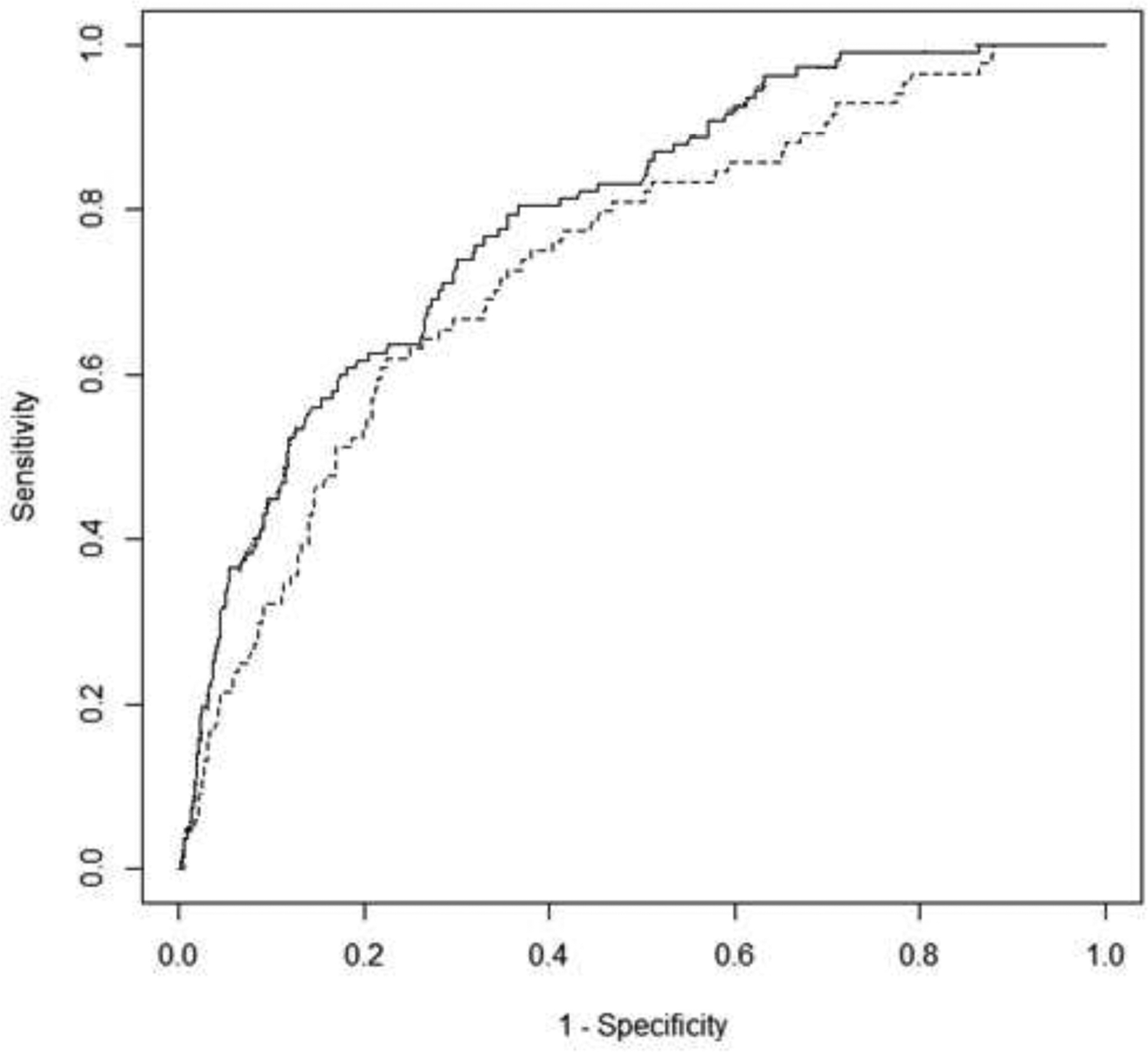
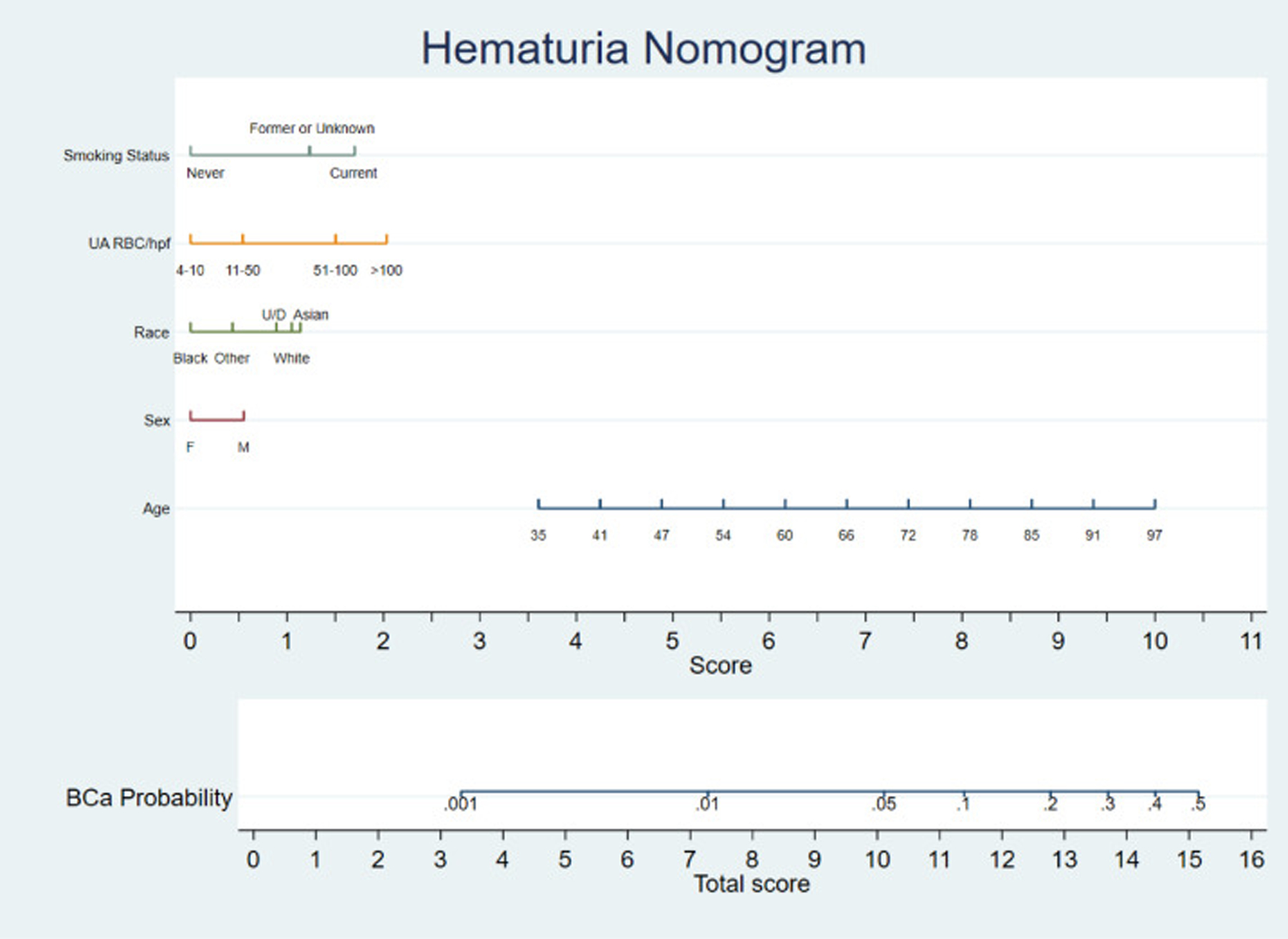
Methods: Patients with a new diagnosis of microhematuria during an 8.5 year period were retrospectively identified. All patients who had a complete MH evaluation were randomized to a training or a validation cohort. Logistic regression analysis was performed in the training cohort to identify factors related to a bladder cancer diagnosis and to develop our model. Receiver operating curves to identify bladder cancer were constructed for the training and validation cohort and tested for their ability to discriminate true cases. A nomogram to predict a bladder cancer diagnosis was created.
Results: In 4,178 patients split into training and validation cohorts, those diagnosed with bladder cancer were shown to be older, have a greater degree of MH (more RBC/hpf), and were former or current smokers. A nomogram created using this model was able to predict risk of a bladder cancer diagnosis with good discrimination (areas under the curve 0.79, 95% CI 0.75-0.83). A cutoff of 0.01 probability demonstrated a sensitivity of 99.1% and a negative predictive value of 99.7%.
Conclusion: A nomogram can accurately predict the risk of bladder cancer diagnosed during the evaluation of MH and can potentially be used avoid a significant number of work ups in those at the lowest risk.
Keywords: Bladder cancer; Cystoscopy; Hematuria; Microhematuria.
Copyright © 2019 Elsevier Inc. All rights reserved.
Conflict of interest statement
We disclose no financial or conflicts of interest.
Figures
References
-
- Nielsen M, Qaseem A, High Value Care Task Force of the American College of P. Hematuria as a Marker of Occult Urinary Tract Cancer: Advice for High-Value Care From the American College of Physicians Annals of internal medicine. 2016. - PubMed
-
- Davis R, Jones JS, Barocas DA, Castle EP, Lang EK, Leveillee RJ, et al. Diagnosis, evaluation and follow-up of asymptomatic microhematuria (AMH) in adults: AUA guideline. The Journal of urology. 2012;188:2473–81. - PubMed
-
- Jung H, Gleason JM, Loo RK, Patel HS, Slezak JM, Jacobsen SJ. Association of hematuria on microscopic urinalysis and risk of urinary tract cancer. The Journal of urology. 2011;185:1698–703. - PubMed
-
- Loo RK, Lieberman SF, Slezak JM, Landa HM, Mariani AJ, Nicolaisen G, et al. Stratifying risk of urinary tract malignant tumors in patients with asymptomatic microscopic hematuria. Mayo Clinic proceedings. 2013;88:129–38. - PubMed
-
- Rodgers M, Nixon J, Hempel S, Aho T, Kelly J, Neal D, et al. Diagnostic tests and algorithms used in the investigation of haematuria: systematic reviews and economic evaluation. Health technology assessment. 2006;10:iii-iv, xi-259. - PubMed
Publication types
MeSH terms
Grants and funding
LinkOut - more resources
Full Text Sources
Medical
