


Association of patient-reported outcomes and heart rate trends in heart failure: a report from the Chiron project
- PMID: 31953477
- PMCID: PMC6969136
- DOI: 10.1038/s41598-019-57239-4
Association of patient-reported outcomes and heart rate trends in heart failure: a report from the Chiron project
Abstract
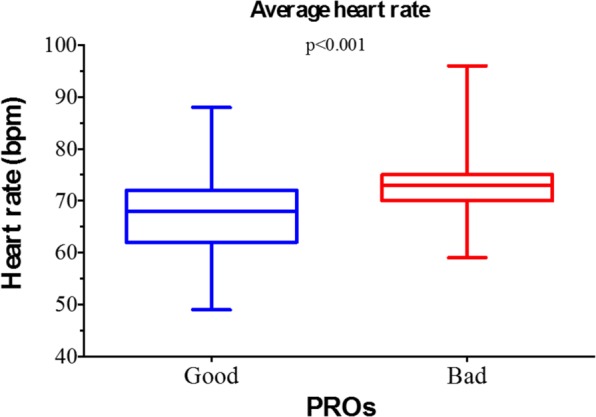
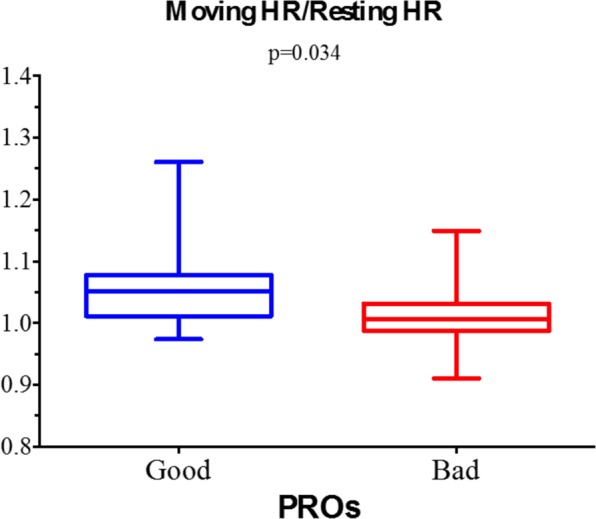
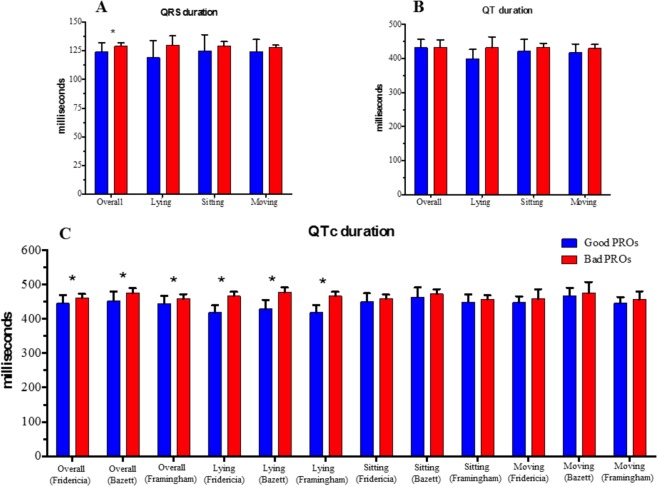
Patient-reported outcomes (PROs) have been previously considered "soft" end-points because of the lack of association of the reported outcome to measurable biological parameters. The present study aimed to assess whether electrocardiographic measures are associated to PROs changes. We evaluated the association between heart rate (HR), QRS and QT/QTc durations and PROs, classified as "good" or "bad" according to the patients' overall feeling of health, in patients from the Chiron project. Twenty-four chronic heart failure (HF) patients were enrolled in the study (71% male, mean age 62.9 ± 9.4 years, 42% ischemic etiology, 15 NYHA class II and 9 class III) providing 1086 days of usable physiological recordings (4 hours/day). The mean HR was significantly higher in the "bad" than in the "good" PROs class (74.0 ± 6.4 bpm vs 68.0 ± 7.2 bpm; p < 0.001). Conversely, the ratio between movement and rest activities showed significantly higher values in "good" compared to "bad" PROs. We also found significantly longer QTc and QRS durations in patients with "bad" PROs compared to patients with "good" PROs. That in patients with mild to moderate HF, higher HR, wider QRS and longer QTc, as well as a reduced HR ratio between movement and rest, were associated with "bad" PROs is clinically noteworthy because the association of worse PROs with measurable variations of biological parameters may help physicians in evaluating PROs reliability itself and in their clinical decisions. Whether a timely intervention on these biological parameters may prevent adverse outcomes is important and deserves to be investigated in further studies.
Conflict of interest statement
The authors declare no competing interests.
Figures

References
-
- Higgins, J. P. T. & Green, S. Cochrane Handbook for Systematic Reviews of Interventions Version 5.1.0 (updated March 2011). London, UK: The Cochrane Collaboration (2011).
Publication types
MeSH terms
LinkOut - more resources
Full Text Sources
Medical
Research Materials
Miscellaneous
