


Embedded Motivational Interviewing combined with a smartphone app to increase physical activity in people with sub-acute low back pain: Study protocol of a cluster randomised control trial
- PMID: 31956722
- PMCID: PMC6957877
- DOI: 10.1016/j.conctc.2019.100511
Embedded Motivational Interviewing combined with a smartphone app to increase physical activity in people with sub-acute low back pain: Study protocol of a cluster randomised control trial
Erratum in
-
Erratum regarding missing Declaration of Competing Interest statements in previously published articles.Contemp Clin Trials Commun. 2020 Dec 10;20:100688. doi: 10.1016/j.conctc.2020.100688. eCollection 2020 Dec. Contemp Clin Trials Commun. 2020. PMID: 33392412 Free PMC article.
Abstract
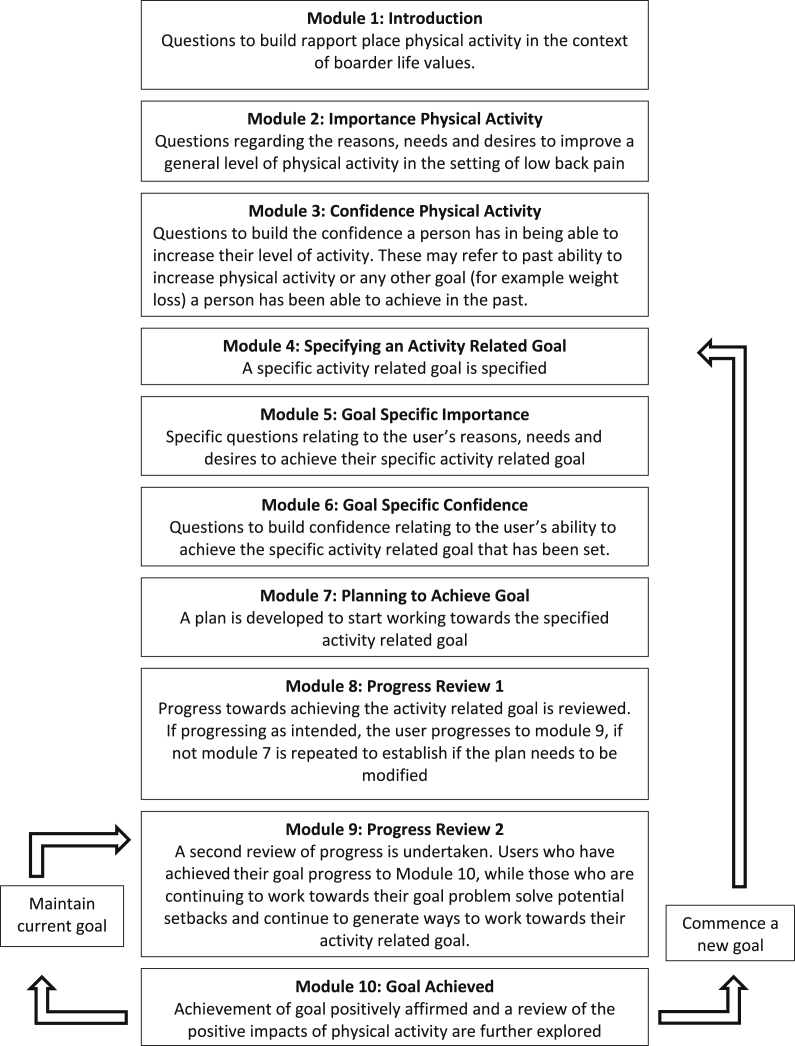
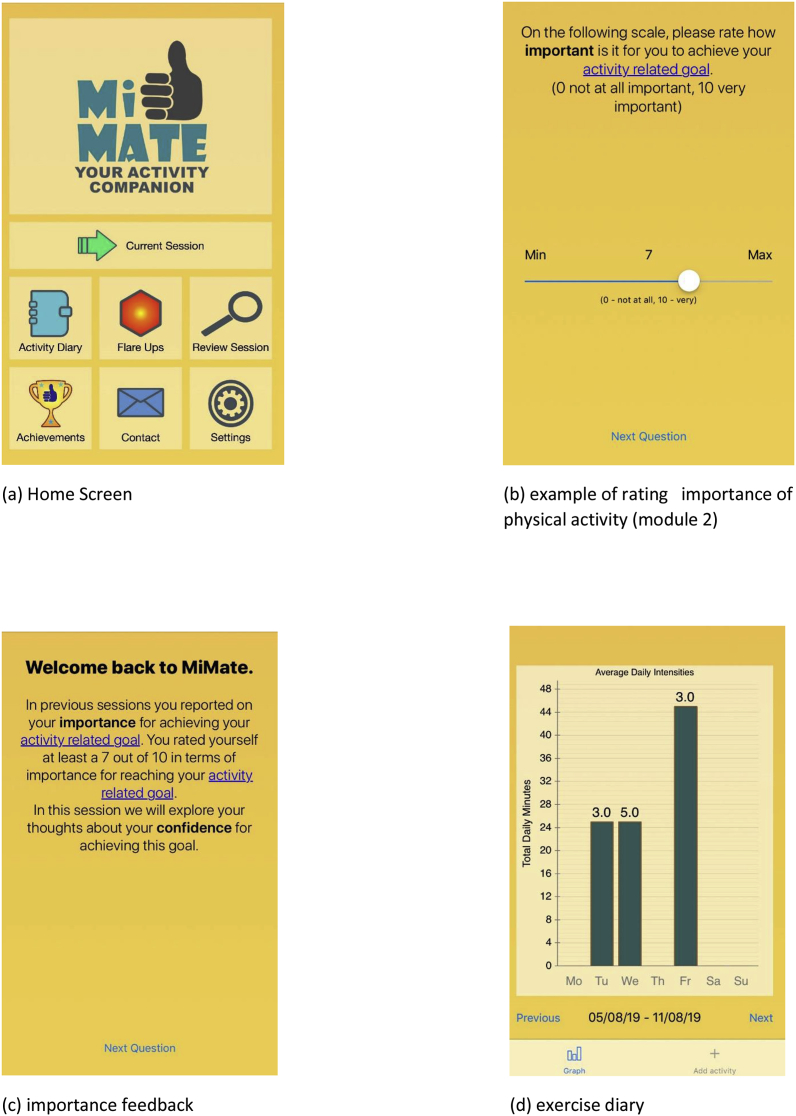
Background: Motivational Interviewing is an evidence-based, client-centred counselling technique that has been used effectively to increase physical activity, including for people with low back pain. One barrier to implementing Motivational Interviewing in health care settings more broadly is the extra treatment time with therapists. The aim of this paper is to describe the design of a cluster randomised controlled trial evaluating the effect of an intervention that pairs Motivational Interviewing embedded into usual physiotherapy care with a specifically designed app to increase physical activity in people with sub-acute low back pain.
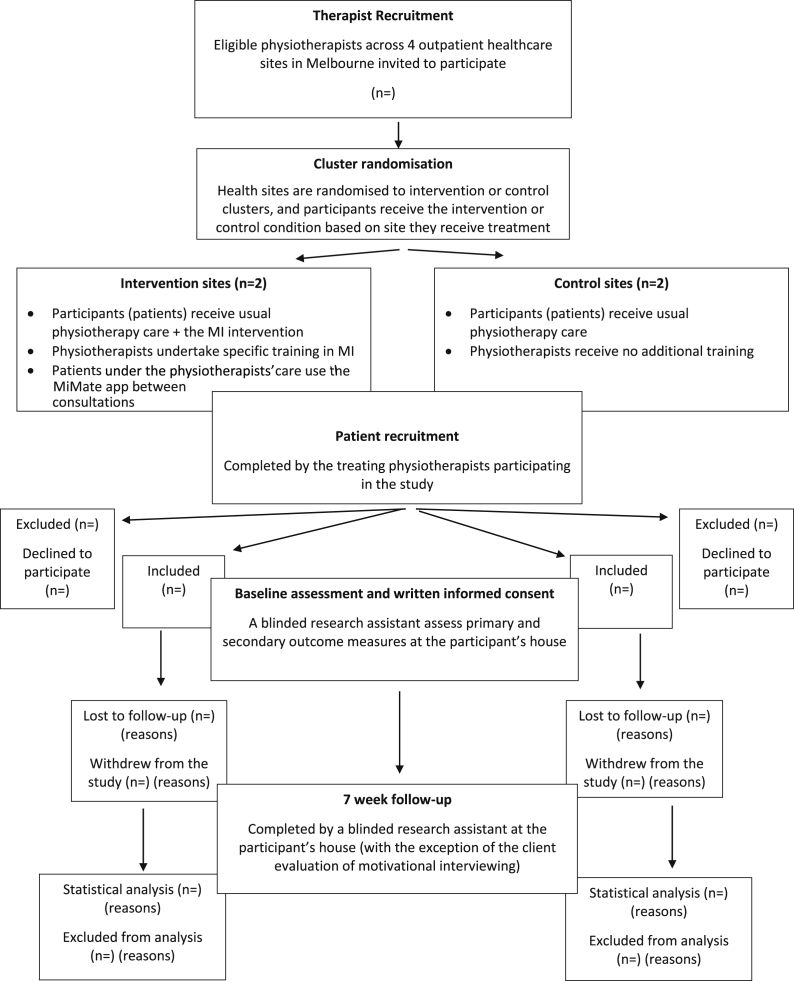
Methods: The study is a cluster randomised controlled in which patients aged over 18 years who have sub-acute low back pain (3-12 weeks duration) are recruited from four public hospital outpatient clinics. Based on the recruitment site, participants either receive usual physiotherapy care or the Motivational Interviewing intervention over 6 consecutive weekly outpatient sessions with a specifically designed app designed to facilitate participant-led physical activity behaviour change in between sessions. Outcome measures assessed at baseline and 7 weeks are: physical activity as measured by accelerometer (primary outcome), and pain-related activity restriction and pain self-efficacy (secondary outcomes). Postintervention interviews with physiotherapists and participants will be conducted as part of a process evaluation.
Discussion: This intervention, which comprises trained physiotherapists conducting conversations about increasing physical activity with their patients in a manner consistent with Motivational Interviewing as part of usual care combined with a specifically designed app, has potential to facilitate behaviour change with minimal extra therapist time.
Keywords: Health care app; Low back pain; Motivational interviewing; Musculoskeletal diseases.
© 2019 Published by Elsevier Inc.
Figures
References
-
- Balagué F., Mannion A.F., Pellisé F., Cedraschi C. Non-specific low back pain. Lancet. 2012;379(9814):482–491. - PubMed
-
- Dagenais S., Caro J., Haldeman S. A systematic reveiw of low back pain cost of illness studies in the United States and internationally. Spine J. 2008;8:8–20. - PubMed
-
- Wasiak R., Kim J., Pransky G. Work disability and costs caused by recurrence of low back pain: longer and more costly than in first episodes. Spine. 2006;31(2):219–225. - PubMed
-
- Hoy D., Bain C., Williams G., March L., Brooks P., Blyth F. A systematic review of the global prevalence of low back pain. Arthritis Rheum. 2012;64(6):2028–2037. - PubMed
LinkOut - more resources
Full Text Sources
