


Stakeholder perspectives on transition planning, implementation, and outcomes for students with autism spectrum disorder
- PMID: 31957461
- PMCID: PMC7311242
- DOI: 10.1177/1362361319894827
Stakeholder perspectives on transition planning, implementation, and outcomes for students with autism spectrum disorder
Abstract
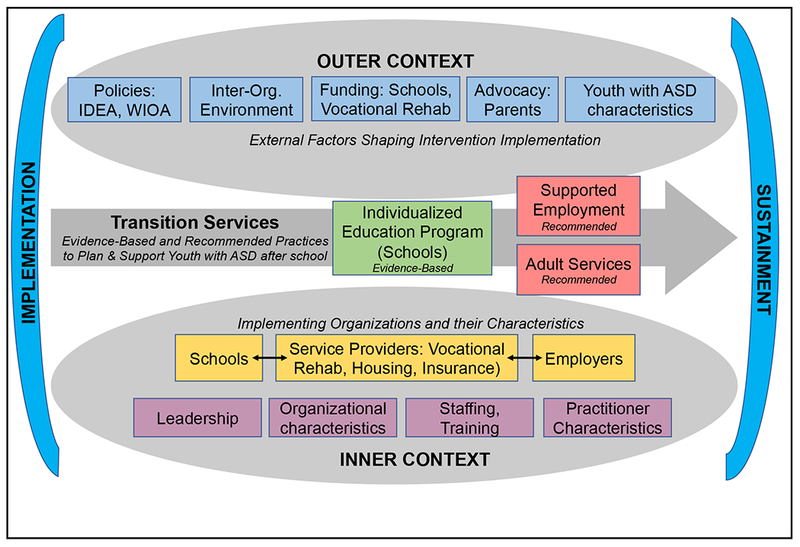
Little is known about factors impacting poor post-school outcomes for transition-age students with autism spectrum disorder. Guided by an implementation science framework that takes into account the multiple factors that influence transition outcomes, we sought to better understand the interdependent impacts of policy, organizational, provider, and individual factors that shape the transition planning process in schools, and the subsequent process through which transition plans are implemented as youth with autism spectrum disorder access services and gain employment after school. We conducted focus groups with individuals with autism spectrum disorder, parents, classroom teachers, school administrators, adult service providers, and state policymakers (10 groups, N = 40). Participants described how core tenets of the individualized education planning process were not reliably implemented: planning was described by inappropriate goal-setting, ineffective communication, and inadequate involvement of all decision-makers needed to inform planning. After school, youth struggled to access the services specified in their transition plans due to inadequate planning, overburdened services, and insufficient accountability for adult service providers. Finally, a failure to include appropriate skill-building and insufficient interagency and community relationships limited efforts to gain and maintain employment. Diverse stakeholder perspectives illuminate the need for implementation efforts to target the provider, organizational, and policy levels to improve transition outcomes for individuals with autism spectrum disorder.
Keywords: COMPASS; EPIS; autism spectrum disorder; implementation science; stakeholders; transition planning.
Figures
References
-
- Aarons GA & Palinkas LA Implementation of Evidence-based Practice in Child Welfare: Service Provider Perspectives. Adm. Policy Ment. Heal. Ment. Heal. Serv. Res. 34, 411–419 (2007). - PubMed
-
- Brantlinger E, Jimenez R, Klingner J, Pugach M, & Richardson V (2005). Qualitative studies in special education. Exceptional Children, 71(2), 195–207.
-
- Cameto R, Levine P, & Wagner M (2004). Transition planning for students with disabilities: A special topic report of findings from the National Longitudinal Transition Study-2 (NLTS2) (pp. 89). SRI International, Menlo Park, CA., USA: National Center for Special Education Research. 400 Maryland Avenue SW, Washington, DC 20202. Tel: 800-437-0833; Fax: 202-401-0689; Web site: http://ies.ed.gov/ncser/.
Publication types
MeSH terms
Grants and funding
LinkOut - more resources
Full Text Sources
Medical
