


Experience Versus Report: Where Are Changes Seen After Exposure-Based Cognitive-Behavioral Therapy? A Randomized Controlled Group Treatment of Childhood Social Anxiety Disorder
- PMID: 31960175
- PMCID: PMC7235054
- DOI: 10.1007/s10578-019-00954-w
Experience Versus Report: Where Are Changes Seen After Exposure-Based Cognitive-Behavioral Therapy? A Randomized Controlled Group Treatment of Childhood Social Anxiety Disorder
Abstract
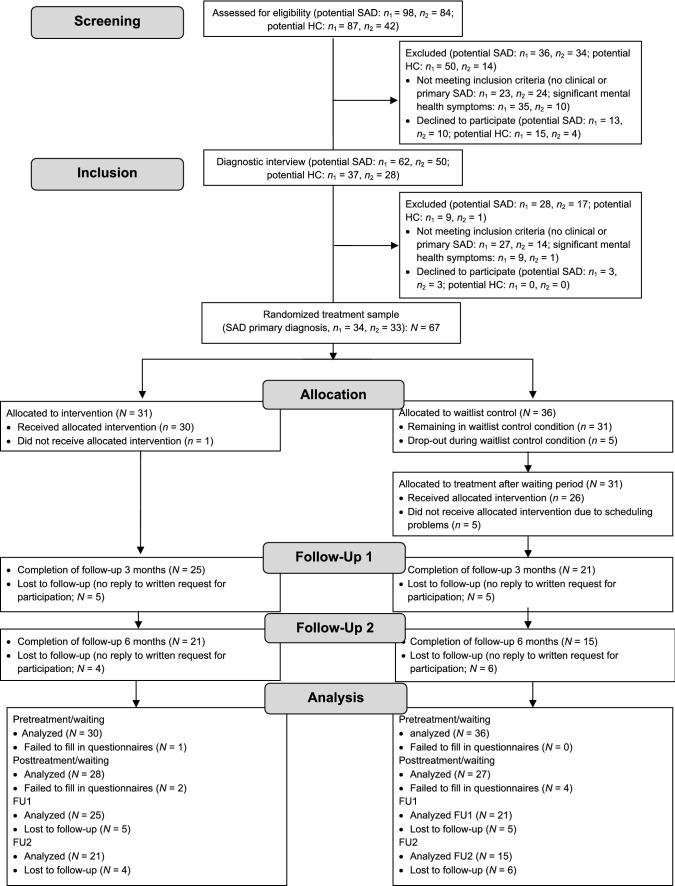
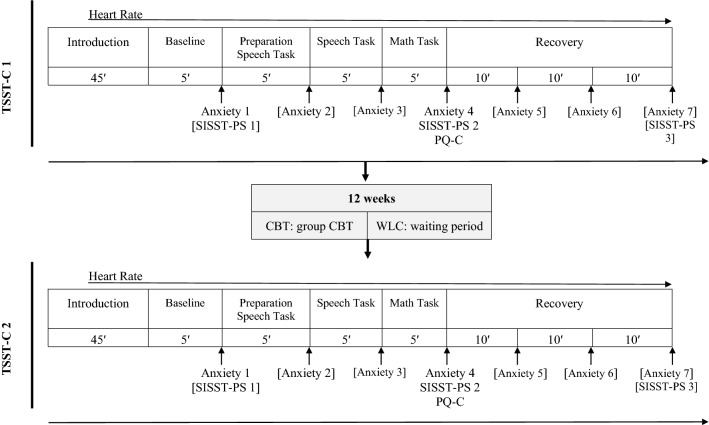
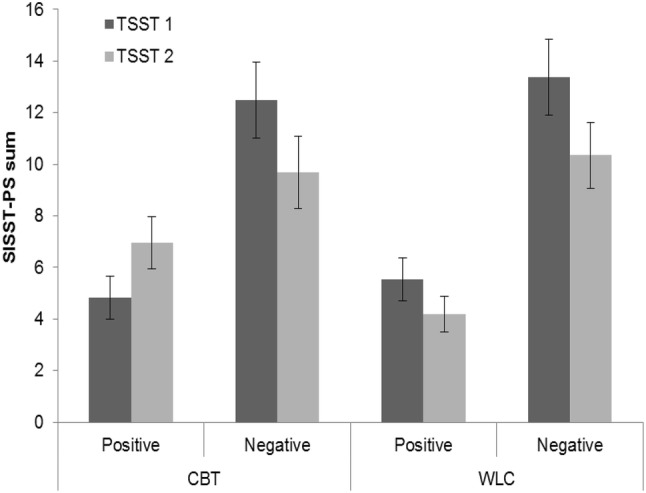
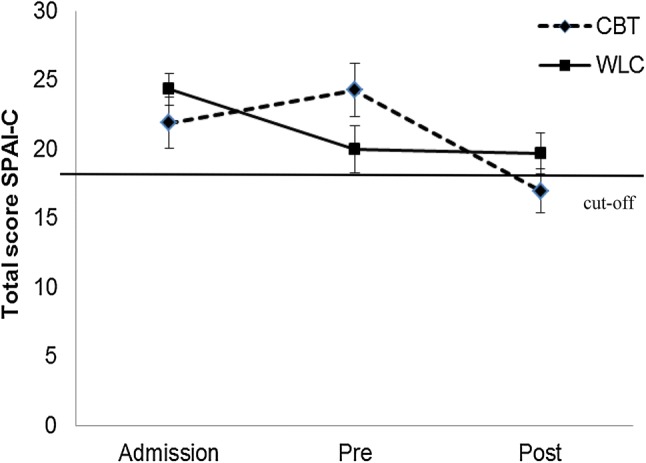
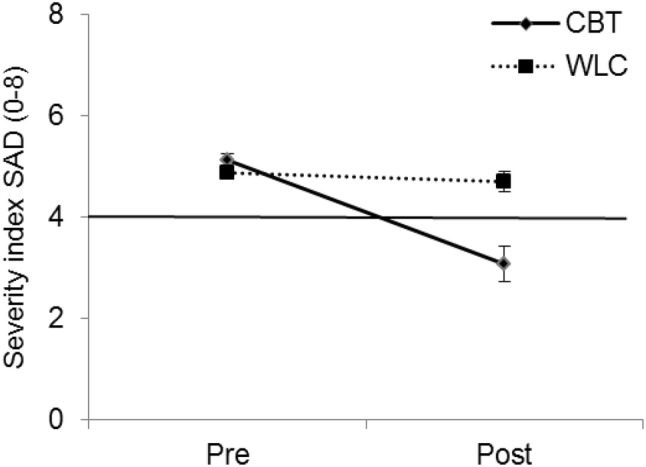
A considerable number of children and adolescents with social anxiety disorder (SAD) do not benefit from treatment as much as expected. However, treatment success should not be measured with social anxiety reports alone; the cognitive, behavioral, and physiological components of social stress should also be assessed. The authors examined an exposure-based SAD-specific group cognitive behavioral therapy (CBT) in a randomized controlled trial (N = 67, age 9-13 years, blind randomized allocation to treatment [CBT; n = 31] and waitlist control [WLC; n = 36] groups). Success was operationalized as a clinically significant reduction of symptoms measured with SAD-specific questionnaires, structured interviews, and changes in response to the Trier Social Stress Test (TSST). In the CBT group, there was a trend toward a significant increase in positive cognitions in the TSST after treatment (d = 0.37), whereas these positive cognitions decreased in the WLC group (d = 0.40). No significant results involving group appeared for negative cognitions, behavior and physiology. Children in the CBT group, but not parents, further reported less social anxiety in one questionnaire from pre- to post-treatment (d = 0.89). A structured interview confirmed a decrease in severity of SAD in the CBT group. While the gold standard of a blind interview showed efficacy of treatment, not all trait and state measures demonstrated similar success patterns.Trial registration Eligibility criteria and some of the dependent variables (cognitions, physiology) for treatment success were registered with the German Research Foundation (TU 78/5-2, HE 3342/4-2) prior to recruitment. Clinical assessment of diagnosis and behavioral data were not a priori planned as outcome measures for this trial and therefore analyzed in a post-hoc approach.
Keywords: Group cognitive behavioral therapy; Social phobia; State measures; Treatment success.
Conflict of interest statement
The authors declare no conflict of interest.
Figures
References
-
- Rao PA, Beidel DC, Turner SM, Ammerman RT, Crosby LE, Sallee FR. Social anxiety disorder in childhood and adolescence: descriptive psychopathology. Behav Res Ther. 2007;45:1181–1191. - PubMed
-
- Kendall PC, Hedtke KA. Cognitive-behavioral therapy for anxious children: therapist manual. Ardmore: Workbook Publishing; 2006.
-
- Crawley SA, Beidas RS, Benjamin CL, Martin E, Kendall PC. Treating socially phobic youth with CBT: differential outcomes and treatment considerations. Behav Cogn Psychother. 2008;36:379–389.
Publication types
MeSH terms
LinkOut - more resources
Full Text Sources
