Review
. 2020 Jan 16;10(1):151.
doi: 10.3390/biom10010151.

Recent Advances in the Synthesis of Coumarin Derivatives from Different Starting Materials

Affiliations
Review

Recent Advances in the Synthesis of Coumarin Derivatives from Different Starting Materials

Melita Lončarić et al. Biomolecules. .

Abstract

The study of coumarin dates back to 1820 when coumarin was first extracted from tonka bean by Vogel. Compounds containing coumarin backbone are a very important group of compounds due to their usage in pharmacy and medicine. Properties and biological activities of coumarin derivatives have a significant role in the development of new drugs. Therefore, many different methods and techniques are developed in order to synthesize coumarin derivatives. Coumarin derivatives could be obtained from different starting materials with various methods but with big differences in yield. This review summarized various methods, techniques and reaction conditions for synthesis of coumarins from different compounds such as aldehydes, phenols, ketones and carboxylic acids.

Keywords: Knoevenagel condensation; Pechmann reaction; coumarins; synthesis.


Conflict of interest statement

The authors declare no conflict of interest..

Figures
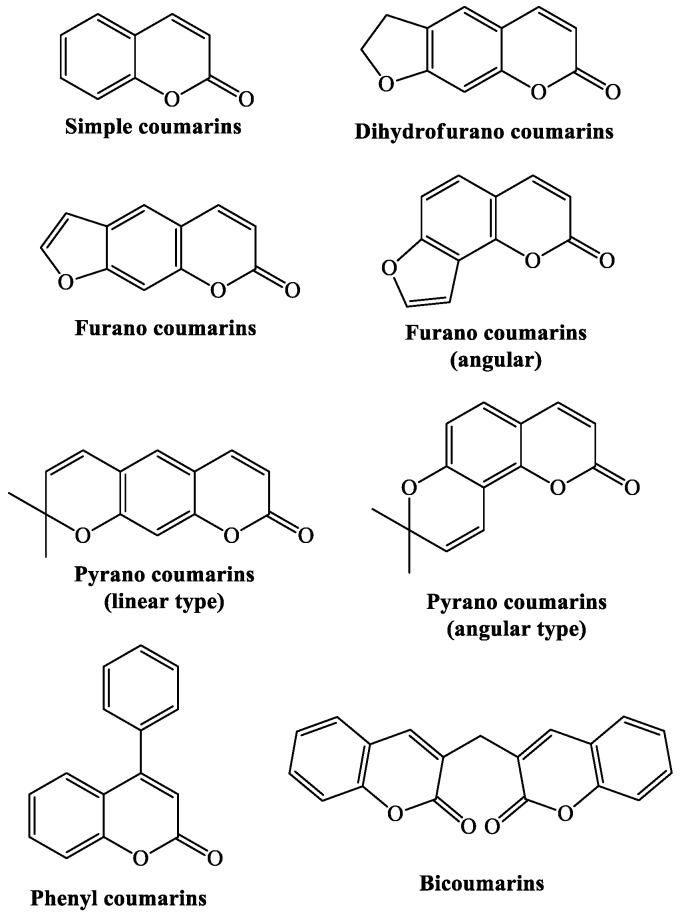
Figure 1
Figure 1
Six basic groups of natural coumarins.
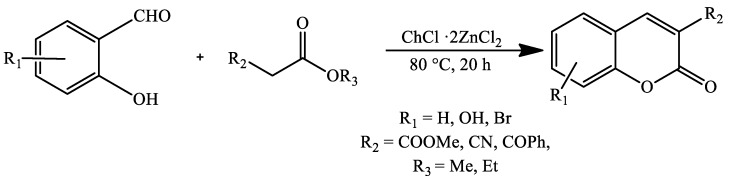
Scheme 1
Scheme 1
Green synthesis of coumarin derivatives in deep eutectic solvent.

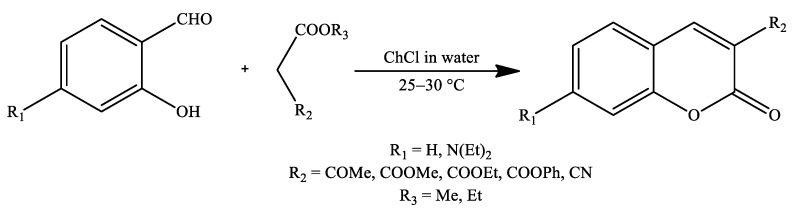
Scheme 2
Scheme 2
Coumarin derivatives obtained in aqueous media with ChCl as catalyst.
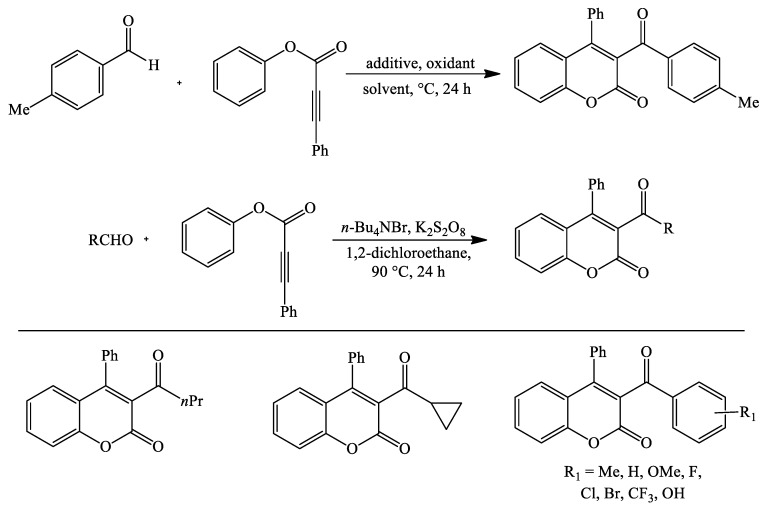
Scheme 3
Scheme 3
Cyclization reaction of phenyl 3-phenylpropiolate with various aldehydes.
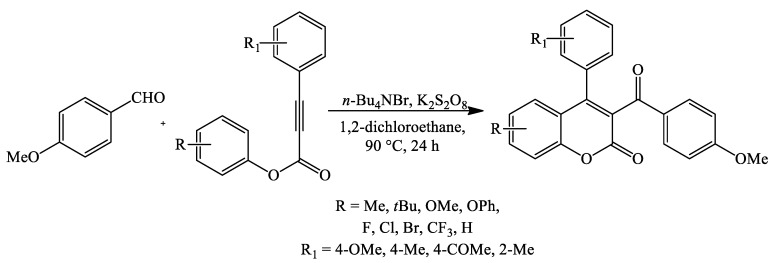
Scheme 4
Scheme 4
Cyclization reactions of 4-methoxybenzaldehyde and various alkynoates.
Scheme 5
Scheme 5
Synthesis of coumarin derivatives in the presence of piperidine and acetic acid as catalysts.
Scheme 6
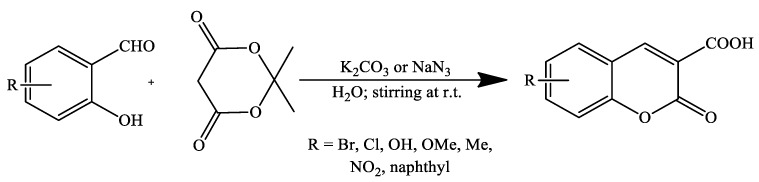
Scheme 6
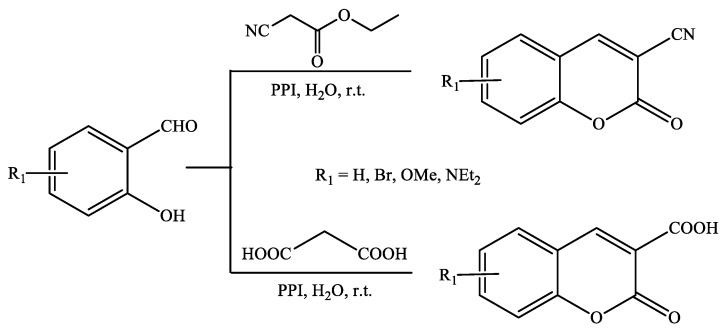
One-pot synthesis of coumarin-3-carboxylic acids in water.
Scheme 7
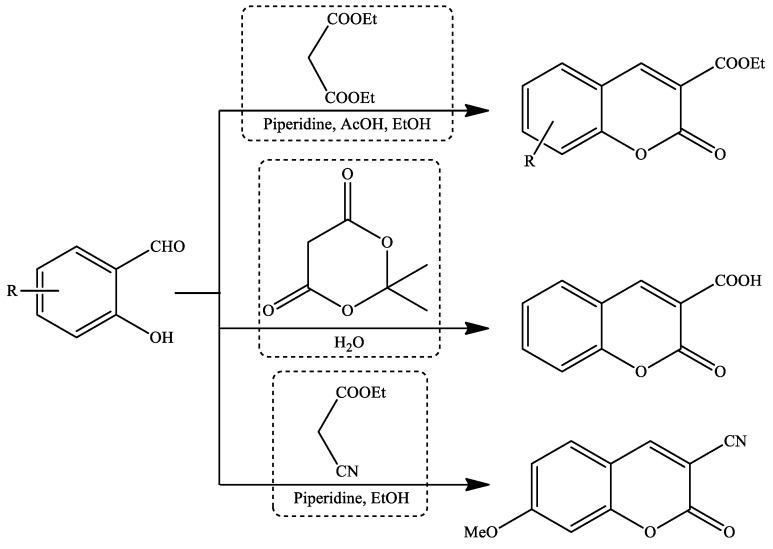
Scheme 7
Synthesis of different coumarins from active methylene compounds and salicylaldehydes.
Scheme 8
Scheme 8
Phenyliododiacetate mediated reaction of salicylaldehydes and α-substituted ethylacetates.
Scheme 9
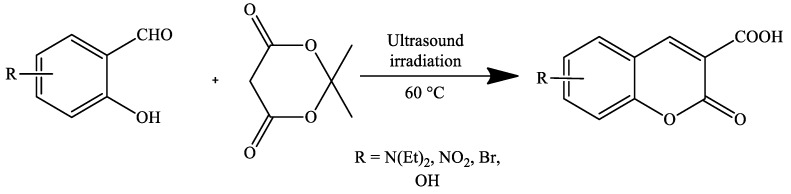
Scheme 9
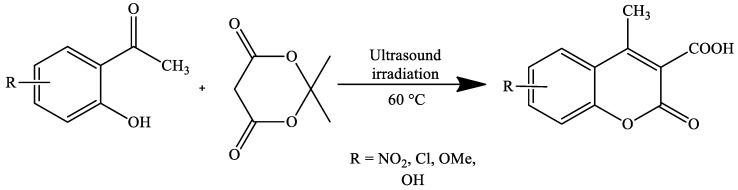
Green method for synthesis of coumarin-3-carboxylic acids under ultrasound irradiation.
Scheme 10
Scheme 10
Synthesis of 3-substituted coumarins between salicylaldehydes and 1,3-dicarbonyl compounds in presence of nano MgFe2O4.
Scheme 11
Scheme 11
Synthesis of 2H-chromene-3-carboxylates in presence of piperidine in toluene.
Scheme 12
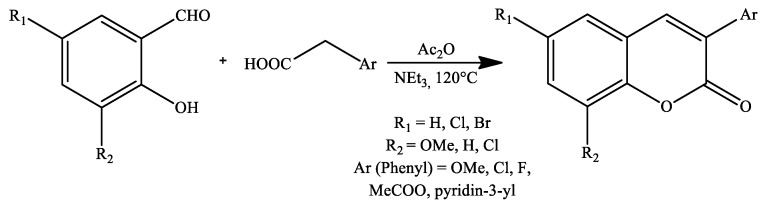
Scheme 12
Synthesis of 3-arylcoumarins via Perkin condensation in the presence of anhydride and trimethylamine.
Scheme 13
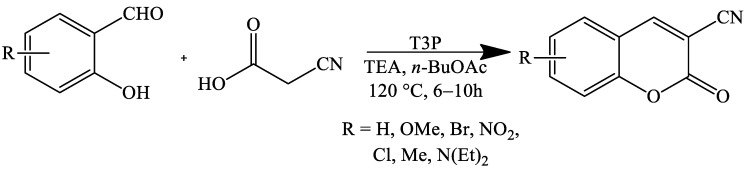
Scheme 13
One-pot synthesis of cyanocoumarins in presence of T3P, trimethylamine and butyl acetate.
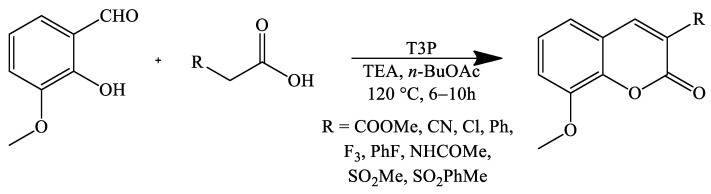
Scheme 14
Scheme 14
Synthesis of coumarin derivatives trough reaction of carboxylic acids and 2-hydroxy-3-methoxybenzaldehyde.
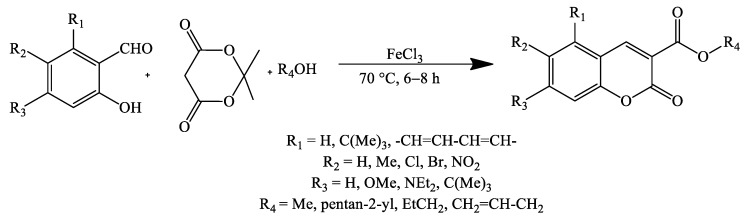
Scheme 15
Scheme 15
Synthesis of coumarin-3-carboxylic esters in multicomponent reaction in the presence of FeCl3.
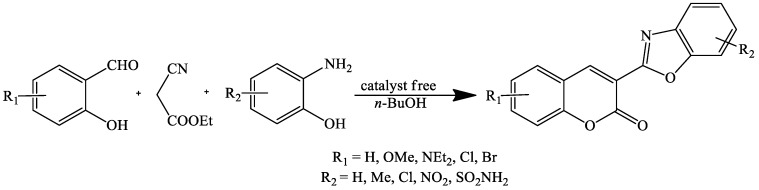
Scheme 16
Scheme 16
Three-component one-pot synthesis of 3-benzoxazole coumarins.
Scheme 17
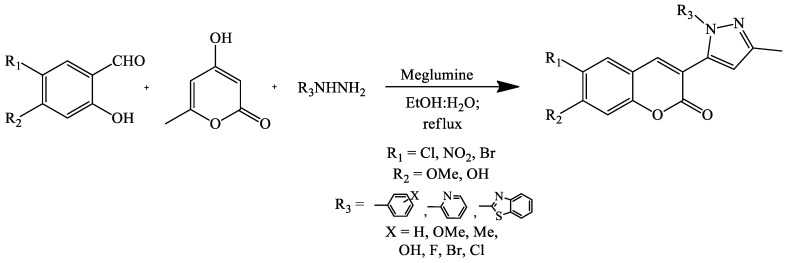
Scheme 17
Synthesis of pyrazolylcoumarins in a multicomponent reaction.
Scheme 18
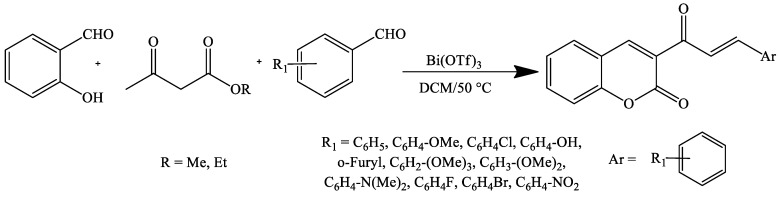
Scheme 18
Synthesis of coumarin-chalcone compounds in multicomponent reaction.
Scheme 19
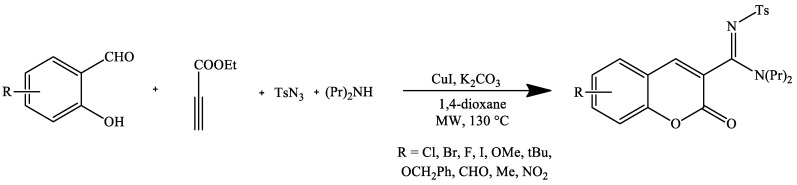
Scheme 19
Microwave assisted four-component synthesis of 3-N-sulfonylamidine coumarins.
Scheme 20
Scheme 20
Two-step synthesis of bromoacetylcoumarin under microwave irradiation.
Scheme 21
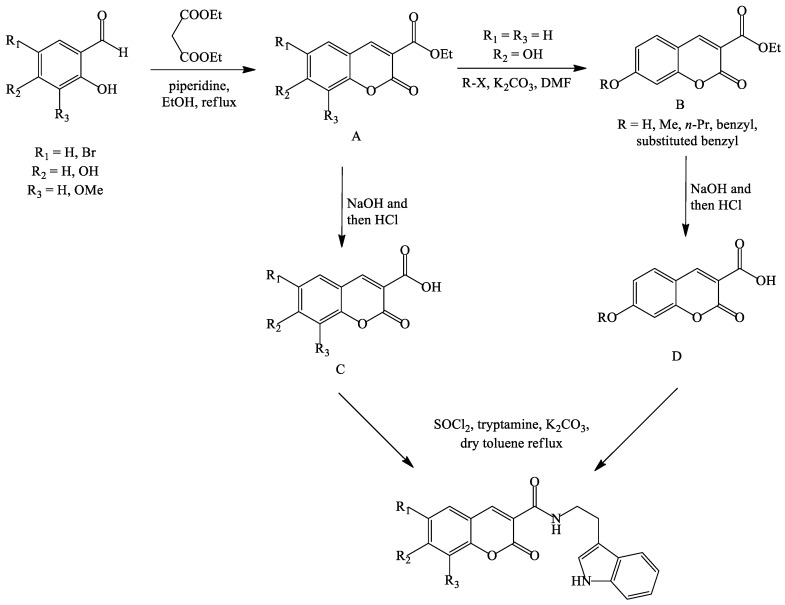
Scheme 21
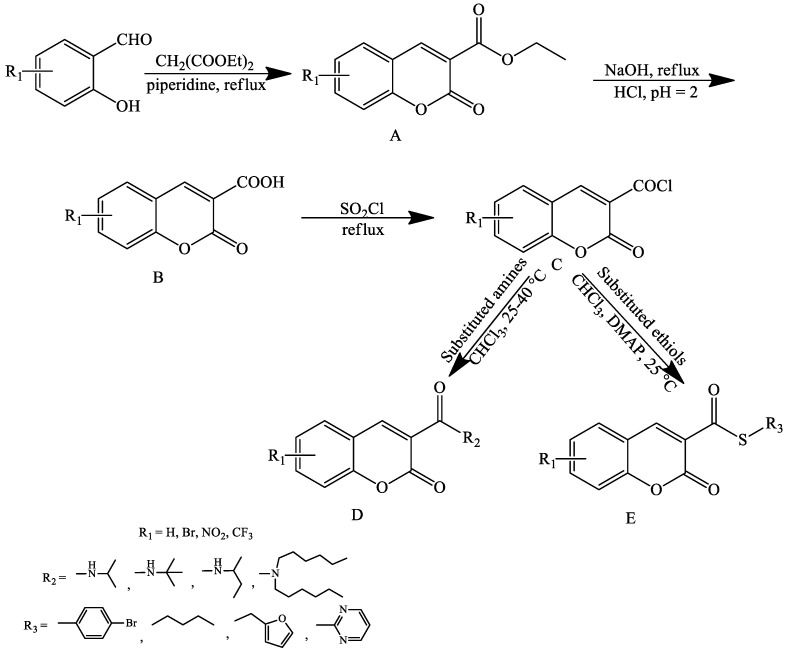
Three and four-step synthesis of N-(2-(1H-indol-3-yl)ethyl)-2-oxo-2H-chromene-3-carboxamides.
Scheme 22
Scheme 22
Two-step synthesis of substituted 3-cyanocoumarins under microwave irradiation.
Scheme 23
Scheme 23
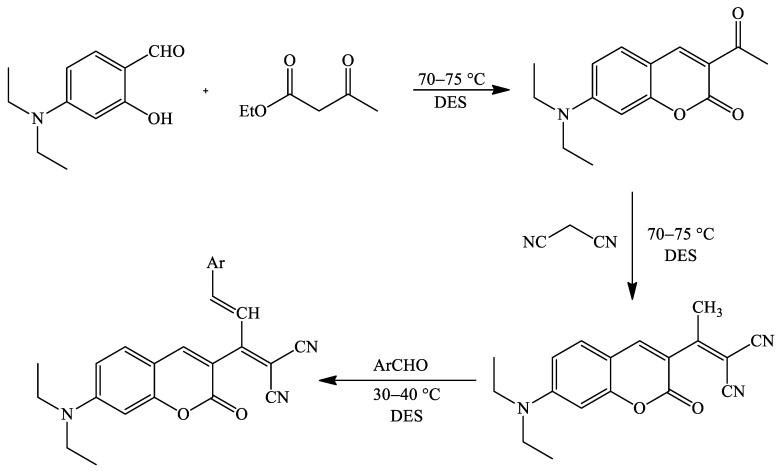
One-pot synthesis of fluorescent colorant in deep eutectic solvents.
Scheme 24
Scheme 24
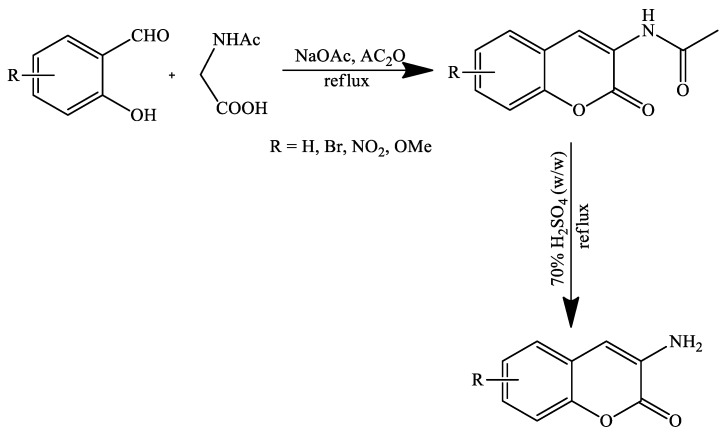
Synthesis of substituted 3-aminocoumarins in two-step reaction.
Scheme 25
Scheme 25
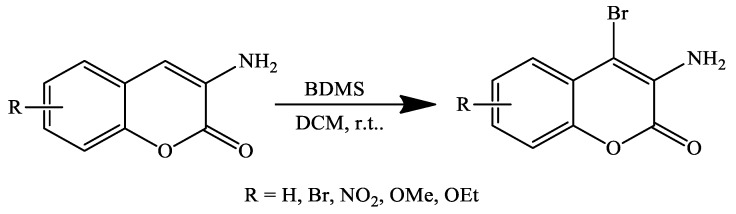
Synthesis of substituted 3-amino-4-bromocoumarins in the presence of bromodimethylsulfonium bromide.
Scheme 26
Scheme 26
Four-step reaction in synthesis of coumarin derivatives.
Scheme 27
Scheme 27
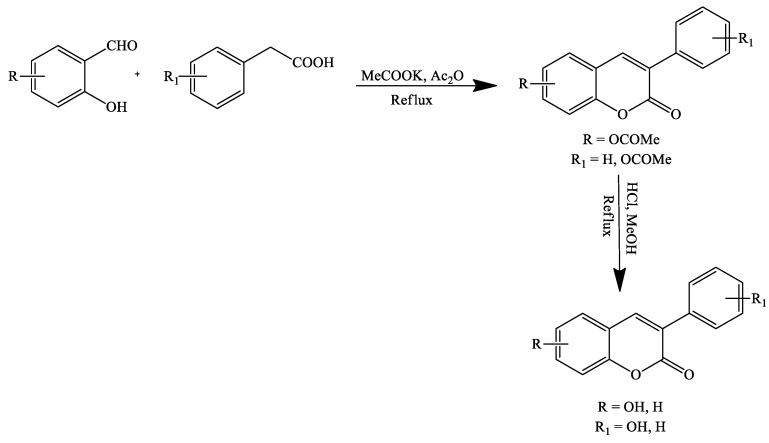
Efficient two-step synthesis of hydroxylated 3-phenylcoumarins.
Scheme 28
Scheme 28
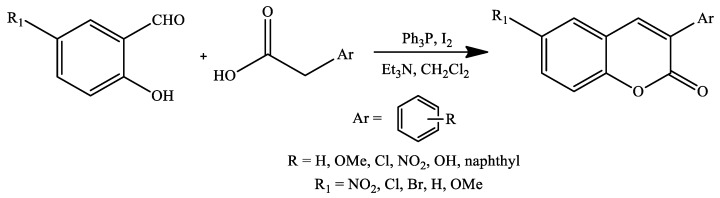
One-pot two-step synthesis of 3-aryl coumarins in the presence of Ph3P/I2-Et3N.
Scheme 29
Scheme 29
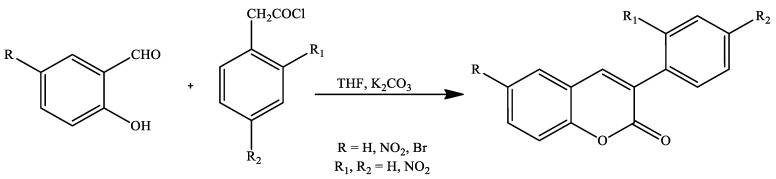
Ultrasound assisted synthesis of 3-phenylcoumarin derivatives in presence of tetrahydrofuran and K2CO3.
Scheme 30
Scheme 30
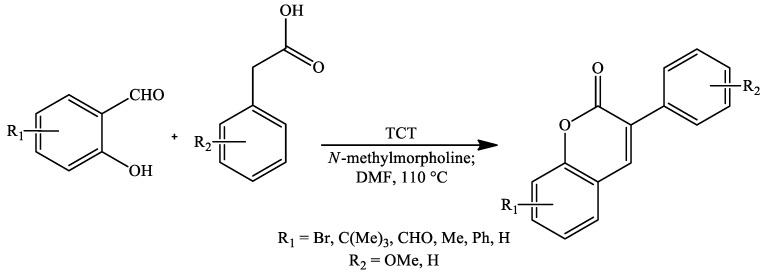
Efficient synthesis of 3-aryl coumarin derivatives in presence of N-methylmorpholine.
Scheme 31
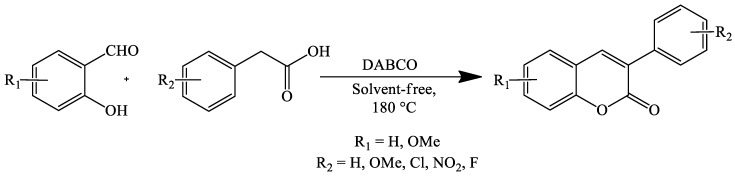
Scheme 31
Solvent-free synthesis of 3-aryl coumarins in the presence of DABCO as the catalyst.
Scheme 32
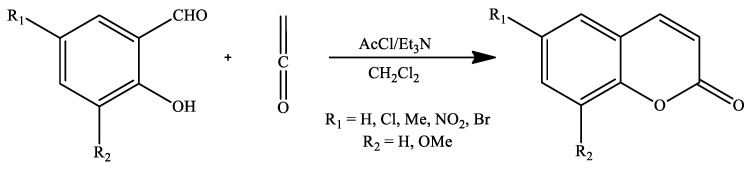
Scheme 32
Synthesis of substituted coumarin derivatives from salicylaldehydes and ketene.
Scheme 33
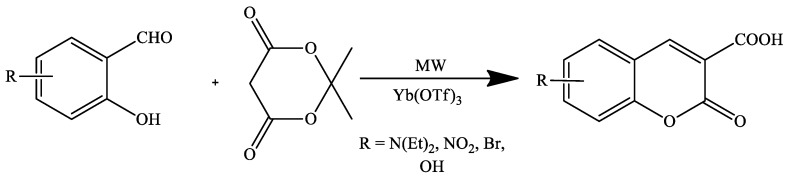
Scheme 33
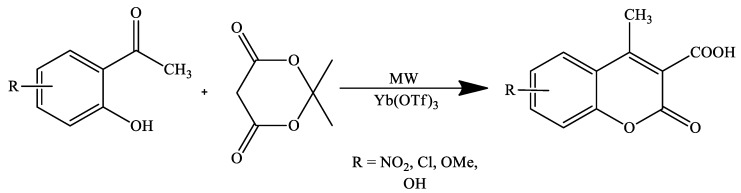
Solvent-free synthesis of coumarin-3-carboxylic acids under microwave irradiation.
Scheme 34
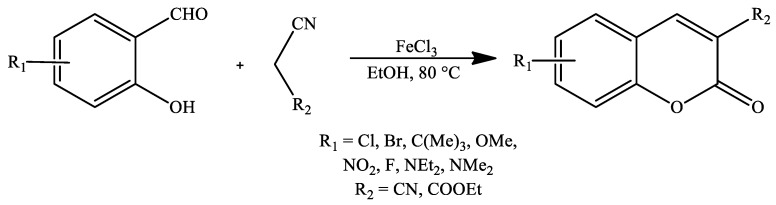
Scheme 34
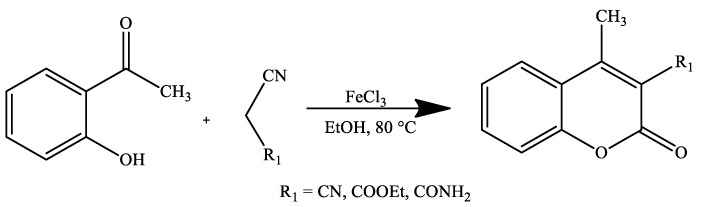
Synthesis of 3-substituted coumarins catalyzed by iron (III) chloride.
Scheme 35
Scheme 35
Synthesis of 3-substituted coumarins in the presence of potassium phtalamide.
Scheme 36
Scheme 36
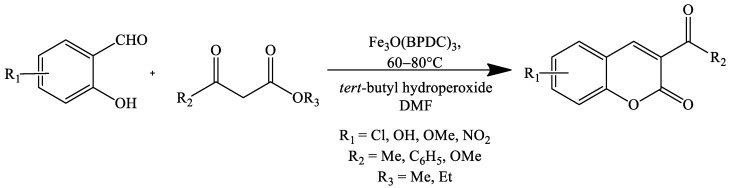
Synthesis of substituted coumarins catalyzed by Fe3O(BPDC)3.
Scheme 37
Scheme 37
Synthesis of 3-cyanocoumarins performed under heating and microwave conditions.
Scheme 38
Scheme 38
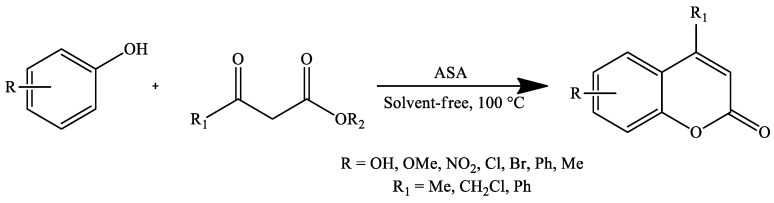
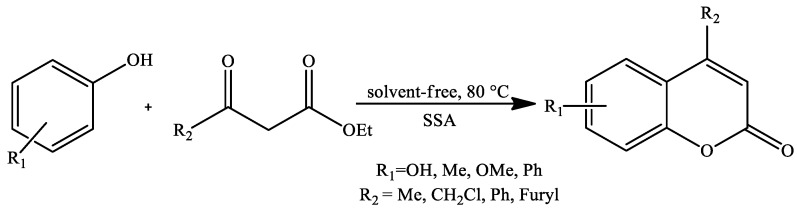
Synthesis of coumarin derivatives in presence of starch sulfuric acid.
Scheme 39
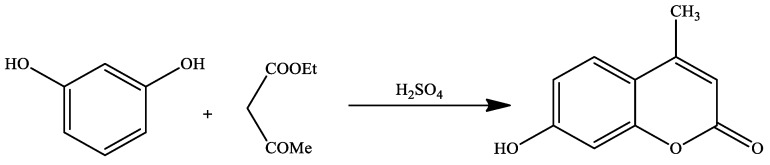
Scheme 39
Coumarins synthesis via Pechmann condensation with sulfuric acid as a catalyst.
Scheme 40
Scheme 40
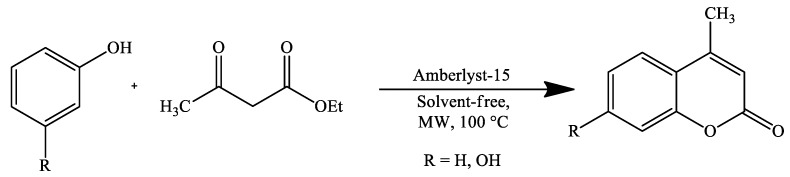
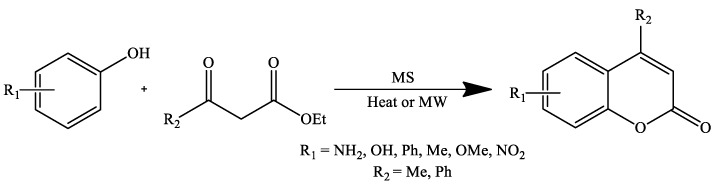
Solvent-free synthesis of 4-methylcoumarins under microwave irradiation.
Scheme 41
Scheme 41
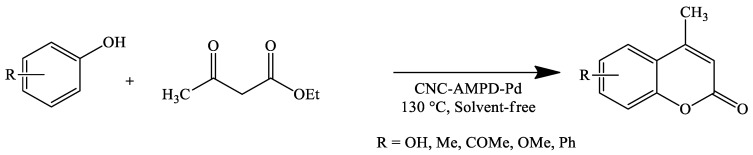
Solvent-free Pechmann condensation of coumarin derivatives in the presence of cellulose nanocrystal supported palladium nanoparticles.
Scheme 42
Scheme 42
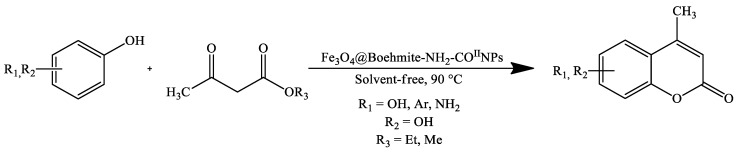
Synthesis of coumarin derivatives in the presence of magnetic-core-shell-like Fe3O4@Boehmite-NH2-CoII NPs.
Scheme 43
Scheme 43
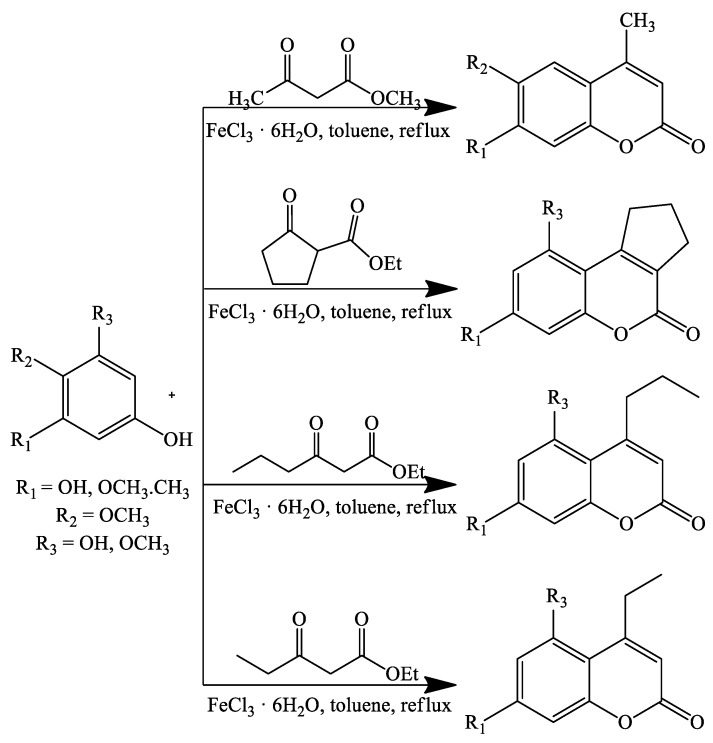
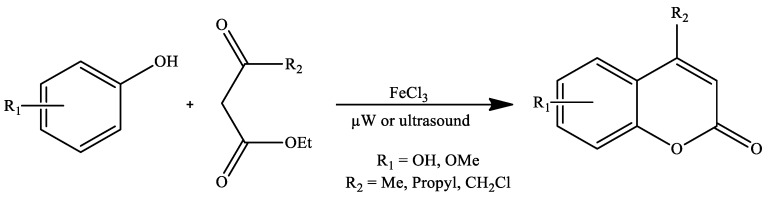
Condensation reaction of phenols and β-ketoesters catalyzed by FeCl3·6H2O.
Scheme 44
Scheme 44
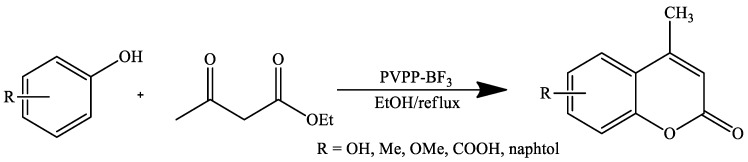
Synthesis of 4-methyl coumarin derivatives via Pechmann condensation.
Scheme 45
Scheme 45
Solvent-free synthesis of coumarin derivatives with meglumine sulfate as a catalyst.
Scheme 46
Scheme 46
Alumina sulfuric acid catalyzed reaction between phenolic compounds and β-ketoesters.
Scheme 47
Scheme 47
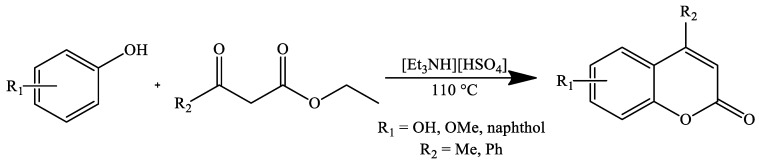
Pechmann synthesis of coumarins in the presence of triethylammonium hydrogen sulfate as a catalyst.
Scheme 48
Scheme 48
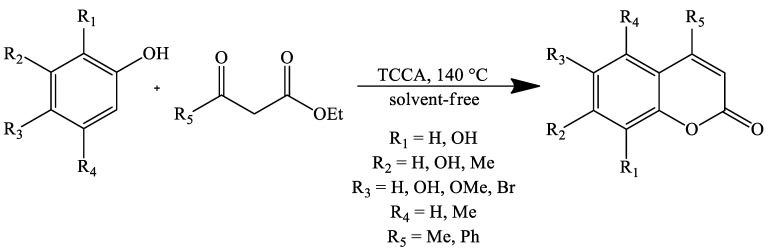
Synthesis of coumarin derivatives in the presence 1,3,5-trichloroisocyanuric acid.
Scheme 49
Scheme 49
Ultrasound assisted solvent-free synthesis of 4-substituted coumarins.
Scheme 50
Scheme 50
Synthesis of 7-hydroxy-4-methyl coumarin in presence of H2SO4 under ultrasonic irradiation.
Scheme 51
Scheme 51
Synthesis of 4-methyl coumarins in PEG-SO3H catalyzed reaction.
Scheme 52
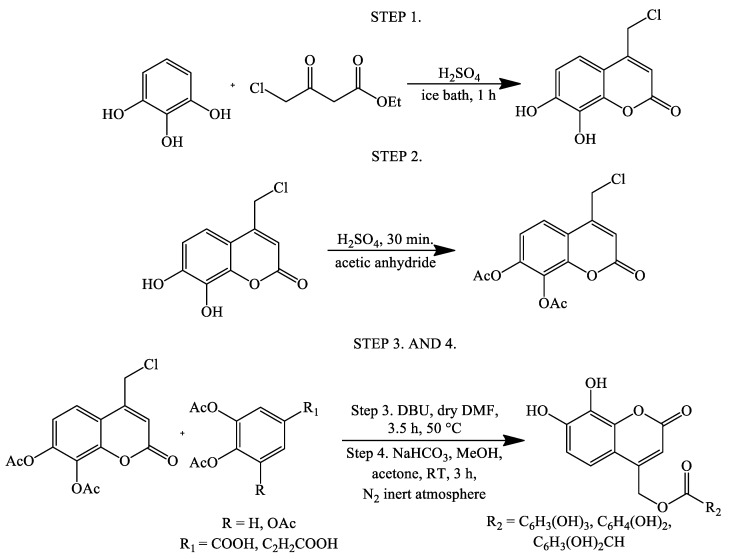
Scheme 52
Four-step syntheses of polyphenolic hybrid-coumarins.
Scheme 53
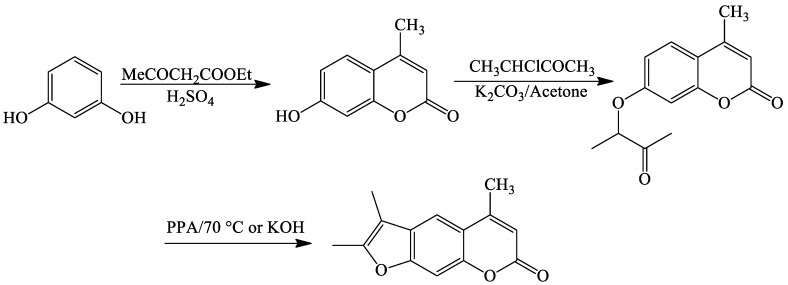
Scheme 53
Three-step synthesis of furanocoumarin.
Scheme 54
Scheme 54
Solvent-free synthesis of substituted coumarins catalyzed by Wells-Dawson heteropolyacid (H6P2W18O62).
Scheme 55
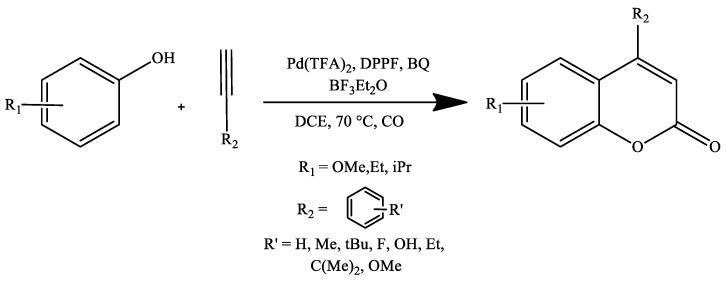
Scheme 55
Palladium catalyzed synthesis of coumarin derivatives.
Scheme 56
Scheme 56
Synthesis of coumarin-3-carboxylic acids under microwave irradiation.
Scheme 57
Scheme 57
Synthesis of coumarin derivatives via Knoevenagel condensation in green solvents.
Scheme 58
Scheme 58
Synthesis of 3,4-disubstituted coumarins in presence of FeCl3.
Scheme 59
Scheme 59
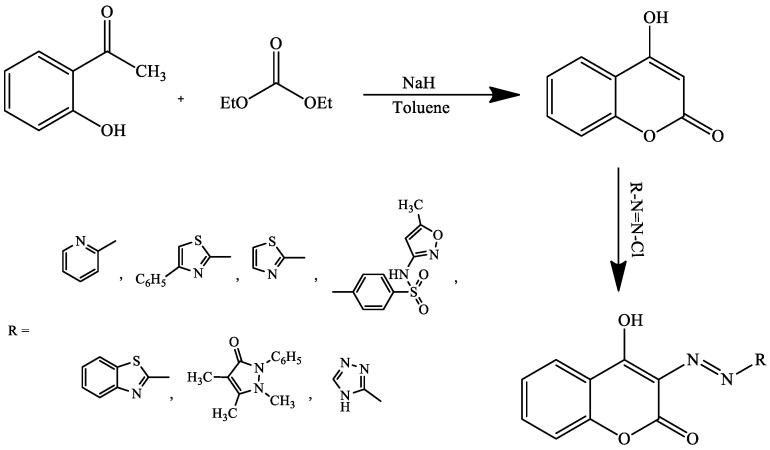
Two-step synthesis of 4-hydroxy-3-(hetero aryl Azo) coumarins.
Scheme 60
Scheme 60
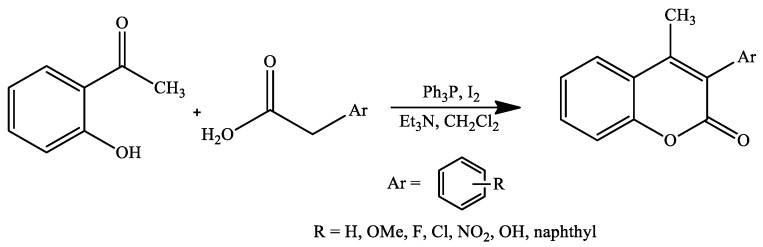
One-pot two-step synthesis of 3-aryl-4-methylcoumarins.
Scheme 61
Scheme 61
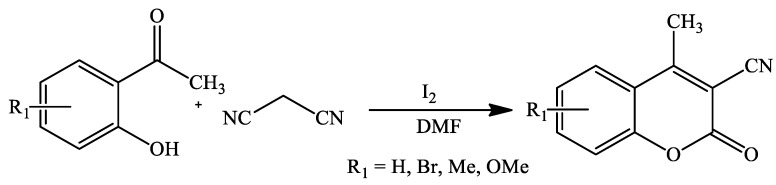
Synthesis of 3-cyano-4-methylcoumarions in presence of iodine as a catalyst. Coumarin derivatives synthesized from carboxylic acids.
Scheme 62
Scheme 62
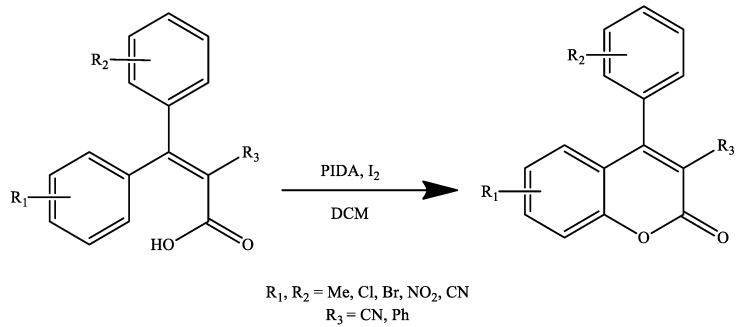
Synthesis of coumarin derivatives performed by Li et al.
Scheme 63
Scheme 63
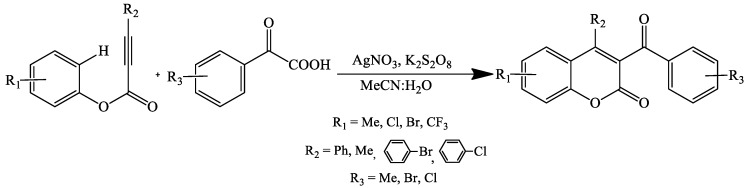
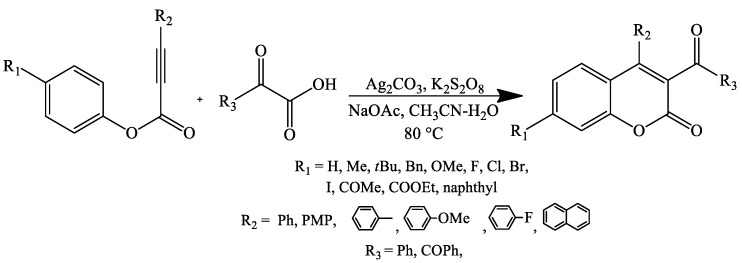
Radical cyclization of α-keto acids and alkynoates in coumarin derivatives synthesis.
Scheme 64
Scheme 64
Silver-promoted decarboxylative annulation of 3-acylcoumarins.

References

    1. Nikhil B., Shikha B., Anil P., Prakash N.B. Diverse pharmacological activities of 3-substituted coumarins: A review. Int. Res. J. Pharm. 2012;3:24–29.
    1. Kontogiorgis C., Detsi A., Hadjipavlou-Litina D. Coumarin-based drugs: A patent review (2008–present) Expert Opin. Ther. Pat. 2012;22:437–454. doi: 10.1517/13543776.2012.678835. - DOI - PubMed
    1. Venugopala K.N., Rashmi V., Odhav B. Review on Natural Coumarin Lead Compounds for Their Pharmacological Activity. BioMed Res. Int. 2013;2013:1–14. doi: 10.1155/2013/963248. - DOI - PMC - PubMed
    1. Prahadeesh N., Sithambaresan M., Mathiventhan U. A Study on Hydrogen Peroxide Scavenging Activity and Ferric Reducing Ability of Simple Coumarins. Emerg. Sci. J. 2018;2:417–427. doi: 10.28991/esj-2018-01161. - DOI
    1. Kulkarni M.V., Kulkarni G.M., Lin C.-H., Sun C.-M. Recent advances in coumarins and 1-azacoumarins as versatile biodynamic agents. Curr. Med. Chem. 2006;13:2795–2818. doi: 10.2174/092986706778521968. - DOI - PubMed

Publication types

MeSH terms

LinkOut - more resources