


Determinants of the persistence of malaria in Rwanda
- PMID: 31964371
- PMCID: PMC6975052
- DOI: 10.1186/s12936-020-3117-z
Determinants of the persistence of malaria in Rwanda
Abstract
Background: Malaria has a considerable impact on the health of the populations of developing countries; indeed, the entire population of Rwanda is at risk of contracting the disease. Although various interventions to control malaria have been implemented in Rwanda, the incidence of malaria has increased since 2012. There is an interest in understanding factors driving its persistence in Rwanda. This study aims at evaluating the effect of socio-economic and environmental factors, seasonality and the use of insecticide-treated mosquito nets (ITNs) on malaria persistence in Rwanda.
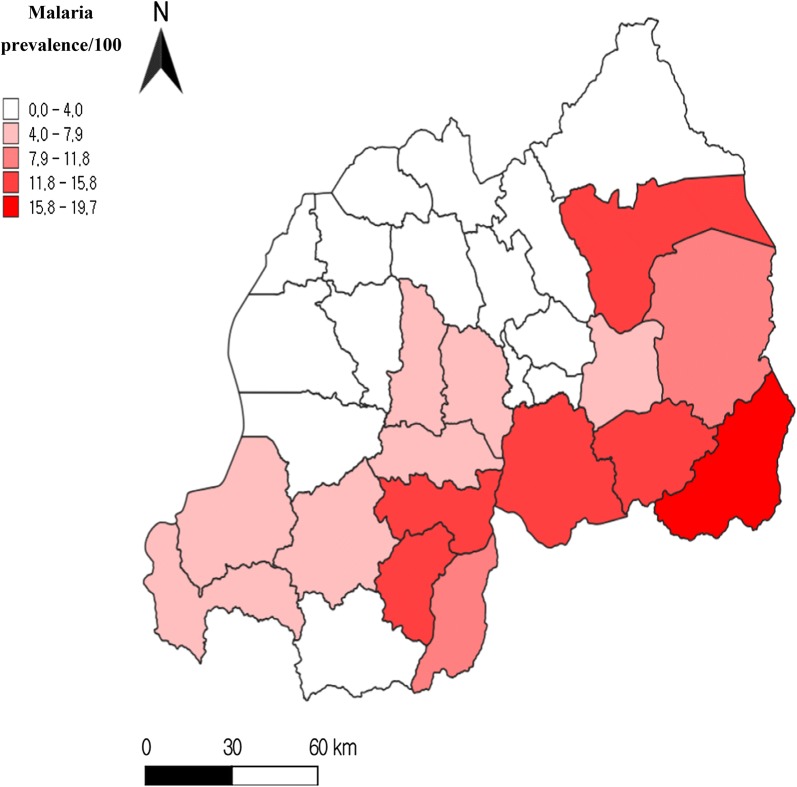
Methods: This study analysed data from the 2014-2015 Rwanda Demographic and Health Survey of 11,202 household's members composed of children under the age of 5 and women aged between 15 and 49. Bivariate analysis was performed between the outcome and each covariate including wealth, altitude, education level, place of residence, and use of ITNs generating percentages. Chi square test was performed to compare malaria negatives and positives on each covariate. Significant variables were subjected to logistic regression analysis to evaluate factors that are significantly associated with malaria at P < 0.05. The analysis was performed in R x64 3.6 and QGIS3.6 was used to map geographical distribution of malaria cases.
Results: The lowest wealth category was associated with the incidence of malaria [AOR] = 1.54, 95% CI (1.78-2.03). Having a place of residence < 1700 m above sea level (asl) and non-use of ITNs were significantly associated with the incidence of malaria (adjusted odds ratio [AOR] = 2.93, 95% confidence interval [95% CI] 1.94-4.42 and [AOR] = 1.29, 95% C.I (1.03-1.60), respectively). Season and type of residence were not significantly associated with malaria prevalence while women had lower risk of contracting malaria than children.
Conclusion: Increased malaria prevalence was associated with lower income, non-compliance with bed-net usage and living below 1700 m of altitude. In addition to current malaria control strategies, potential interventions in individuals with lower income and areas at low altitudes should be taken into consideration when formulating malaria-control strategies, Also use of ITNs to control the spread of malaria should be emphasized.
Keywords: Altitude; Malaria; Mosquito net; Residence; Season; Wealth category.
Conflict of interest statement
The authors declare that they have no competing interests.
Figures
References
-
- PMI. Malaria Operational Plan FY 2017. https://www.pmi.gov/docs/default-source/default-document-library/malaria...; 2017.
MeSH terms
LinkOut - more resources
Full Text Sources
Medical
