


The Synonymy of the Supratidal Crab Species Parasesarma cognatum Rahayu & Li, 2013 with P. liho Koller, Liu & Schubart, 2010 (Decapoda: Brachyura: Sesarmidae) Based on Morphological and Molecular Evidence, with a Note on P. paucitorum Rahayu & Ng, 2009
- PMID: 31966322
- PMCID: PMC6890779
- DOI: 10.6620/ZS.2019.58-21
The Synonymy of the Supratidal Crab Species Parasesarma cognatum Rahayu & Li, 2013 with P. liho Koller, Liu & Schubart, 2010 (Decapoda: Brachyura: Sesarmidae) Based on Morphological and Molecular Evidence, with a Note on P. paucitorum Rahayu & Ng, 2009
Abstract
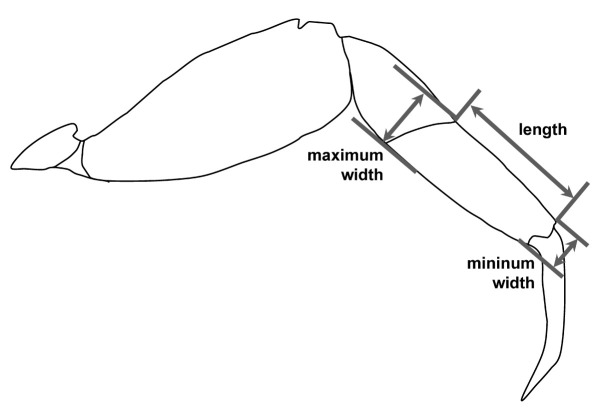
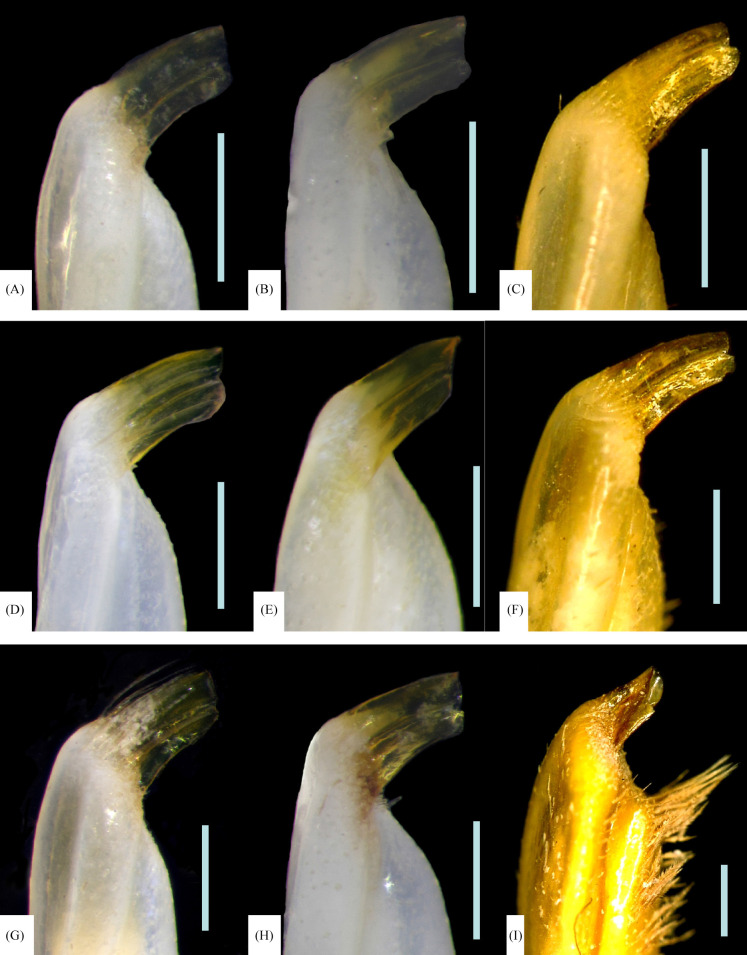
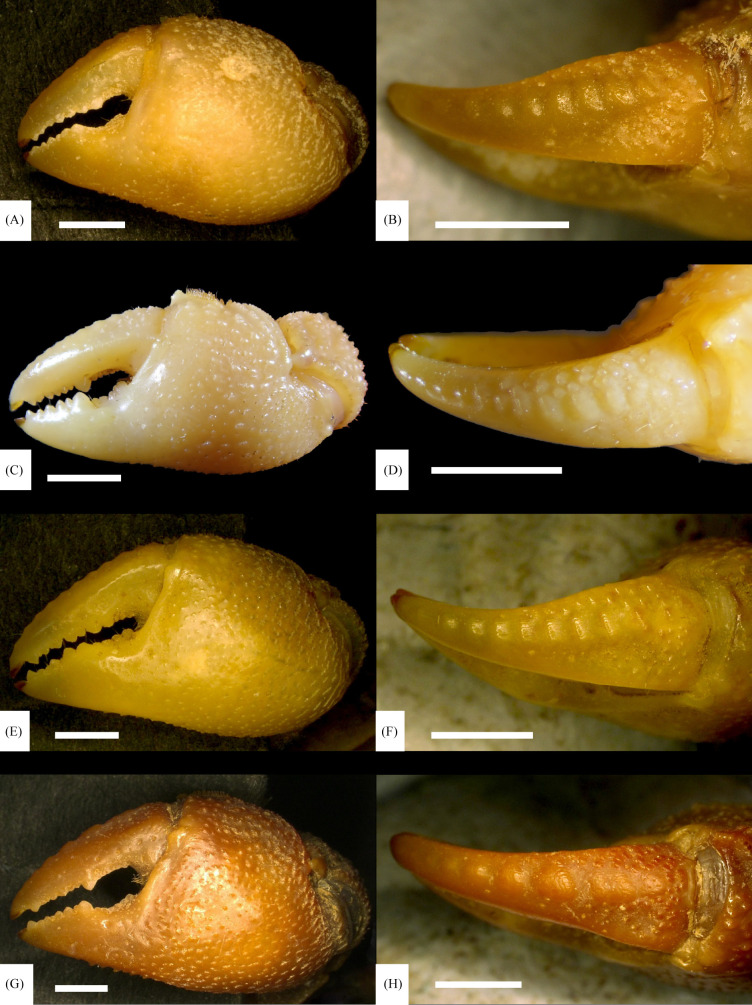
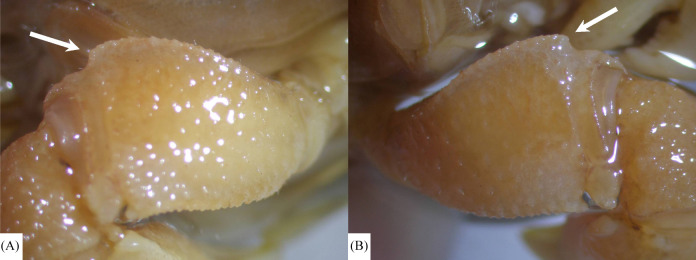
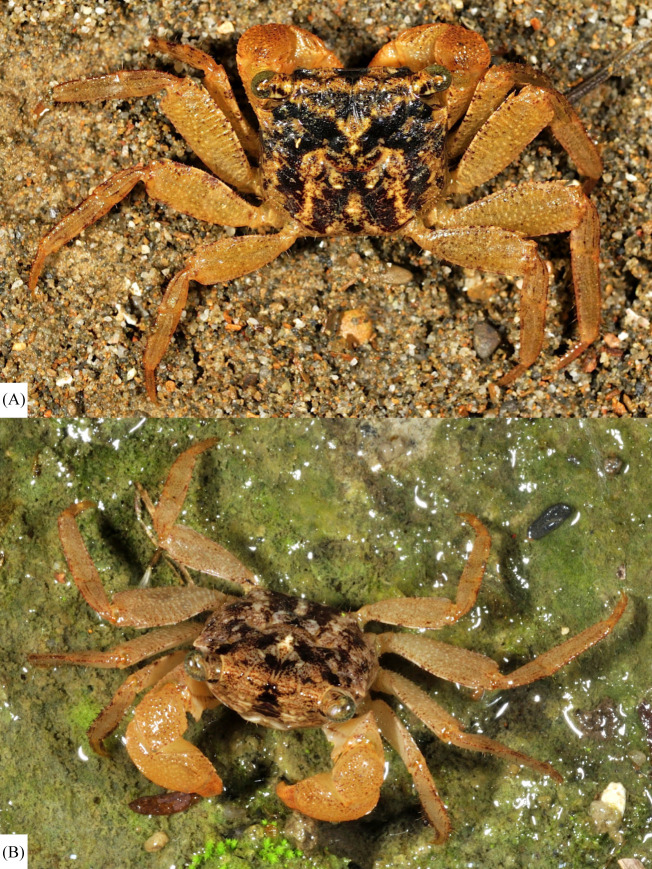
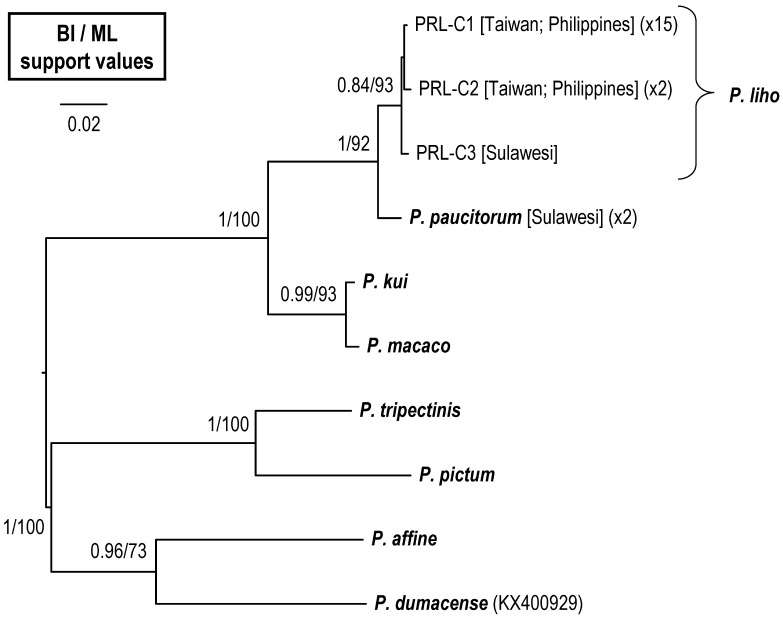
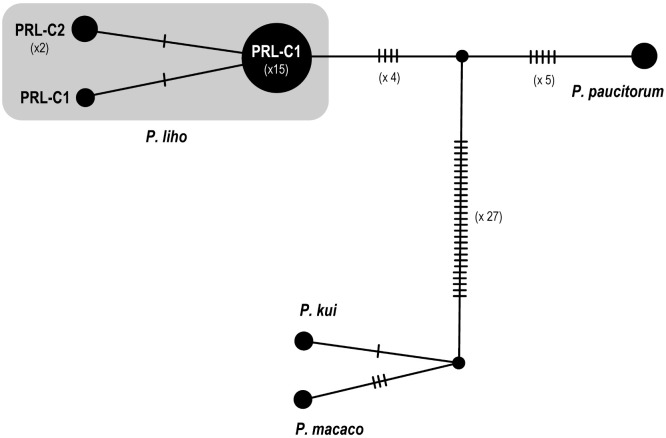
Parasesarma liho Koller, Liu & Schubart, 2010 and P. cognatum Rahayu & Li, 2013 from East and Southeast Asia are similar species that have been confused in several studies. Here, we re-examined the type specimens of both species and found identical main characters, which is supported by the molecular identity of the mitochondrial cytochrome oxidase subunit I gene. As a result, we treat P. cognatum as a junior subjective synonym of P. liho. We also show that the male paratype of P. paucitorum Rahayu & Ng, 2009 is conspecific with P. liho, although P. paucitorum s. str. remains a distinct but allied species. The distribution of P. liho is updated to include Japan (Ryukyus), Taiwan, Philippines (Cebu) and Indonesia (Sulawesi).
Keywords: Mitochondrial COI; Morphology; P. cognatum; P. liho; P. paucitorum; Parasesarma.
Figures
References
-
- Cannicci S, Schubart CD, Innocenti G, Dahdouh-Guebas F, Shahdadi A, Fratini S. 2017. A new species of the genus Parasesarma De Man 1895 from East African mangroves and evidence for mitochondrial introgression in sesarmid crabs. Zool Anz 269:89– 99. doi:10.1016/j.jcz.2017.08.002.
-
- Chu KH, Schubart CD, Shih HT, Tsang LM. 2015. Genetic diversity and evolution of Brachyura. In: Castro P, Davie PJF, Guinot D, Schram FR, von Vaupel Klein JC (eds) Treatise on zoology – anatomy, taxonomy, biology – The Crustacea, complementary to the volumes translated from the French of the Traité de Zoologie. Brill. Leiden, 9(C)(II), Decapoda: Brachyura (Part 2), pp. 775– 820.
-
- Gillikin DP, Schubart CD. 2004. Ecology and systematics of mangrove crabs of the genus Perisesarma (Crustacea: Brachyura: Sesarmidae) from East Africa. Zool J Linn Soc 141:435–445. doi:10.1111/j.1096-3642.2004.00125.x.
-
- Folmer O, Black M, Hoeh W, Lutz R, Vrijenhoek R. 1994. DNA primers for amplification of mitochondrial cytochrome c oxidase subunit I from diverse metazoan invertebrates. Mol Mar Biol Biotechnol 3:294–299. - PubMed
-
- Fratini S, Cannicci S, Porri F, Innocenti G. 2019. Revision of the Parasesarma guttatum species complex reveals a new pseudocryptic species in south-east African mangroves. Invertebr Syst 33:208–224. doi:10.1071/is18028.
LinkOut - more resources
Full Text Sources
Research Materials