


Maxillary Sinus Pneumatization Following Extractions in Riyadh, Saudi Arabia: A Cross-sectional Study
- PMID: 31966939
- PMCID: PMC6957056
- DOI: 10.7759/cureus.6611
Maxillary Sinus Pneumatization Following Extractions in Riyadh, Saudi Arabia: A Cross-sectional Study
Abstract
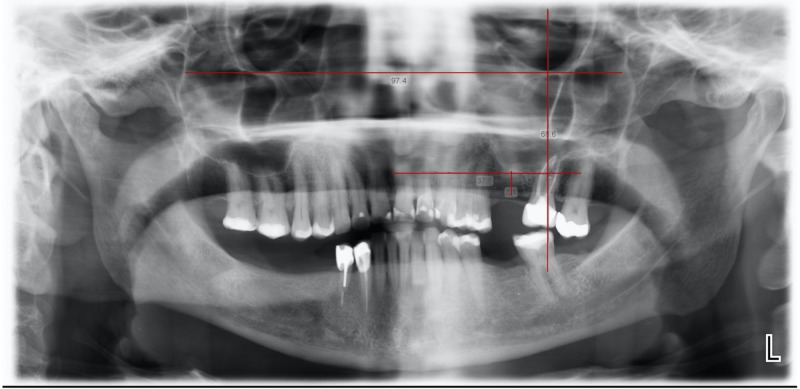
Introduction It is generally agreed that tooth extraction may lead to maxillary sinus pneumatization, resulting in a union between the sinus floor and the crest of the remaining bone in extreme cases. Studies that compared pre- and postextraction radiographs suggest that maxillary sinus pneumatization may occur after posterior tooth extractions. This study's aim was to establish the prevalence of maxillary sinus pneumatization following extractions in Riyadh, Saudi Arabia. Material and methodology In this cross-sectional study, 282 panoramic images were randomly selected from the radiology department of the Dental University Hospital in Riyadh, Saudi Arabia, from the years 2015 to 2018. The radiographs included were of patients who had one of the following teeth extracted: the second premolar, the first molar, or the second molar. These radiographs were then evaluated for sinus pneumatization following extractions. The distance between the sinus floor and the inferior border of the alveolar ridge after the extraction was reviewed and assessed for all images. Result The six teeth that were assessed in this study were: 17, 16, 15, 25, 26, and 27. In relation to distribution (unilateral and bilateral), the results showed a statistically significant difference, especially for tooth numbers 16, 15, and 26. The mean values of change in sinus were significantly higher in the unilateral site than the bilateral site. However, the data did not provide any significant difference for the other three teeth (17, 25, and 27). The gender and molar side groups showed no statistical significance. Conclusion The results of the study showed that maxillary sinus pneumatization may occur after posterior tooth extraction.
Keywords: dental implants; maxillary sinus pneumatization; tooth extraction; vertical height.
Copyright © 2020, Alqahtani et al.
Conflict of interest statement
The authors have declared that no competing interests exist.
Figures
References
-
- Lee KJ. Essentials of Otolaryngology and Head and Neck Surgery, 8th edition. New York: McGraw Hill; 2003.
-
- Misch CE. Dental Implant Prosthetics (2nd Edition) Amsterdam, Netherlands: Elsevier Inc.; 2015. Maxillary posterior edentulism: treatment options for fixed prostheses; pp. 553–572.
-
- Standring S. Philadelphia: Elsevier Limited; 2016. Gray´s Anatomy: The Anatomical Basis of Clinical Practice.
-
- Harnessing the hallowed hollows of the head: the mysterious world of the paranasal sinuses. Laitman JT. Anat Rec. 2008;291:1346–1349. - PubMed
-
- The maxillary sinus floor in the oral implantology. Nimigean V, Nimigean VR, Măru N, Sălăvăstru DI, Bădiţă D, Tuculină MJ. https://www.ncbi.nlm.nih.gov/pubmed/19050796. Rom J Morphol Embryol. 2008;49:485–489. - PubMed
LinkOut - more resources
Full Text Sources