


Ancient West African foragers in the context of African population history
- PMID: 31969706
- PMCID: PMC8386425
- DOI: 10.1038/s41586-020-1929-1
Ancient West African foragers in the context of African population history
Abstract
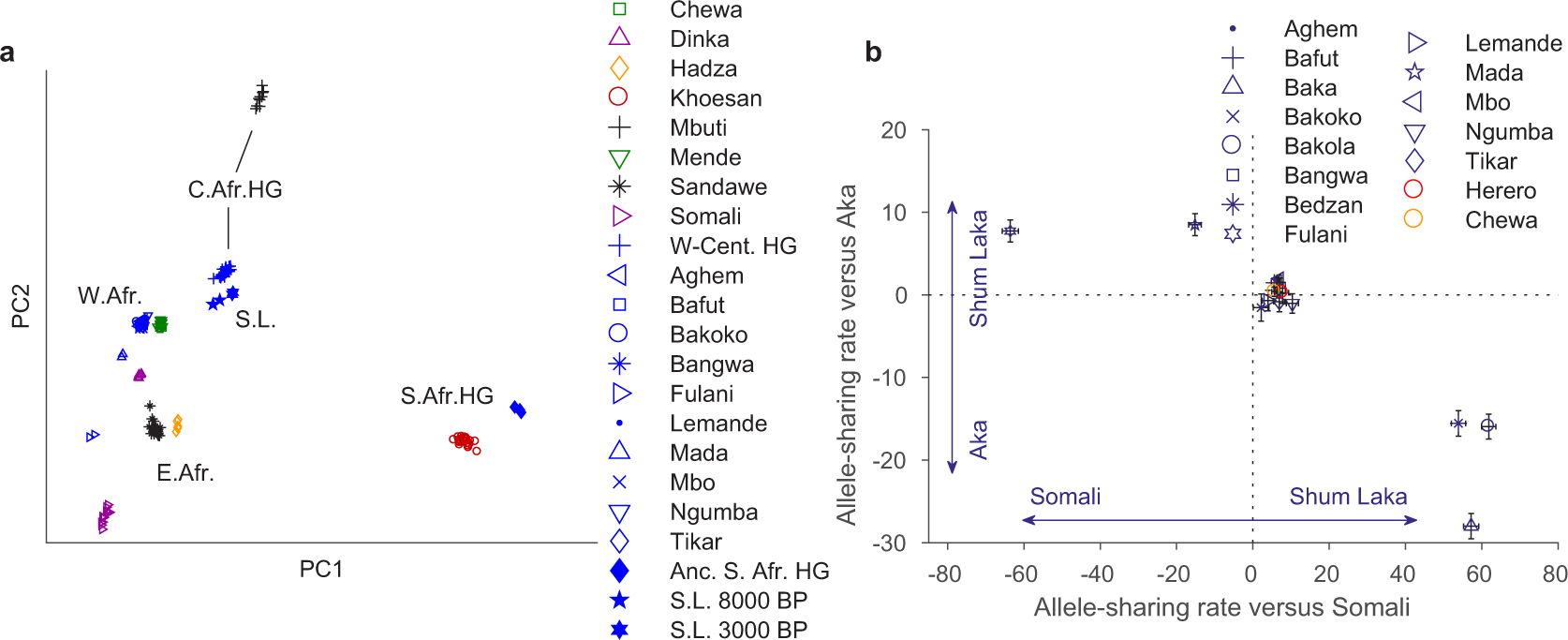
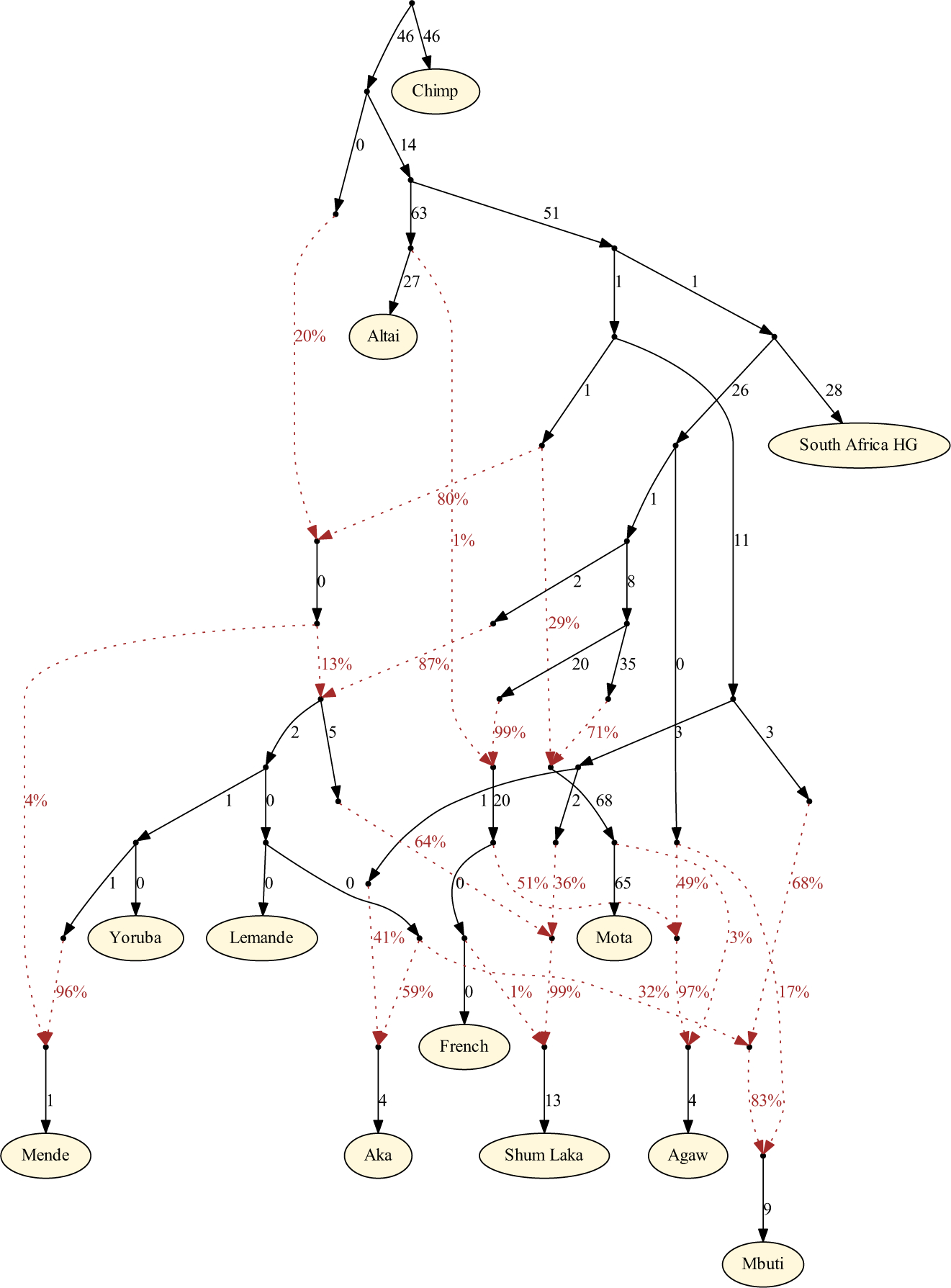
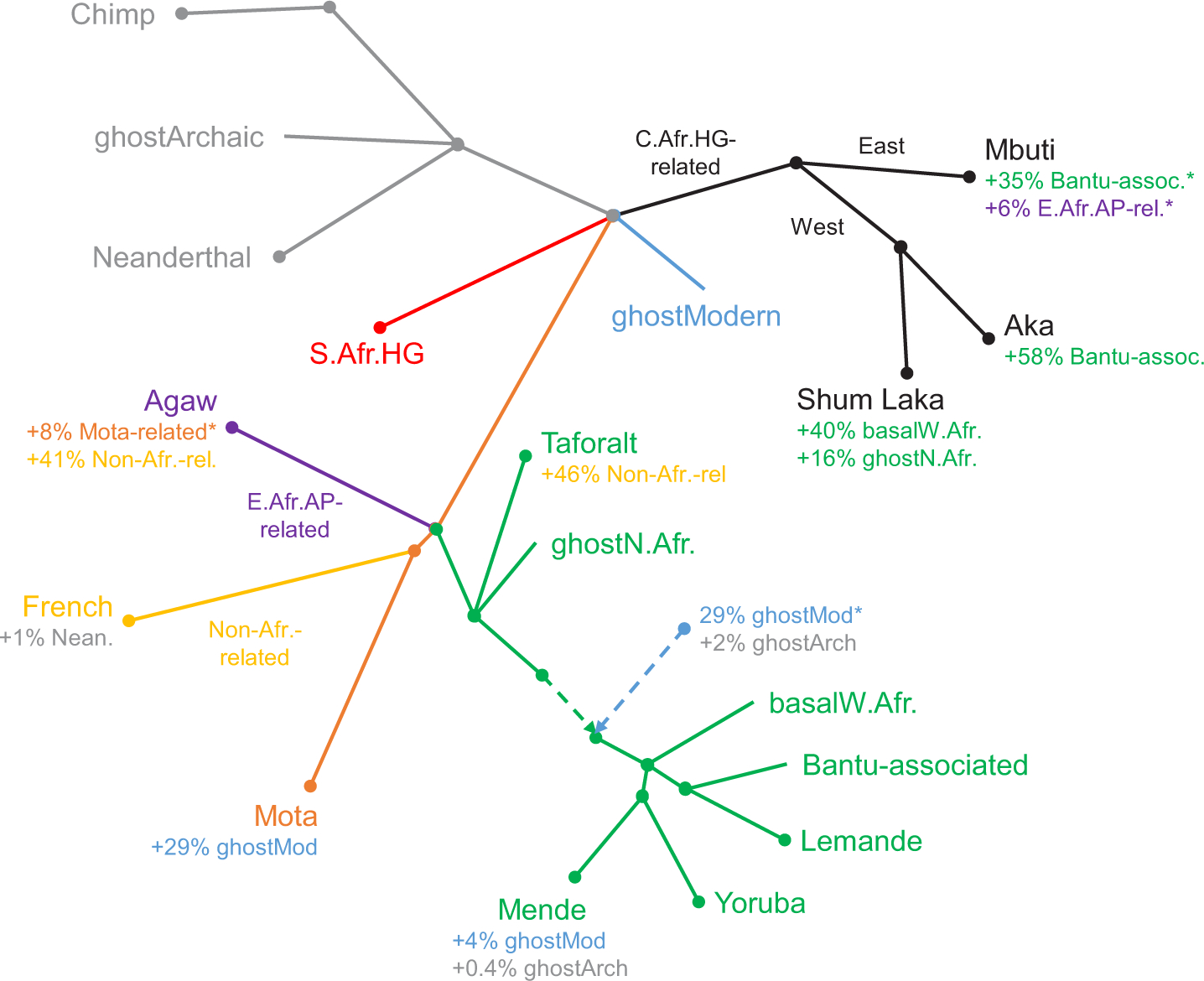
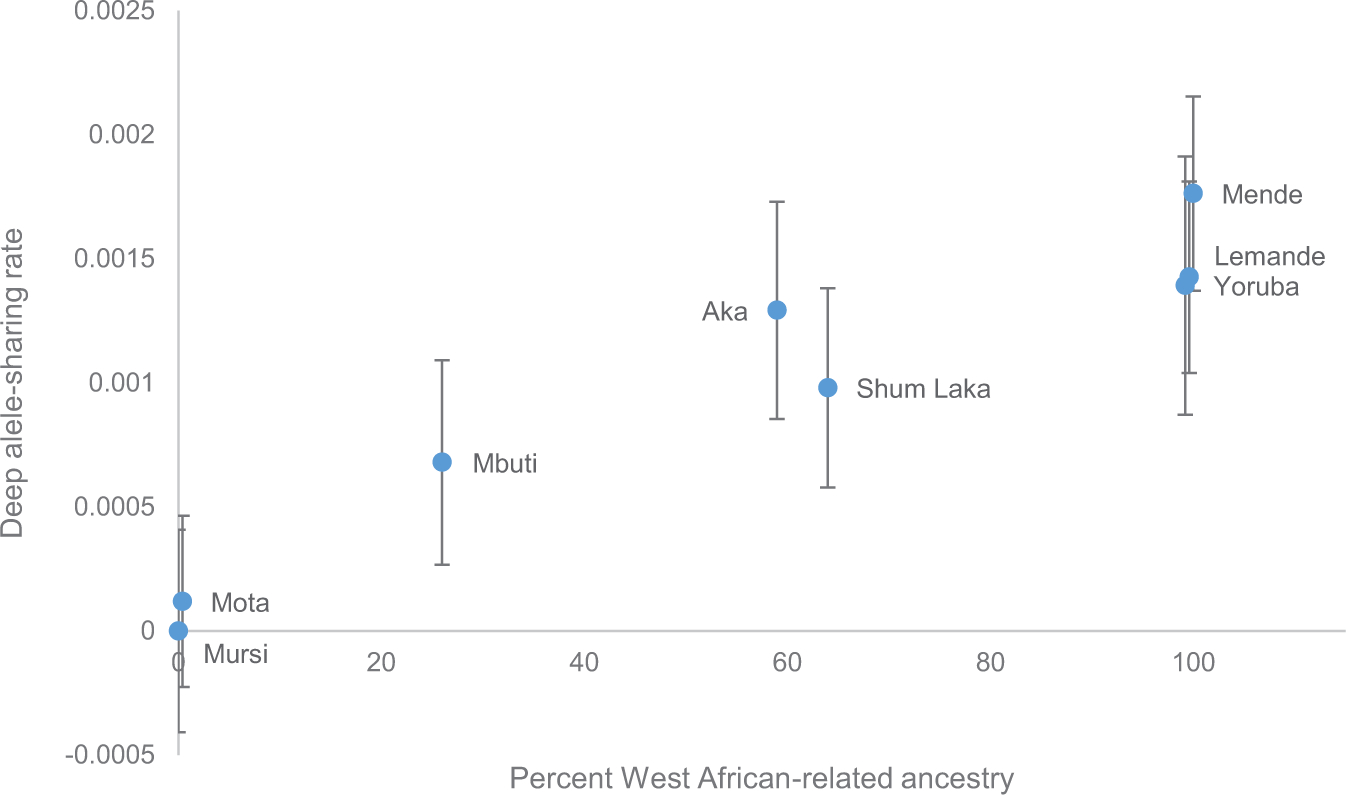
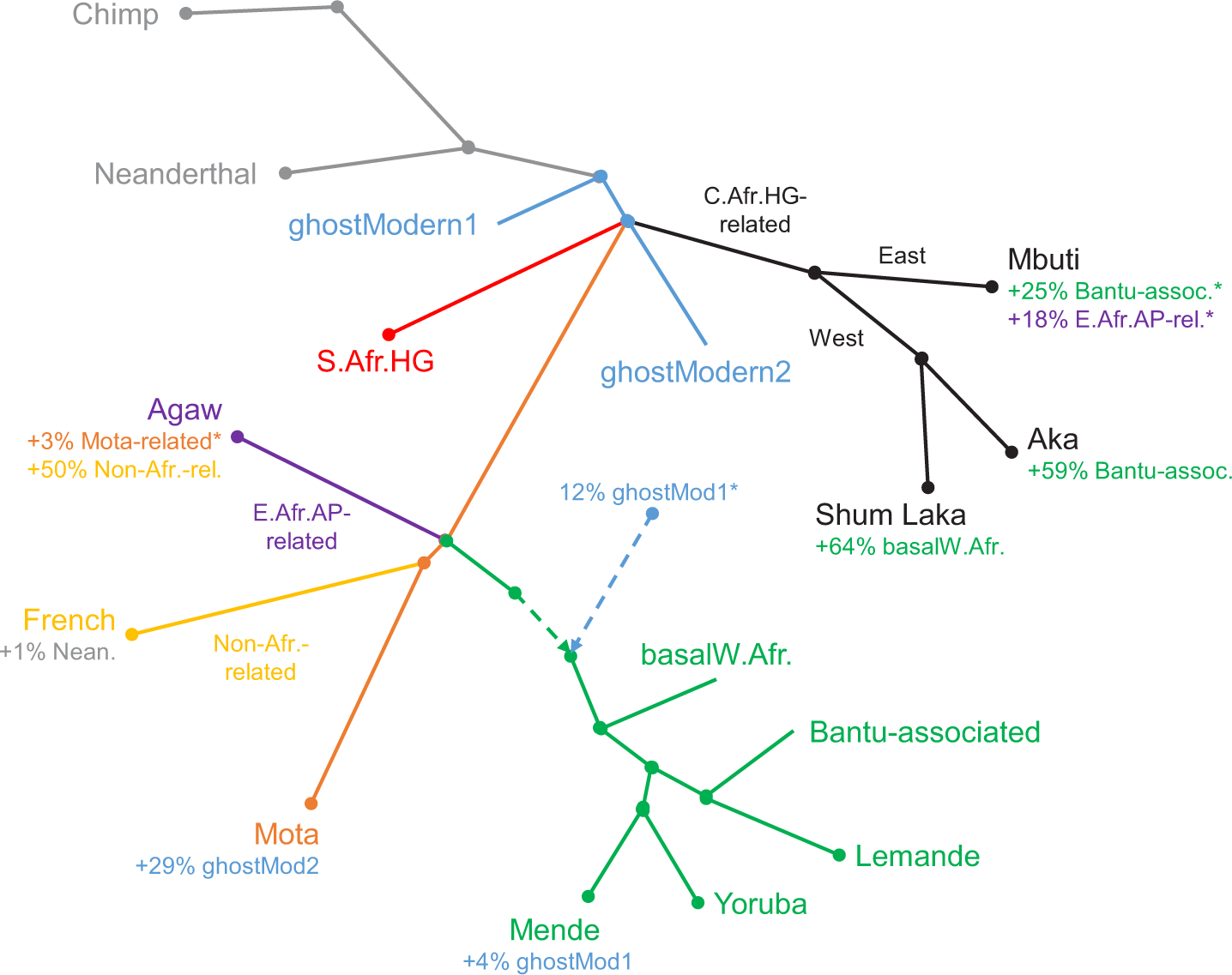
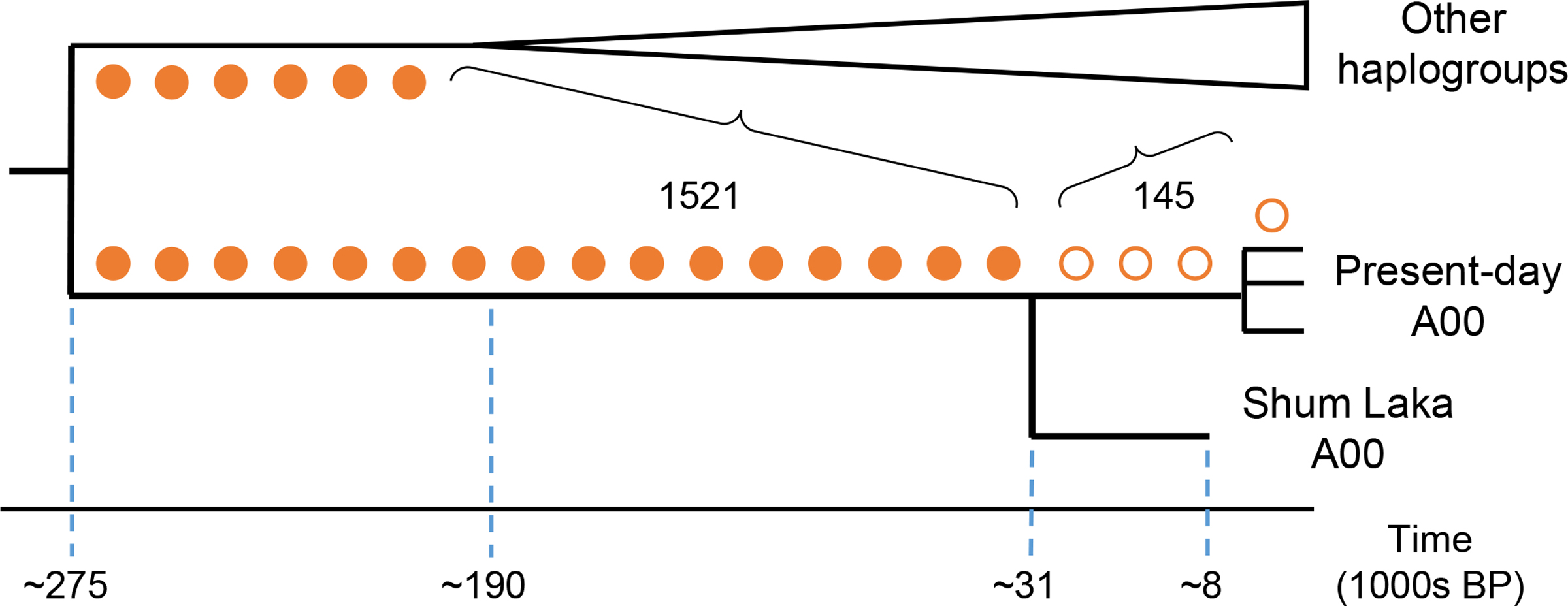
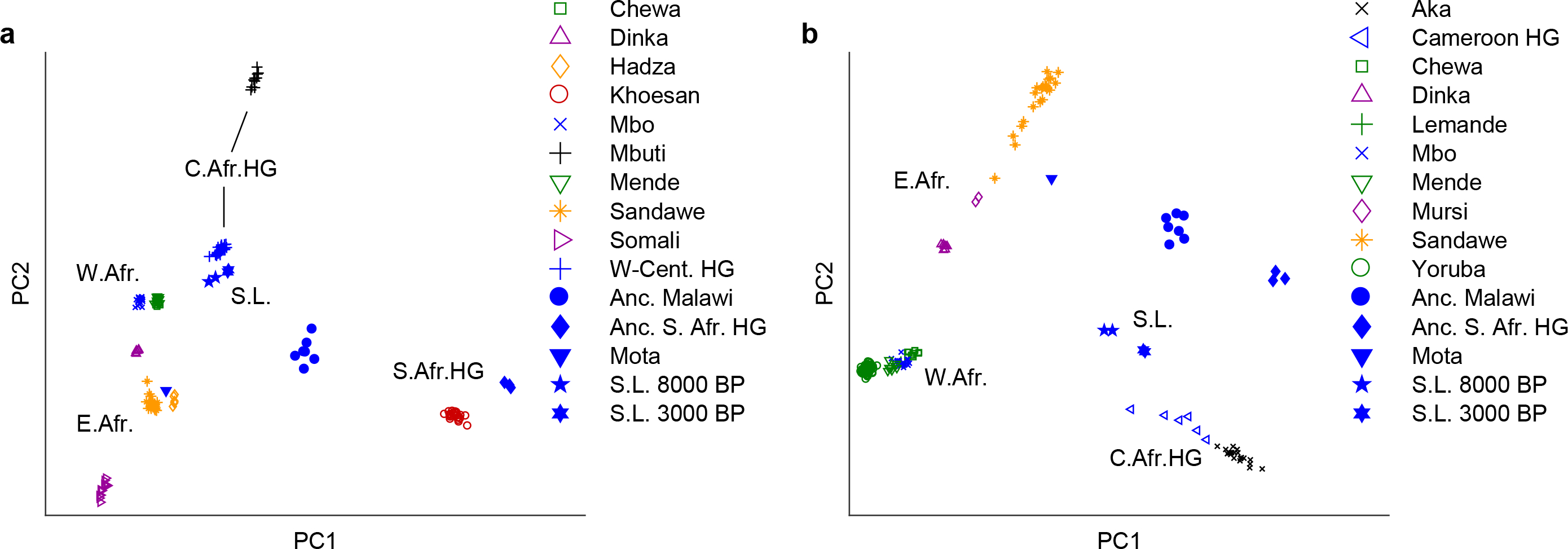
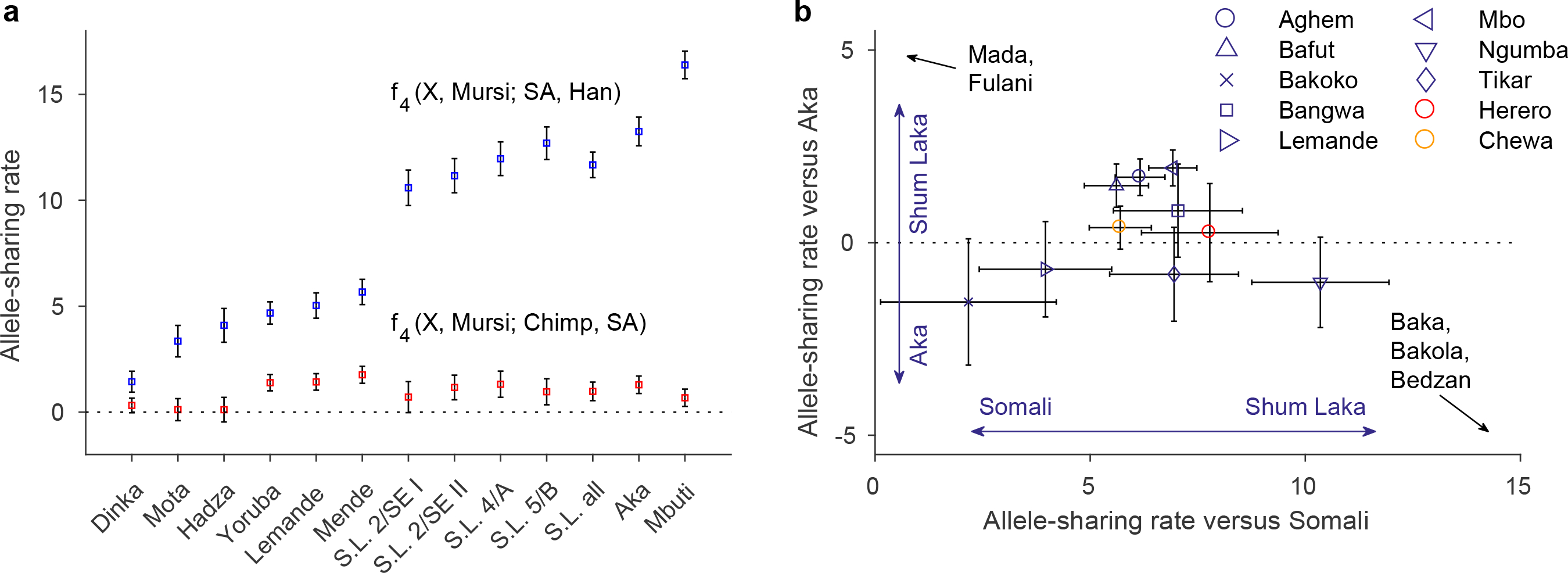
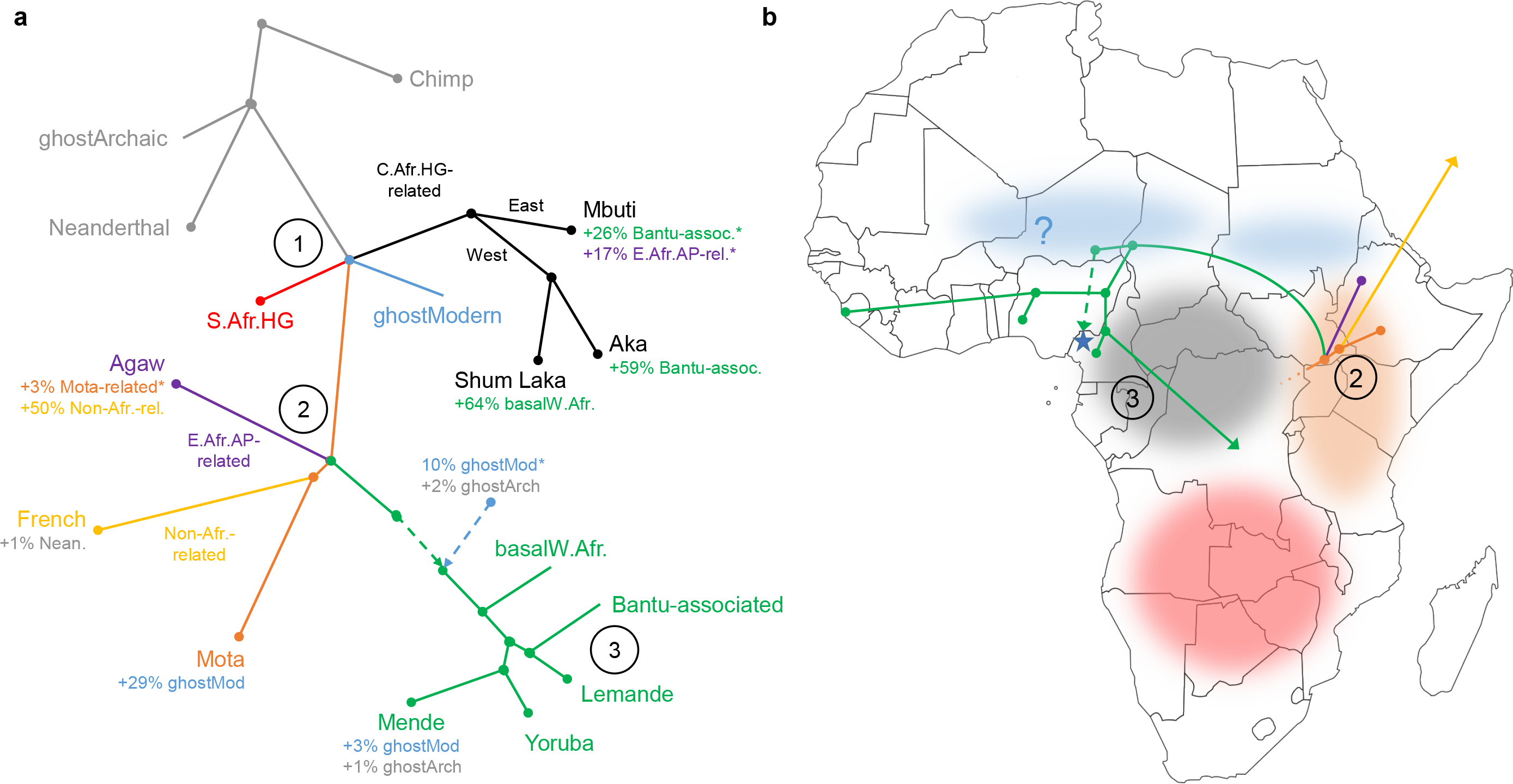
Our knowledge of ancient human population structure in sub-Saharan Africa, particularly prior to the advent of food production, remains limited. Here we report genome-wide DNA data from four children-two of whom were buried approximately 8,000 years ago and two 3,000 years ago-from Shum Laka (Cameroon), one of the earliest known archaeological sites within the probable homeland of the Bantu language group1-11. One individual carried the deeply divergent Y chromosome haplogroup A00, which today is found almost exclusively in the same region12,13. However, the genome-wide ancestry profiles of all four individuals are most similar to those of present-day hunter-gatherers from western Central Africa, which implies that populations in western Cameroon today-as well as speakers of Bantu languages from across the continent-are not descended substantially from the population represented by these four people. We infer an Africa-wide phylogeny that features widespread admixture and three prominent radiations, including one that gave rise to at least four major lineages deep in the history of modern humans.
Conflict of interest statement
Reprints and permissions information is available at
Figures
References
-
- de Maret P Shum Laka (Cameroon): human burials and general perspectives. In Pwiti G & Soper R (eds.) Aspects of African Archaeology: Papers from the 10th Congress of the Panafrican Association of Prehistory and Related Studies, 274–279 (University of Zimbabwe Publications, Harare, 1996).
-
- Ribot I, Orban R & de Maret P The Prehistoric Burials of Shum Laka Rockshelter (North-West Cameroon). In Annales du Musée Royal de l’Afrique Centrale, vol. 164 (Musée Royal de l’Afrique Centrale, Tervuren, Belgium, 2001).
-
- Lavachery P The Holocene archaeological sequence of Shum Laka rock shelter (Grassfields, western Cameroon). African Arch. Rev. 18, 213–247 (2001).
-
- de Maret P Archaeologies of the Bantu expansion. In Mitchell P & Lane P (eds.) The Oxford Handbook of African Archaeology, 627–643 (Oxford University Press, 2013).
-
- Cornelissen E Hunting and gathering in Africa’s tropical forests at the end of the Pleistocene and in the early Holocene. In Mitchell P & Lane P (eds.) The Oxford Handbook of African Archaeology, 403–417 (Oxford University Press, 2013).
Additional References
-
- Korlević P et al. Reducing microbial and human contamination in DNA extractions from ancient bones and teeth. BioTechniques 59, 87–93 (2015). - PubMed
Publication types
MeSH terms
Substances
Grants and funding
LinkOut - more resources
Full Text Sources
