


Human Papillomavirus and carcinogenesis: Novel mechanisms of cell communication involving extracellular vesicles
- PMID: 31973992
- PMCID: PMC7108386
- DOI: 10.1016/j.cytogfr.2019.12.009
Human Papillomavirus and carcinogenesis: Novel mechanisms of cell communication involving extracellular vesicles
Abstract
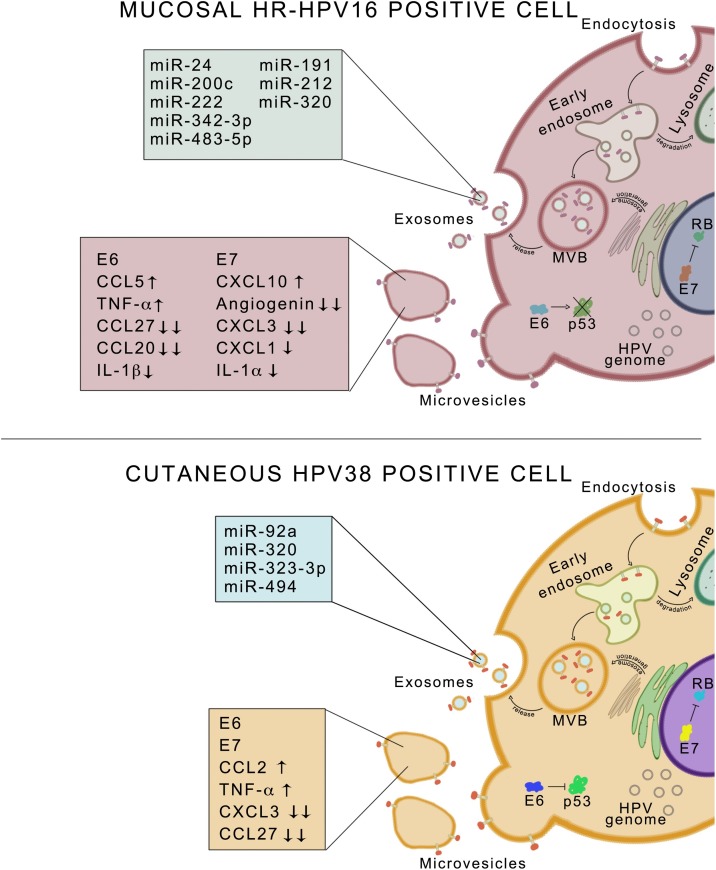
A small group of mucosal Human Papillomaviruses are the causative agents of cervical cancer and are also associated with other types of cancers. Certain cutaneous Human Papillomaviruses seem to have a role as co-factors in the UV-induced carcinogenesis of the skin. The main mechanism of the tumorigenesis induced by Human Papillomaviruses is linked to the transforming activity of the viral E6 and E7 oncoproteins. However, other mechanisms, such as the gene expression control by specific microRNAs expression and deregulation of immune inflammatory mediators, may be important in the process of transformation. In this context, the release of Extracellular Vesicles with a specific cargo (microRNAs involved in tumorigenesis, mRNAs of viral oncoproteins, cytokines, chemokines) appears to play a key role.
Keywords: Extracellular vesicles; Inflammatory cytokines and chemokines; MicroRNAs; Mucosal and cutaneous HPVs; α-and β-HPVs.
Copyright © 2020 Elsevier Ltd. All rights reserved.
Conflict of interest statement
Declaration of Competing Interest The authors declare that they have no known competing financial interests or personal relationships that could have appeared to influence the work reported in this paper.
Figures
References
-
- Orth G. Host defenses against human papillomaviruses: lessons from epidermodysplasia verruciformis. Curr. Top. Microbiol. Immunol. 2008;321:59–83. - PubMed
Publication types
MeSH terms
Substances
LinkOut - more resources
Full Text Sources
Medical
