


The Progression of Regenerative Medicine and its Impact on Therapy Translation
- PMID: 31981408
- PMCID: PMC7214652
- DOI: 10.1111/cts.12736
The Progression of Regenerative Medicine and its Impact on Therapy Translation
Abstract
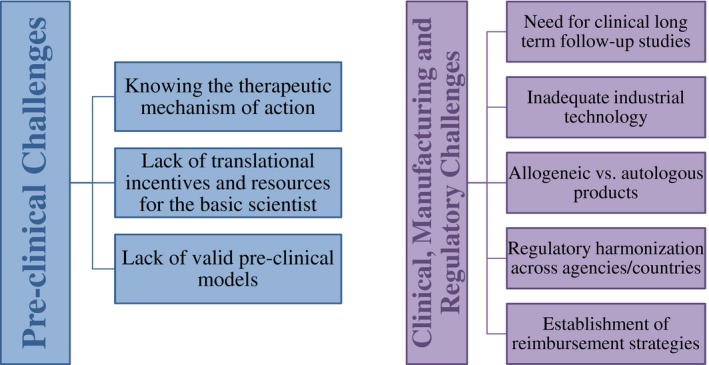
Despite regenerative medicine (RM) being one of the hottest topics in biotechnology for the past 3 decades, it is generally acknowledged that the field's performance at the bedside has been somewhat disappointing. This may be linked to the novelty of these technologies and their disruptive nature, which has brought an increasing level of complexity to translation. Therefore, we look at how the historical development of the RM field has changed the translational strategy. Specifically, we explore how the pursuit of such novel regenerative therapies has changed the way experts aim to translate their ideas into clinical applications, and then identify areas that need to be corrected or reinforced in order for these therapies to eventually be incorporated into the standard-of-care. This is then linked to a discussion of the preclinical and postclinical challenges remaining today, which offer insights that can contribute to the future progression of RM.
© 2020 The Authors. Clinical and Translational Science published by Wiley Periodicals, Inc. on behalf of the American Society for Clinical Pharmacology and Therapeutics.
Conflict of interest statement
All authors declared no competing interest for this work.
Figures
References
-
- Slingerland, A.S. , Smits, A.I.P.M. & Bouten, C.V.C. Then and now: hypes and hopes of regenerative medicine. Trends Biotechnol. 31, 121–123 (2013). - PubMed
-
- Langer, R. & Vacanti, J.P. Tissue engineering. Science 13260, 920–926 (1993). - PubMed
-
- Greenwood, H.L. , Thorsteinsdottir, H. , Perry, G. , Renihan, J. , Singer, P. & Daar, A. Regenerative medicine: new opportunities for developing countries. Int. J. Biotechnol. 8, 60–77 (2006).
Publication types
MeSH terms
Grants and funding
LinkOut - more resources
Full Text Sources
Other Literature Sources
Miscellaneous
