


Subfascial drainage and clipping technique for treatment of cerebrospinal fluid leak following spinal surgery
- PMID: 31982895
- PMCID: PMC8015620
- DOI: 10.17712/nsj.2020.1.20190048
Subfascial drainage and clipping technique for treatment of cerebrospinal fluid leak following spinal surgery
Abstract
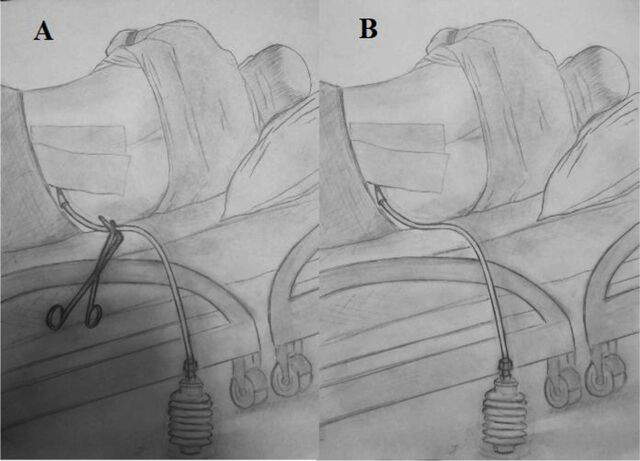
Objective: To investigate the treatment of iatrogenic cerebrospinal fluid (CSF) leak that develops after degenerative lumbar spinal surgery with a subfascial drainage and clipping (SDC) technique.
Methods: This study retrospectively reviewed the medical records of 46 patients who developed iatrogenic CSF leak after surgery for lumbar degenerative spine disease from 2007 to 2019. Twenty-five patients were treated with the SDC procedure (SDC group), whereas 21 were not (control group). Outcomes were compared between the two groups.
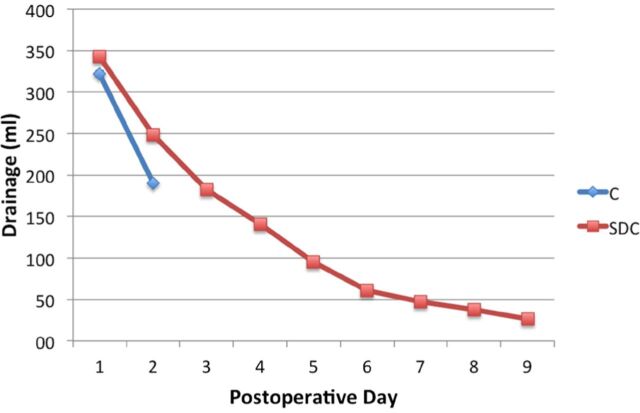
Results: CSF leakage ceased within 6-9 days (average 7.4+/-1) after the procedure in the SDC group. In the control group, CSF leakage was controlled with conservative measures in 14 patients, and in 7 patients, lumbar external drainage was performed. Among these 7, the CSF leak was controlled by lumbar external drainage in 3, and 4 required reoperation to repair the dural defect. No infection occurred in either group. Length of hospital stay was also shorter in SDC group (8.4+/-1 vs 10.0+/-1.3 days, p less than 0.001).
Conclusion: The SDC technique is effective for the treatment of iatrogenic CSF leak that develops after degenerative lumbar spinal surgery.
Figures
References
-
- Solomon P, Murugan Y, Arockiyaraj J, Amritanand R. Incidence and management of incidental durotomy during thoracic and lumbar spine surgeries: a retrospective review in a tertiary care centre. Int J Res Orthop. 2018;4:928–934.
-
- Wolff S, Kheirredine W, Riouallon G. Surgical dural tears: prevalence and updated management protocol based on 1359 lumbar vertebra interventions. Orthopaedics & Traumatology: Surgery & Research. 2012;98:879–886. - PubMed
MeSH terms
LinkOut - more resources
Full Text Sources
Medical