


Pilot study protocol of a mHealth self-management intervention for family members of pediatric transplant recipients
- PMID: 31985067
- PMCID: PMC7047587
- DOI: 10.1002/nur.22010
Pilot study protocol of a mHealth self-management intervention for family members of pediatric transplant recipients
Abstract
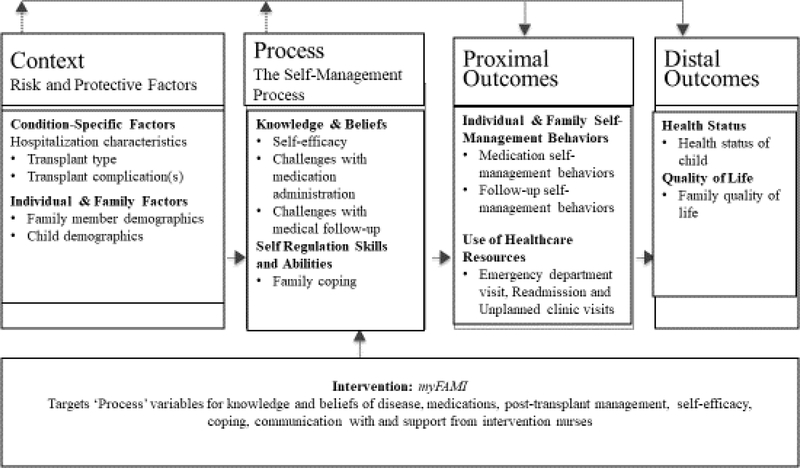
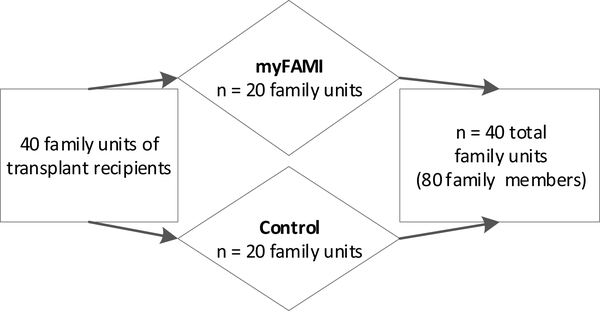
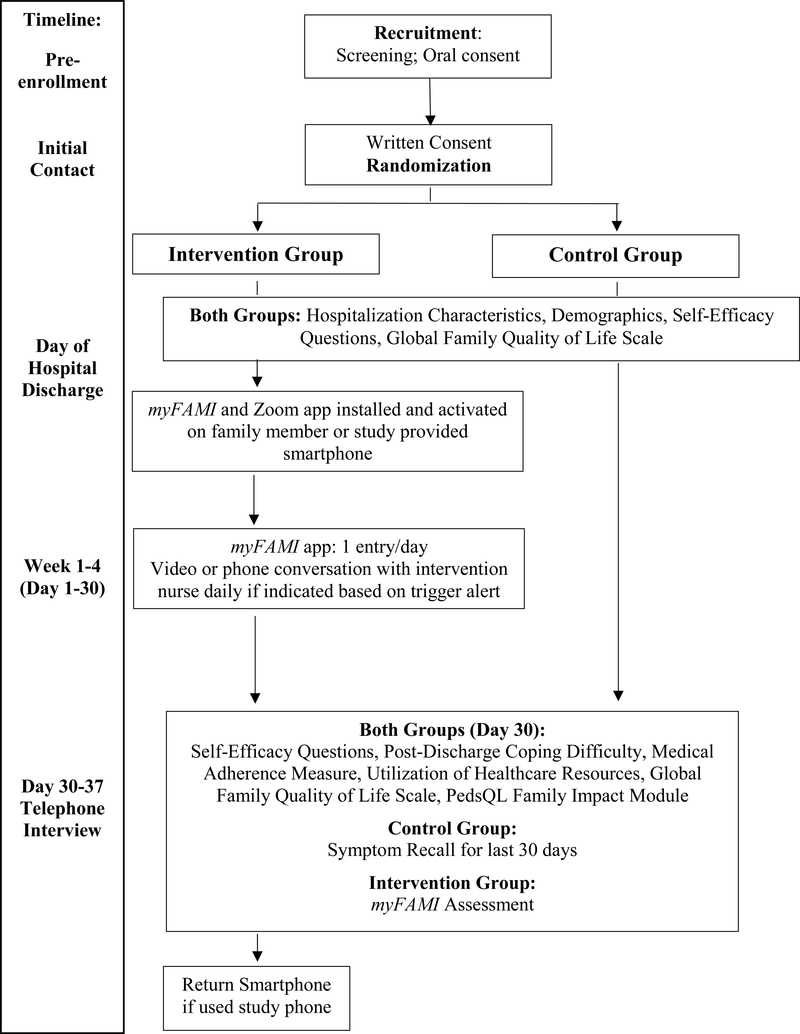
Solid-organ transplantation is the treatment of choice for end-stage organ failure. Parents of pediatric transplant recipients who reported a lack of readiness for discharge had more difficulty coping and managing their child's medically complex care at home. In this paper, we describe the protocol for the pilot study of a mHealth intervention (myFAMI). The myFAMI intervention is based on the Individual and Family Self-Management Theory and focuses on family self-management of pediatric transplant recipients at home. The purpose of the pilot study is to test the feasibility of the myFAMI intervention with family members of pediatric transplant recipients and to test the preliminary efficacy on postdischarge coping through a randomized controlled trial. The sample will include 40 family units, 20 in each arm of the study, from three pediatric transplant centers in the United States. Results from this study may advance nursing science by providing insight for the use of mHealth to facilitate patient/family-nurse communication and family self-management behaviors for family members of pediatric transplant recipients.
Keywords: mHealth; pediatric; self-management; transplant.
© 2020 Wiley Periodicals, Inc.
Figures
References
-
- Benning CR, & Smith A. (1994). Psychosocial needs of family members of liver transplant patients. Clinical Nurse Specialist, 8, 280–288. - PubMed
-
- DeVito Dabbs A, Song MK, Myers BA, Li R, Hawkins RP, Pilewski JM, … Dew MA (2016). A randomized controlled trial of a mobile health intervention to promote self-management after lung transplantation. American Journal of Transplantation, 16, 2172–2180. doi:DOI: 10.1016/j.ijmedinfo.2016.07.012 - DOI - PMC - PubMed
-
- Institute of Medicine. (2001). Crossing the quality chasm: A new health system for the 21st century. Washington DC: National Academies Press. - PubMed
Publication types
MeSH terms
Grants and funding
LinkOut - more resources
Full Text Sources
Medical